Compounded, not FDA-approved
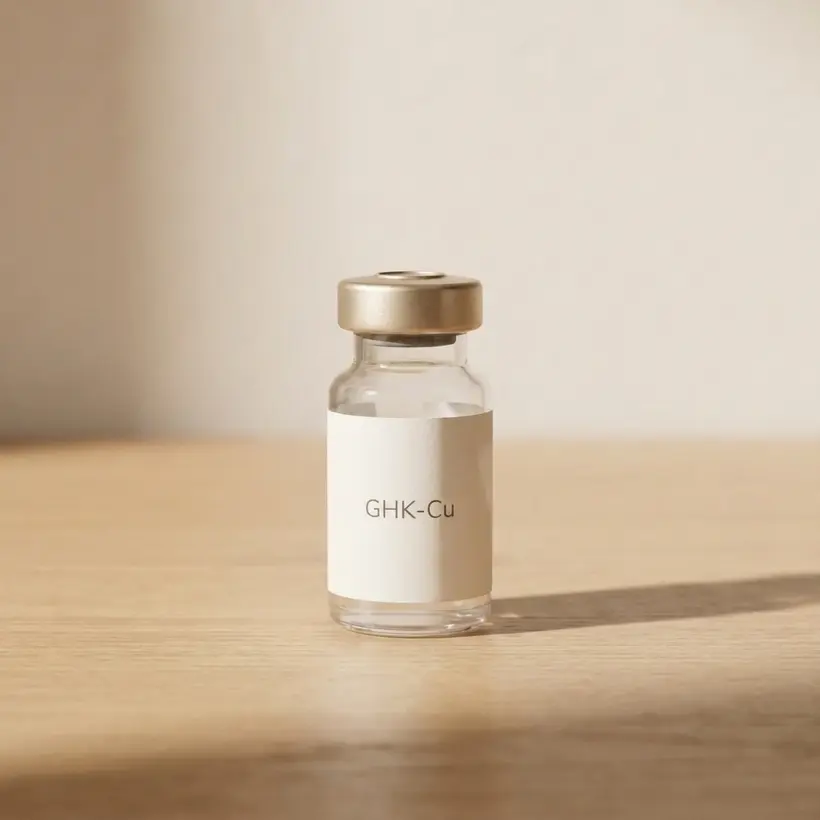
GHK-Cu is one molecule sold as three products, and only the paperwork tells them apart
A cosmetic serum the law never reviews, a compounded cream living inside an interim FDA policy whose dates changed twice in two weeks of 2026, and an injectable vial FDA has flagged for impurity risk. The molecule is the same; the evidence is not. Our study table grades every row by species, route, tier and the compound actually tested: the strongest human result is an industry-run wound trial from 1994, the only RCT-tagged study of GHK-Cu products was objective-null, and the injectable tier has zero human studies of any kind.
- 27graded rows in our study table, each with species, route, tier and compound tested
- 5of them human evidence, and the table says exactly which kind
- 0human studies of injected GHK-Cu, a zero the vial market never prints
- 53fetch-verified citations, 90.6% peer-reviewed or government sources

Online care, from intake to delivery
GHK-Cu care, made simple
Choose your plan, complete a private medical intake, and connect with a licensed provider. If prescribed, treatment ships discreetly to your door.
Your care plan includes
Everything you need to get started
Encrypted checkout • provider review required • shipping included
- 01Choose your planSelect the supply and refill preference that works for you.
- 02Complete your intakeShare your health history in our private, secure flow.
- 03Provider reviewIf appropriate, your prescription is prepared and shipped.
Prescription treatment requires an online medical evaluation. A provider will determine whether treatment is medically appropriate; approval is not guaranteed.
Key facts
- StatusCompounded, not FDA-approved
- Skin permeability coefficient2.43 +/- 0.51 x 10^-4 cm/h (dermatomed human skin, in vitro, 48 h infinite dose)
- Copper permeated, 48 h136.2 +/- 17.5 ug/cm2, with 82 to 97 ug/cm2 retained as depot
- Intact skin, 9 hAlmost no peptide or copper permeated without microneedles
- With microneedle pretreatment134 nmol peptide, 705 nmol copper permeated in 9 h
- Plasma GHK, healthy older adults133.0 +/- 54.54 ng/mL (n=11, 2023)
- Plasma GHK, COPD70.27 +/- 38.87 ng/mL (n=9, P = 0.009 vs controls)
- Reported age declineAbout 200 ng/mL at 20 to about 80 ng/mL at 60, per the originating lineage
- ClassCopper-binding tripeptide (glycyl-L-histidyl-L-lysine); matrikine candidate
- Molecular identityGHK 340.38 Da (CID 73587); 1:1 Cu complex 401.91 Da (CID 165429100)
- INCI label nameCopper tripeptide-1 (cosmetics)
- Status: cosmetic serumsCosmetics only; no FDA approval exists or is required for cosmetics
- Status: compounded non-injectable503A interim Category 1 (under evaluation); restored May 5, 2026; PCAC before end of Feb 2027
- Status: injectable vialsResearch-only; on FDA's compounding safety-risks page; zero human trials
- Approved drugs containing GHK-Cu0 (Drugs@FDA query returns no matches)
- Registered trials3 on ClinicalTrials.gov; none injectable; 1 topical phase 2 recruiting
- RCT-tagged GHK-Cu records1 (2006 laser study; objective endpoints null)
- Endogenous plasma GHK133.0 ng/mL healthy older adults; 70.27 ng/mL COPD (2023 measurement)
- CIR cosmetic safetySafe as used; surveyed concentrations typically under 10 ppm
Browse by topic
Everything on GHK-Cu and copper peptides, organized the way you research it.
Free GHK-Cu tools
Practical calculators and references, each scoped and sourced.
All guides
214 in-depth, individually cited guides.
Comparisons 63 guides
Evidence 62 guides
Sourcing 45 guides
Safety 28 guides
Dosing 16 guides
We will tell you when the evidence moves
No dosing advice by email. Unsubscribe anytime.