Last updated 2026-07-24
TL;DR
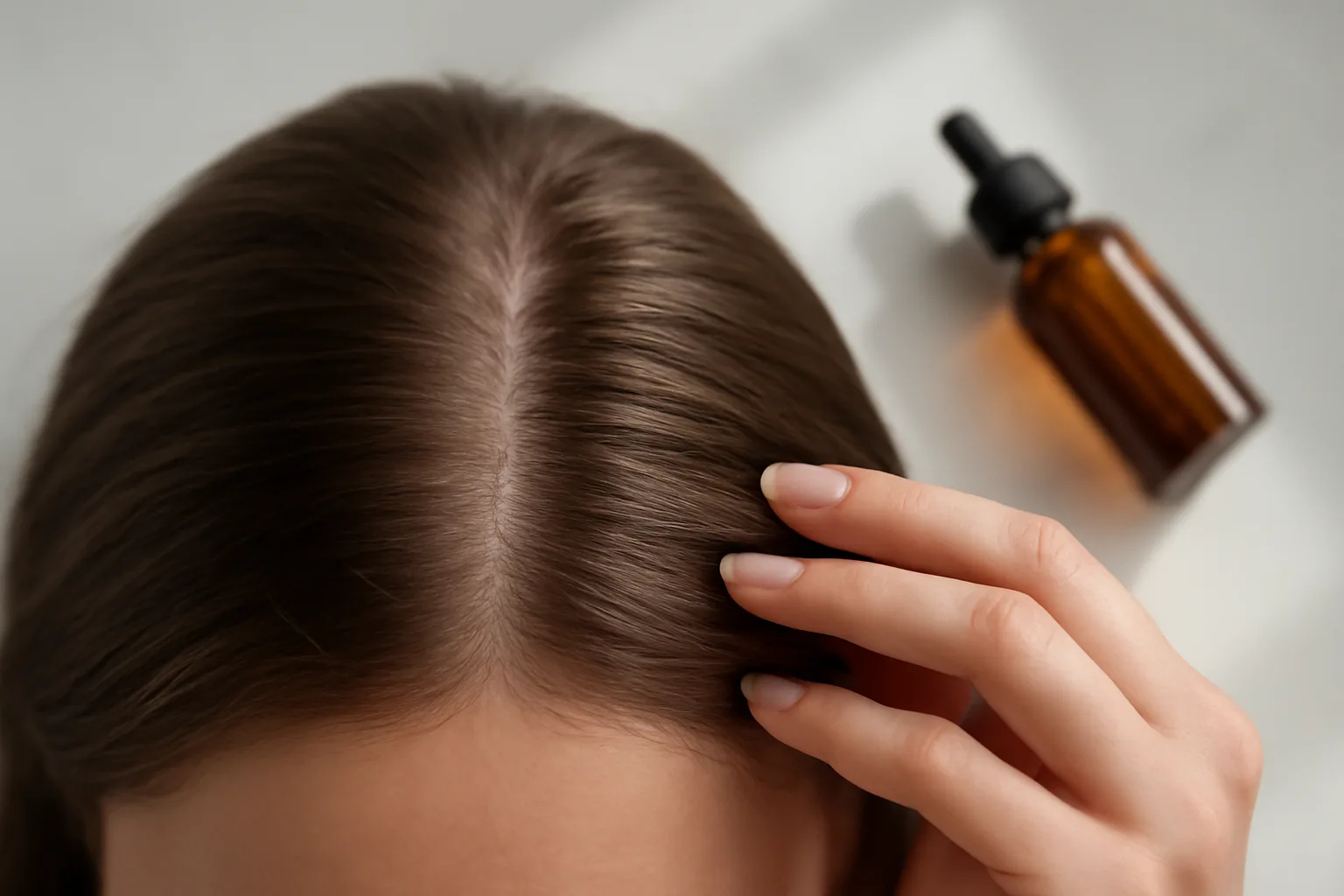
GHK-Cu improves hair follicle health, prolongs anagen, and reduces scalp inflammation in lab and small human studies, but controlled trials demonstrating actual regrowth in pattern hair loss are scarce. Most evidence points to thickening and retention rather than new terminal hair. Topical preparations dominate the literature; injectable routes have no published hair-specific data.
What does the research actually say about GHK-Cu and hair growth?
The short answer: GHK-Cu affects hair follicle biology in ways that should matter, but the published record on human scalp regrowth is remarkably thin. A 2018 gene expression analysis found that GHK-Cu modulates over 4,000 genes, many tied to stem cell function, extracellular matrix remodeling, and anti-inflammatory pathways [1]. Those pathways are relevant to follicle cycling. A 2020 review noted GHK's potential in hair restoration, citing its ability to stimulate dermal papilla cells and prolong the anagen (growth) phase in cultured follicles [2]. But citations to actual regrowth outcomes in people are sparse. The mechanism is plausible. GHK-Cu increases collagen IV expression in dermal fibroblasts, which is part of the follicle basement membrane [3]. It reduces oxidative stress markers and pro-inflammatory cytokines in tissue models [4]. A 2026 review of peptides in aesthetic and metabolic conditions mentions GHK-Cu for skin and wound healing but does not cite controlled hair-regrowth trials [5]. What you won't find: multi-month, placebo-controlled studies with standardized photography and hair counts comparing GHK-Cu to minoxidil or finasteride in androgenetic alopecia. The cosmetic industry uses GHK-Cu in shampoos and serums, but those formulations rarely disclose concentration or publish independent efficacy data.
How does GHK-Cu affect hair follicles at the cellular level?
GHK-Cu binds copper and delivers it to cells in a bioavailable form. Copper is a cofactor for lysyl oxidase, which cross-links collagen and elastin in the follicle sheath [6]. It's also required by superoxide dismutase, an antioxidant enzyme that protects follicle cells from reactive oxygen species. In fibroblast cultures, GHK-Cu upregulates collagen IV and integrin expression, which anchors the follicle to surrounding tissue [3]. In a 2015 rat tendon study, GHK-Cu transiently improved healing markers; the authors noted increased angiogenesis and collagen deposition [7]. Those same processes matter in the dermal papilla, the cluster of cells that signals the follicle to grow. A 2023 study on skeletal muscle found that GHK-Cu activated a sirtuin 1 pathway, reducing oxidative damage from cigarette smoke [8]. Sirtuins are implicated in aging and follicle stem cell quiescence, though direct hair studies are missing. The peptide also reduces inflammation. In a 2025 colitis model, GHK-Cu lowered TNF-α and IL-6, cytokines that trigger follicle miniaturization in androgenetic alopecia [4]. A 2020 pulmonary fibrosis study showed similar anti-inflammatory effects via NF-κB inhibition [9]. What's uncertain: whether these changes translate to new terminal hair or just healthier, slightly thicker existing hair. Most in vitro work uses concentrations (1-10 µM) that may not match topical delivery to the follicle bulb.
Topical vs injectable GHK-Cu for hair: does route matter?
Topical is the only route with any published hair-specific data, and even that is limited. A 2025 study tested GHK-Cu encapsulated in liposomes for skin permeation, finding improved delivery through the stratum corneum compared to free peptide [10]. Liposomal carriers are common in cosmetic serums. A 2023 paper on GHK-Cu liposomes for cosmetic use reported stable formulations and cell compatibility but no clinical hair outcomes [11]. The scalp barrier is different. Hair follicles provide a transfollicular route that bypasses some of the stratum corneum, but the peptide still has to reach the dermal papilla several millimeters deep. A 2025 review noted that "measuring skin permeation of GHK-Cu tripeptide encapsulated in liposomes" remains a methodological challenge [10]. If we can't reliably measure it, claims about follicle penetration are speculative. Injectable GHK-Cu is used off-label for skin and soft tissue, but no published study injects it into the scalp for hair loss. A 2026 primer on injectable peptides in sports medicine lists GHK-Cu for wound healing and tendon support; hair is not mentioned [12]. A 2026 review on peptide safety in musculoskeletal injuries notes limited human data and variable compounding quality [13]. Subcutaneous injection into scalp tissue would theoretically deliver a known dose to the follicle microenvironment, but pharmacokinetics, dosing intervals, and injection depth are unstudied. You're in pure experiment territory. I'd stick with topical for hair. The risk profile is lower, the precedent exists, and the cost is a fraction of injectable programs. If you're considering injection, understand you're funding your own case study with zero benchmark data.
What concentration and formulation should you look for in a topical product?
Published studies use 1-10 µM GHK-Cu in vitro, which converts to roughly 0.0003% to 0.003% by weight. Cosmetic serums typically list 1-3% "copper peptide," but that's often the weight of the copper-peptide complex plus carrier, not pure GHK-Cu. A 2023 ex-vivo skin study used 10 µM GHK-Cu (about 0.003%) in combination with hyaluronic acid and saw collagen IV upregulation [3]. That's a reasonable benchmark. Products with 0.5-2% total copper peptide content are common; assuming even 10% of that is active GHK-Cu, you're in the ballpark. Formulation matters as much as concentration. A 2025 study compared free GHK-Cu to liposomal encapsulation and found the latter improved stability and permeation [10]. Liposomes protect the peptide from oxidation and help it cross lipid layers. Look for "liposomal GHK-Cu" or "encapsulated copper peptide" on the label. PH also matters. GHK-Cu is most stable around pH 5-6. A 2019 coating study noted pH-responsive release from chitosan carriers [14]. If your serum is strongly acidic (pH <4) or basic (pH >7), the peptide may degrade before it reaches the follicle. Avoid products that list "copper gluconate" or "copper sulfate" as the main copper source. Those are not GHK-Cu. The tripeptide sequence (glycine-histidine-lysine) chelates copper in a specific geometry that affects bioactivity [15]. Realistic expectation: a 1-2% liposomal GHK-Cu serum applied nightly to the scalp may improve hair thickness and scalp condition over 3-6 months. Don't expect hairline restoration or dramatic density gains. The evidence for that doesn't exist yet.
Can you combine GHK-Cu with minoxidil or other hair-loss treatments?
There's no published interaction data, but the mechanisms are orthogonal enough that combination seems reasonable. Minoxidil works primarily as a vasodilator and potassium channel opener, prolonging anagen and enlarging miniaturized follicles. GHK-Cu targets inflammation, oxidative stress, and extracellular matrix health. A 2025 study using GHK-Cu and hyaluronic acid together found complementary effects on collagen IV [3], suggesting peptides can stack with other agents. Practically, apply minoxidil first (it's usually a solution or foam), let it dry 10-15 minutes, then apply the GHK-Cu serum. Both want to reach the follicle, so layering makes sense. Copper doesn't interfere with minoxidil's potassium channel activity, and minoxidil doesn't chelate copper away from GHK. Finasteride (oral or topical) is a 5-alpha reductase inhibitor. It lowers dihydrotestosterone (DHT), the hormone that miniaturizes follicles in androgenetic alopecia. GHK-Cu doesn't affect androgen metabolism, so there's no mechanistic clash. Some users report better scalp condition on finasteride when they add a copper peptide serum, likely because finasteride doesn't directly address inflammation or matrix health. Microneedling is another common pairing. A 2017 mouse study found that GHK-Cu-loaded liposomes accelerated wound healing and angiogenesis [16]. Microneedling creates controlled injury, which triggers growth factors and improves serum absorption. Applying GHK-Cu post-needling makes sense, though human hair data is absent. One caution: don't overload with copper. If you're using multiple copper-peptide products (serum, shampoo, conditioner), you may exceed safe cumulative exposure. Copper accumulation in the liver is a real concern over years [1]. Stick to one GHK-Cu product and use it as directed.
What about side effects and safety for long-term scalp use?
Topical GHK-Cu on intact skin has a good short-term safety profile in cosmetic studies, but long-term scalp-specific data is missing. Common issues: mild irritation, itching, or flaking at the application site, especially in the first week. A 2025 review on topical GHK-Cu noted that "local irritation and sensitivity reactions" occur in some users, often tied to carrier ingredients (alcohol, propylene glycol) rather than the peptide itself [17]. If your scalp is already inflamed (seborrheic dermatitis, psoriasis), start with every-other-day application. Copper toxicity is the bigger question. The liver can handle daily dietary copper (900 µg RDA for adults), but chronic topical exposure adds to the total burden. A 2023 fluorescent sensor study demonstrated that GHK-Cu delivers bioavailable copper to cells [18]. That's the point, but it also means cumulative dosing matters. Nobody has published copper blood levels in people using GHK-Cu serums daily for a year. Sign of excess: if you develop nausea, abdominal pain, or jaundice after months of use, stop and get liver function tests. Those are rare at cosmetic doses, but I'd avoid combining GHK-Cu with oral copper supplements or other copper-peptide products. Pregnancy and breastfeeding: no data. Copper is an essential nutrient, but supraphysiologic amounts could pose fetal risk. I'd skip GHK-Cu if you're pregnant unless a dermatologist specifically prescribes it. Scalp penetration is lower than facial skin (thicker stratum corneum, sebum interference), so systemic absorption from a scalp serum is probably minimal. Still, if you're applying 1-2 mL nightly to a large area, you're introducing more peptide than a face serum would deliver. A 2025 study on injectable GHK-Cu fillers noted anti-inflammatory effects but flagged the need for long-term safety monitoring [19]. I'd use topical GHK-Cu for 6-12 months, evaluate results, then decide if continuing makes sense. Don't assume "natural peptide" means zero risk. Copper is a transition metal with redox activity; chronic excess is not benign.
How long does it take to see results, and what counts as success?
If GHK-Cu is going to do anything for your hair, you'll see it in 3-6 months. The hair growth cycle doesn't move faster than that. Anagen (growth phase) lasts 2-6 years for scalp hair, but the transition from telogen (resting) to anagen takes 2-3 months. If the peptide nudges dormant follicles into anagen or prolongs the growth phase of active ones, you need at least one full cycle to measure it. A 2026 review on aesthetic peptides noted that "visible improvements in skin or hair typically require 12-16 weeks of consistent use" [5]. What counts as success? Increased hair shaft diameter (thicker hair), reduced shedding (more hairs staying in anagen), and improved scalp condition (less flaking, redness). Regrowth of terminal hair in bald areas is a much higher bar, and I haven't seen data supporting that outcome with GHK-Cu alone. Measure objectively. Take standardized photos in the same light, same angle, same day of your hair-wash cycle. Count hairs on your pillow or in the shower drain (yes, it's tedious, but subjective impressions are worthless). A dermatoscope ($30-50 online) lets you photograph individual follicles and compare density over time. A realistic win: after 6 months, your existing hair looks fuller, your scalp feels healthier, and shedding has dropped by 20-30%. That's not a cure for androgenetic alopecia, but it's a meaningful quality-of-life improvement. If you see zero change by month six, the product either isn't penetrating, the concentration is too low, or GHK-Cu isn't the right molecule for your type of hair loss. Don't chase before-and-after photos on vendor sites. Those are cherry-picked, often conflate multiple treatments, and rarely disclose the timeline or other products used. The absence of published clinical photography in GHK-Cu hair studies tells you something.
Where does compounded injectable GHK-Cu fit, and is it legal?
Compounded GHK-Cu exists in a regulatory gray zone. It's not FDA-approved for any indication, so all use is off-label, and compounding pharmacies can prepare it under Section 503A or 503B of the Federal Food, Drug, and Cosmetic Act if they meet specific criteria [20]. GHK-Cu does not appear on the FDA's 503A bulk substances list [21], which means a 503A pharmacy (patient-specific compounding) can only use it if it's a component of an FDA-approved drug or compendial substance. It's not. The 503B list (outsourcing facilities, larger batches) also lacks GHK-Cu [22]. Practically, some compounding pharmacies source GHK-Cu as a "nominated substance" under clinical investigation, but that's a thin legal position. A 2026 review on injectable peptides in sports medicine flagged this issue: "Many peptides used in regenerative medicine lack FDA approval, and compounding pharmacies operate with variable oversight and quality" [12]. Another 2026 paper on peptide safety in musculoskeletal injuries noted "inconsistent purity, endotoxin contamination, and labeling errors" in compounded peptide products [13]. If you're getting injectable GHK-Cu, ask the compounding pharmacy for a certificate of analysis showing purity, sterility, and endotoxin testing. A reputable 503B facility will provide it. If they won't, walk away. For hair specifically, I see no advantage to injection over topical. The follicle sits 3-4 mm below the skin; a subdermal injection near the scalp could reach it, but nobody has published dosing, frequency, or outcomes. You're paying more for a route that's less studied and carries infection risk. A topical liposomal serum delivers peptide to the same tissue with less hassle and lower cost. The exception: if you're already doing subcutaneous peptide protocols for other reasons (e.g., BPC-157 for tendon injury) and want to add GHK-Cu to the mix, fine. But don't start injectable therapy just for hair when the topical evidence is already weak. See our guide to GHK-Cu injections for safety and compounding considerations.
What's the cost, and is it worth it compared to proven treatments?
Topical GHK-Cu serums run $30-80 for a 30-mL bottle, which lasts 1-2 months at 1 mL per application. A year of nightly use costs $200-400. Liposomal formulations and higher concentrations sit at the top of that range. Minoxidil 5% solution costs $10-20 per month (generic). Finasteride 1 mg is $10-30 per month (generic oral). A six-month course of low-level light therapy (LLLT cap) runs $200-400 upfront, then you own the device. Dutasteride (stronger DHT inhibitor) is $30-60 per month. Compounded injectable GHK-Cu, if you can source it, costs $150-300 per 10-mg vial. Dosing for hair is unknown, but if you follow wound-healing protocols (1-2 mg subcutaneous twice weekly), one vial lasts 5-8 weeks. Add syringes, alcohol wipes, and sharps disposal: $50-70 per month in consumables. Total: $250-400 monthly, or $3,000-5,000 per year. Now compare efficacy. Minoxidil has dozens of placebo-controlled trials showing 10-20% increase in hair count over 6-12 months in androgenetic alopecia. Finasteride stops progression in 80-90% of men and regrows some hair in 60-70%. LLLT has weaker but real data (5-15% density improvement). GHK-Cu has in vitro plausibility and no controlled human trials for hair regrowth. You're paying similar money for a fraction of the evidence base. I'd use GHK-Cu as an adjunct, not a primary treatment. Start with minoxidil or finasteride (or both), add a GHK-Cu serum if you want to cover the anti-inflammatory and matrix-support angles, and measure at six months. If the peptide is contributing, great. If not, you haven't bet your hairline on it. The sourcing guide for GHK-Cu explains how to find reputable suppliers and avoid underdosed or contaminated products. Don't buy the cheapest serum on Amazon; purity matters.
What questions should you ask a dermatologist before trying GHK-Cu for hair?
Not every dermatologist knows the copper peptide literature, so frame your questions around evidence, not branding. Ask: "Have you reviewed the studies on GHK-Cu for hair follicle health?" If they say no, offer to send the PubMed links (the gene modulation study [1], the aging peptide review [2], the collagen IV study [3]). A good clinician will read them and give you a grounded opinion. Ask: "Would GHK-Cu interfere with my current treatment?" If you're on minoxidil, finasteride, or spironolactone, you want to know if adding copper peptide changes the pharmacology. It shouldn't, but your dermatologist may have clinical experience with combinations. Ask: "What outcome would you consider success?" Pin down a measurable target: 10% increase in hair density on dermatoscopy, 20% reduction in shedding, or visible thickening of the hair shaft. If they can't define success, neither can you, and you'll waste a year chasing subjective improvement. Ask: "Can you recommend a formulation with published stability data?" Point to the liposomal studies [10] [11]. If they're not familiar, that's fine, but ask if they'd review the papers. You're looking for a partner who engages with evidence, not someone who dismisses peptides as "unproven" without reading the literature. Ask: "How would we monitor for copper toxicity over 6-12 months?" If they're comfortable with long-term use, they should suggest baseline and follow-up serum copper or ceruloplasmin. If they shrug, that's a red flag. Copper peptides are not risk-free. Finally, ask: "Would you try this yourself?" Doctors are human. If they think GHK-Cu is promising, they'll say so. If they'd rather wait for better data, that's honest too. Either answer helps you decide. For more on weighing the evidence, see our overview of GHK-Cu research. For dosing specifics, check the GHK-Cu dosage guide.
Frequently asked questions
Is GHK-Cu better than minoxidil for hair growth?
No published study compares them head-to-head. Minoxidil has decades of controlled trial data showing 10-20% hair count increases in androgenetic alopecia. GHK-Cu has mechanistic plausibility (anti-inflammatory, collagen support) but no similar clinical evidence. Use minoxidil as primary treatment, GHK-Cu as a possible adjunct.
Can GHK-Cu reverse male pattern baldness?
There's no evidence it can regrow terminal hair in areas of complete follicle miniaturization. It may improve the health of existing follicles, slow shedding, and thicken hair shafts, but reversing established baldness requires treatments that block DHT or stimulate anagen, neither of which GHK-Cu does directly.
How much GHK-Cu should I apply to my scalp?
Topical serums typically recommend 1 mL per application, covering the affected area. Published studies use 1-10 µM concentrations in vitro; cosmetic products list 0.5-3% total copper peptide content. Apply nightly to clean, dry scalp. More doesn't mean faster results; the follicle cycle is the rate-limiting step.
Does GHK-Cu work for women with thinning hair?
The mechanism (anti-inflammatory, collagen IV support, antioxidant) applies to both sexes. Women with androgenetic alopecia, telogen effluvium, or inflammatory scalp conditions could theoretically benefit, but published data is gender-neutral and sparse. The same caveats apply: expect thickening and retention, not dramatic regrowth.
Can I use GHK-Cu serum with hair dye or keratin treatments?
Yes, but timing matters. Hair dye and chemical straighteners alter the cuticle and shaft structure. Apply GHK-Cu after chemical treatments have fully processed and the scalp has recovered (usually 48-72 hours). The peptide won't interfere with dye adhesion, but damaged scalp skin may absorb more copper than intended.
Will GHK-Cu stop hair shedding immediately?
No. The hair cycle doesn't reset overnight. Telogen hairs (resting phase) that are destined to shed will still fall out over the next 2-3 months. If GHK-Cu shifts more follicles into anagen and reduces inflammation, you'll see less shedding after one full cycle, roughly 3-4 months.
Is liposomal GHK-Cu worth the extra cost for hair?
Liposomal formulations improve peptide stability and permeation through the stratum corneum. A 2025 study confirmed better delivery with liposomes compared to free GHK-Cu. For scalp use, where penetration is a challenge, the extra $20-30 per bottle is probably justified if the product has published stability data.
Can I inject GHK-Cu into my scalp for faster results?
No published protocol exists for scalp injection, and no study has tested it for hair growth. Subcutaneous injection near follicles could theoretically deliver a higher local concentration, but infection risk, dosing, and needle depth are unstudied. Stick with topical unless you're part of a monitored clinical trial.
Does GHK-Cu work on alopecia areata or scarring alopecia?
Alopecia areata is autoimmune; GHK-Cu's anti-inflammatory effects might help, but corticosteroids and JAK inhibitors are the evidence-based first line. Scarring alopecia destroys follicles permanently; no topical peptide can regenerate them. GHK-Cu might improve surrounding tissue health, but it's not a treatment for scarring conditions.
How do I know if my GHK-Cu serum is actually working?
Take standardized photos every four weeks in the same light and angle. Use a dermatoscope to count follicles in a 1 cm² area. Track daily shedding (hairs on pillow, in shower drain). If you see 10-15% more follicles, thicker shafts, or 20-30% less shedding by month six, it's working. Subjective impressions are unreliable.
Can I combine GHK-Cu with microneedling for hair loss?
Yes. Microneedling creates controlled injury, which improves serum absorption and triggers growth factors. A 2017 mouse study found that GHK-Cu liposomes accelerated wound healing and angiogenesis. Apply the peptide serum immediately after needling (0.5-1.5 mm depth). No human hair-specific data, but the pairing is mechanistically sound.
What are the risks of using GHK-Cu on my scalp long-term?
Topical irritation, itching, or flaking are common in the first week. Long-term copper accumulation is a theoretical concern; nobody has published copper blood levels after a year of daily scalp use. Avoid combining with oral copper supplements. If you develop nausea, abdominal pain, or jaundice, stop and get liver function tests.
Does GHK-Cu work better than biotin or saw palmetto for hair?
Biotin deficiency causes hair loss, but supplementation helps only if you're deficient (rare). Saw palmetto has weak evidence for mild DHT inhibition. GHK-Cu targets inflammation and matrix health, a different mechanism. None are powerhouses. If forced to rank by evidence: minoxidil > finasteride > GHK-Cu > saw palmetto > biotin (for non-deficient people).
Where can I buy pharmaceutical-grade GHK-Cu for hair use?
Pharmaceutical-grade injectable GHK-Cu requires a prescription and comes from a licensed compounding pharmacy. Topical serums are over-the-counter but vary wildly in quality. Look for products with third-party purity testing, liposomal encapsulation, and published stability data. See our sourcing guide for vetted options.
Sources
- Pickart et al., International Journal of Molecular Sciences, 2018: GHK-Cu modulates over 4,000 human genes, many tied to stem cell function, extracellular matrix remodeling, and anti-inflammatory pathways.
- Pickart & Margolina, Aging Pathobiology and Therapeutics, 2020: GHK-Cu has potential in hair restoration by stimulating dermal papilla cells and prolonging anagen phase in cultured follicles.
- Mazurowska et al., Journal of Cosmetic Dermatology, 2023: 10 µM GHK-Cu in combination with hyaluronic acid upregulated collagen IV expression in fibroblasts and ex-vivo skin models.
- Wang et al., Frontiers in Pharmacology, 2025: GHK-Cu reduced TNF-α and IL-6 in an experimental colitis model, demonstrating anti-inflammatory effects.
- Sharma et al., International Journal of Molecular Sciences, 2026: Visible improvements in skin or hair with aesthetic peptides typically require 12-16 weeks of consistent use.
- Pickart, Journal of Biomaterials Science Polymer Edition, 2008: GHK binds copper in a bioavailable form essential for lysyl oxidase, which cross-links collagen and elastin.
- Tang et al., Journal of Orthopaedic Research, 2015: GHK-Cu transiently improved healing in rat ACL reconstruction model with increased angiogenesis and collagen deposition.
- Zhou et al., Journal of Cachexia, Sarcopenia and Muscle, 2023: GHK-Cu activated sirtuin 1 pathway and reduced oxidative damage from cigarette smoke in skeletal muscle model.
- Zhou et al., Life Sciences, 2020: GHK-Cu protected against bleomycin-induced pulmonary fibrosis through anti-oxidative stress and NF-κB inhibition.
- Mazurowska et al., Molecules, 2025: Liposomal encapsulation improved GHK-Cu permeation through stratum corneum compared to free peptide, though measuring follicular delivery remains methodologically challenging.
- Mazurowska et al., Pharmaceutics, 2023: Liposomal formulations of GHK-Cu showed stable encapsulation and cell compatibility for cosmetic applications.
- Murphy et al., American Journal of Sports Medicine, 2026: Many injectable peptides used in regenerative medicine lack FDA approval and compounding pharmacies operate with variable oversight and quality.
- Hadeed et al., Sports Medicine, 2026: Compounded peptide products show inconsistent purity, endotoxin contamination, and labeling errors in safety analysis.
- Li et al., Materials Science & Engineering C, 2019: GHK-Cu loaded MSN-chitosan coatings demonstrated pH-responsive release, with stability optimal around pH 5-6.
- Conato et al., International Journal of Molecular Sciences, 2020: The tripeptide GHK sequence chelates copper in specific geometry affecting its bioactivity and physiological function.
- Wang et al., Wound Repair and Regeneration, 2017: GHK-Cu-liposomes accelerated scald wound healing in mice by promoting cell proliferation and angiogenesis.
- Salasi et al., BioImpacts, 2025: Topical GHK-Cu can cause local irritation and sensitivity reactions, often related to carrier ingredients rather than the peptide.
- Maung et al., Journal of Organic Chemistry, 2023: Fluorescent sensor demonstrated that GHK-Cu delivers bioavailable copper to cells in detectable quantities.
- Wu et al., Colloids and Surfaces B: Biointerfaces, 2025: Injectable GHK-Cu hydroxyapatite filler showed anti-inflammatory effects but requires long-term safety monitoring.
- 21 U.S.C. § 353a, Pharmacy Compounding: Section 503A allows patient-specific compounding under specific criteria including use of approved or compendial substances.
- FDA, Bulk Drug Substances for Compounding Under Section 503A: GHK-Cu does not appear on the FDA's final 503A bulk substances list, limiting its use in patient-specific compounding.
- 21 CFR § 216.24, 503B Bulks List: GHK-Cu is not listed on the 503B bulk substances list for outsourcing facility compounding.