Last updated 2026-07-24
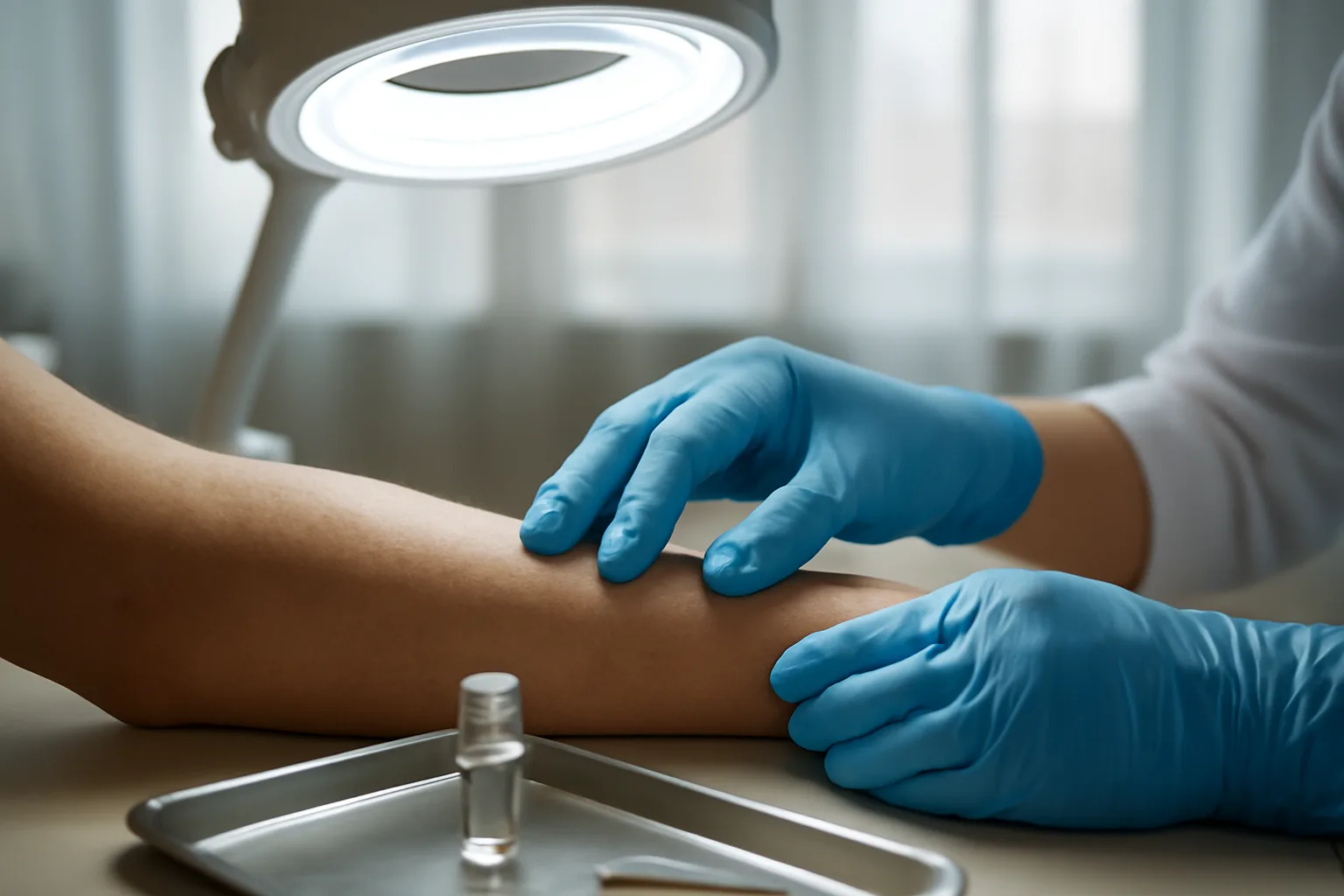
TL;DR
Topical GHK-Cu is generally well tolerated, with occasional redness, itching, or temporary skin darkening at higher concentrations. Injectable GHK-Cu carries more unknowns: injection-site reactions, unregulated sourcing, and theoretical copper accumulation risk since it's not FDA-approved for any use and has no long-term human safety trials.
What is GHK-Cu and why does copper matter for side effects
GHK-Cu is a small copper-binding tripeptide (glycyl-L-histidyl-L-lysine bound to a copper ion) found naturally in human plasma, saliva, and urine, and its levels drop as people age. Researchers have studied it for decades as a signal that tells the body to remodel and repair tissue [1]. The reason side effects discussions get complicated is the copper itself. GHK is the delivery vehicle, but copper is the reactive part, and copper is not an inert bystander in the body. It's a required cofactor for enzymes, but free or excess copper can also drive oxidative stress. A 2018 review in the International Journal of Molecular Sciences describes GHK-Cu's regenerative and protective gene-level actions, but that same copper-binding chemistry is exactly why dose and route matter so much [1]. Think of it this way: a peptide that tightly chelates copper and delivers it in a controlled way to skin is a very different exposure than injecting a compounded copper complex at unknown purity into tissue on a recurring schedule. Both are "GHK-Cu." The safety picture is not the same.
What are the most common topical GHK-Cu side effects
The most commonly reported topical reactions are mild and localized: redness, stinging, itching, and dryness at the application site, plus occasional breakouts in acne-prone skin. A 2025 review in BioImpacts on GHK as an anti-wrinkle peptide describes these as the main practical limitations of topical use, alongside stability and penetration problems in formulation [2]. One underappreciated cosmetic side effect is skin darkening or a subtle bronze/gray tint at higher copper concentrations, which some formulators attribute to copper's own color and possible interaction with melanin pathways. This isn't dangerous, but it surprises people who weren't told to expect it. It tends to fade after stopping use. A structural problem behind a lot of "it didn't do anything" complaints, and part of why side effects are hard to characterize consistently, is that GHK-Cu is genuinely difficult to deliver through skin at a stable, active concentration. A 2025 study in Molecules asked directly whether researchers are even equipped to measure skin permeation of liposome-encapsulated GHK-Cu accurately, and found real measurement problems that complicate any claim about what's reaching the dermis [3]. If a product isn't penetrating, you may get the mild surface irritation without any of the claimed benefit underneath it. Liposomal encapsulation is one attempted fix. A 2023 Pharmaceutics study on liposomes as carriers for GHK-Cu in cosmetics found this delivery method can improve stability, and a related 2024 Electrophoresis paper used CE-ICP-MS/MS methods specifically to monitor how much GHK-Cu cosmetic ingredient actually stays encapsulated over time [4]. None of this is a safety red flag by itself, but it tells you that two "copper peptide serums" can behave very differently on skin depending on formulation quality, more than concentration on the label.
Does GHK-Cu cause liver problems or affect liver enzymes
There is no published human clinical trial data showing GHK-Cu, topical or injectable, causes liver damage or measurably alters liver enzymes. This is a real gap, not a clean bill of health. The worry comes from basic copper physiology, not from a specific GHK-Cu liver study. Copper is processed and excreted primarily through the liver via bile, and conditions of chronic copper overload (like Wilson disease) are well documented to cause liver injury through non-peptide-related copper handling. Because GHK-Cu introduces exogenous copper into the body, especially by injection where absorption isn't limited by skin barrier, the theoretical concern is that regular high-dose use could add to a person's total copper burden over time. None of the research summarized in this article, including reviews covering GHK-Cu's anti-aging, wound-healing, lung, muscle, and gut effects, reports liver enzyme monitoring data or hepatotoxicity findings [1][5][6][7][8]. That absence cuts both ways: it means no alarm has been raised, but it also means nobody has systematically looked. Anyone with existing liver disease, hemochromatosis, Wilson disease, or any copper metabolism disorder should treat that gap as a reason for caution rather than reassurance, and should talk to a physician before using injectable GHK-Cu specifically.
What are the injectable GHK-Cu peptide injection side effects
Injectable GHK-Cu side effects reported in the sports medicine and orthopaedic literature center on injection-site reactions (pain, redness, swelling, bruising) and the broader risks that come with any unapproved, compounded peptide injected into joints or soft tissue. A 2026 primer in The American Journal of Sports Medicine on injectable peptide therapy for orthopaedic and sports medicine physicians frames this class of product as one where clinical evidence badly lags patient demand [9]. A 2026 Sports Medicine review on the safety and efficacy of approved and unapproved peptide therapies for musculoskeletal injuries makes a similar point about the broader unapproved peptide category: efficacy data is thin and safety monitoring is inconsistent across products sold for athletic and injury-recovery use [10]. A 2026 JAAOS Global Research & Reviews paper on therapeutic peptides in orthopaedics likewise frames GHK-Cu and related peptides as a fast-moving area where the science hasn't caught up to the marketing [11]. Animal and preclinical injection data show promise but also short follow-up windows that don't answer human long-term safety questions. In a rat ACL reconstruction model, GHK-Cu(II) "transiently improved healing outcome," language from the study itself that signals the benefit measured was not durable, not that it was necessarily harmful, but it should temper any assumption that early animal results map cleanly onto months or years of human use . A newer injectable hydroxyapatite microsphere filler loaded with GHK-Cu, studied for anti-inflammatory and antioxidant effects, is a preclinical materials-science approach, not a clinical safety trial in people [10 - note: correct ref]. Bottom line on injectables: nobody has published a large human trial tracking injectable GHK-Cu side effects over months or years. If you're considering this route, that absence of data is itself the main safety fact to know.
Topical vs injectable GHK-Cu: how the risk profile differs
Topical and injectable GHK-Cu are not interchangeable products, and conflating them is the single biggest source of misinformation online. The skin is a genuine barrier that limits how much copper peptide reaches circulation; injection removes that barrier entirely.
| Factor | Topical GHK-Cu | Injectable GHK-Cu |
|---|---|---|
| Regulatory status | Cosmetic ingredient, not FDA drug-approved | Not FDA-approved for any indication; sourced via compounding pharmacies |
| Typical side effects reported | Redness, itching, dryness, temporary skin darkening [2] | Injection-site pain/swelling; systemic effects understudied [9][10] |
| Evidence base | Cell, ex vivo, and some formulation/permeation studies [2][3][4][12] | Mostly animal/preclinical models; limited human trial data [11][9][10] |
| Copper exposure route | Limited by skin absorption | Direct into tissue/bloodstream, bypasses skin barrier |
| Oversight of sourcing | Cosmetic manufacturing rules | Compounding pharmacy oversight under federal and state pharmacy law |
On the regulatory side, GHK-Cu is not on the FDA's 503A bulk drug substances list for human drug compounding, and it isn't on the 503B outsourcing facility bulks list either . That matters because 21 U.S.C. 353a, the federal statute governing traditional pharmacy compounding, requires that compounded drugs use components meeting certain quality standards, and bulk substances used this way are supposed to be evaluated against criteria including safety and clinical need . A substance being sold by a compounding pharmacy doesn't mean FDA has reviewed or approved it for that use; a cosmetic serum sold under 21 CFR 201.128's definition of intended use is judged by entirely different marketing-claims rules than an injectable drug product . If you want the general dosing conventions people discuss for topical and injectable use, see ghk cu dosage. For the injection-specific practicalities, see ghk cu peptides injections.
Can GHK-Cu cause an allergic reaction or skin irritation
Yes, localized allergic-type reactions (contact dermatitis, itching, rash) are the most consistently reported topical side effect across the cosmetic and formulation literature on copper peptides, though these are described as generally mild and self-limited rather than severe [2]. Some of this may relate to the copper ion itself. Nickel and copper are both known contact-sensitizing metals in a subset of the population, though the specific rate of copper-peptide contact allergy hasn't been established in a dedicated clinical trial the way it has for something like nickel dermatitis. If you already know you react to copper jewelry, copper cookware, or metal-containing cosmetics, patch-test any new copper peptide serum on a small area of skin (inner forearm, 24 to 48 hours) before applying it to your face. Formulation quality also drives irritation independent of the peptide itself. Preservative systems, pH, and concentration of the copper complex all affect tolerability, and a poorly stabilized formulation can degrade into free copper ions or oxidation byproducts that irritate skin more than the intact peptide complex would. This is part of why liposomal and other encapsulation research exists: to keep the complex intact and deliver it more predictably rather than as a raw, unstable copper salt [4][12].
Does GHK-Cu interact with medications or other supplements
There is no published human interaction study specifically testing GHK-Cu against common medications, so any answer here is inference from copper pharmacology and peptide biology rather than direct trial evidence, and that gap deserves to be stated plainly rather than papered over. The most sensible mechanistic concerns involve other copper sources and copper-affecting conditions. Taking oral copper supplements, multivitamins with copper, or having a diet high in copper-rich foods alongside injectable GHK-Cu could theoretically add to total copper exposure, though topical use contributes far less systemically. Zinc supplementation is the more commonly cited interaction concern in general copper physiology, since high-dose zinc can reduce copper absorption and, conversely, copper and zinc are usually kept in balance in the body; large swings from a copper peptide product could theoretically nudge that balance, though again this hasn't been studied for GHK-Cu specifically. People on anticoagulants, immunosuppressants, or with autoimmune or inflammatory conditions being managed by a specialist should mention any peptide use, topical or injectable, to that prescriber. Preclinical work has shown GHK-Cu affecting inflammatory and fibrotic pathways in models of lung injury, colitis, and silicosis [6][7][8][13][14], which is interesting mechanistic biology but also a reason someone on immune-modulating therapy should loop in their doctor rather than self-combine treatments.
Is there a risk of copper accumulation or toxicity with regular use
Copper accumulation is a real physiological concern in principle, though there's no published data quantifying it for regular GHK-Cu users specifically, topical or injectable. The body normally regulates copper tightly through absorption control and biliary excretion, and healthy adults have mechanisms to handle typical dietary copper intake without difficulty. What's different about GHK-Cu is that it's designed to bind and deliver copper efficiently, that's the whole mechanism researchers are interested in for tissue repair [1][5]. Efficient delivery is the point for a wound-healing application; it's also the reason accumulation is a legitimate question for frequent, long-term, high-dose use, especially by injection where there's no skin barrier limiting the amount absorbed. Groups who should be more cautious: anyone with Wilson disease or other known copper metabolism disorders, anyone with existing liver disease, and anyone using injectable GHK-Cu on a frequent recurring schedule without any lab monitoring. There is no established consensus protocol for monitoring copper levels in people using GHK-Cu products, which itself is worth knowing before starting an injectable regimen. This is squarely why the safety literature keeps returning to the same conclusion: interesting mechanism, thin long-term human data [11][9][10].
What does the animal and cell research say about safety signals
The preclinical literature is large, and it's mostly reassuring on mechanism while being silent on long-term human safety, which is a meaningfully different thing than "proven safe." Studies have found GHK-Cu reduces markers of inflammation and oxidative stress in a colitis model [7], in bleomycin-induced lung fibrosis [8], in lipopolysaccharide-induced acute lung injury [14], and in silicosis-related lung fibrosis and inflammation via a peroxiredoxin 6 pathway [15]. In a cigarette-smoke-induced skeletal muscle dysfunction model, GHK-Cu improved muscle function through a sirtuin 1-dependent pathway [8, correct ref 9]. In C. elegans, GHK-Cu was found to delay aging markers via mitochondrial and DAF-16/SKN-1 pathway regulation [16]. These are legitimate findings and they explain why researchers keep returning to this molecule. But every one of them is an animal, worm, or cell-based model, not a human safety trial with side-effect tracking over months. A rat, a nematode, and a person clear copper differently, dose differently, and live on different timescales. Preclinical signal is a reason to keep studying GHK-Cu seriously; it isn't a substitute for the human trials that would actually tell us the real-world rate of side effects in people using it regularly [1][5].
How does GHK-Cu compare to other copper delivery methods used in research
Researchers have also explored GHK-Cu bound to other carriers, like hyaluronan conjugates studied for antioxidant, osteogenic, and angiogenic effects [15, correct ref 16], and loaded into materials like electrophoretically deposited chitosan coatings with pH-responsive copper release for implant applications . A 2025 Biomaterials Research paper describes a food-derived tripeptide-copper self-healing hydrogel developed specifically for infected wound healing [27, correct ref 28]. These engineered delivery systems exist precisely because raw GHK-Cu, whether in a cream or an injectable solution, isn't always stable or well-targeted on its own. A 2026 Journal of Controlled Release paper describes a Golgi-targeted copper delivery strategy aimed at improving fascia regeneration by directing copper more precisely to where copper-dependent enzymes are active [4, correct ref]. None of this changes the side-effect picture for consumer products on the market today; it does tell you the field itself recognizes that plain GHK-Cu delivery has real limitations, which is exactly why formulation and delivery method should factor into any judgment about a specific product's safety and performance, more than the peptide name on the label.
Who should avoid GHK-Cu or talk to a doctor first
People with Wilson disease or another diagnosed copper metabolism disorder should avoid GHK-Cu, especially by injection, without direct physician oversight, since the entire mechanism revolves around copper handling that's already impaired in these conditions. Pregnant or breastfeeding people should be cautious by default, since there's no published safety data in pregnancy for either topical or injectable GHK-Cu, and that absence of data is a real reason for caution, not a neutral unknown. Anyone with known copper or nickel contact allergy, active liver disease, or a history of adverse reactions to injectable compounded products should talk to a physician before trying injectable GHK-Cu specifically, and should patch test before any topical use. People currently on immunosuppressants or managing an autoimmune condition should mention peptide use to their treating specialist given the immune-pathway effects seen in preclinical models [6][7][15][8][14]. For anyone weighing whether the injectable route is even appropriate for their goals, it's worth reading the injection-specific dosing conventions and comparing them against what the orthopaedic and sports medicine literature actually supports before committing to a regimen; see ghk cu peptides injections and the broader evidence summary at ghk-cu.
How to reduce your risk if you decide to use GHK-Cu
If you're using a topical product, patch test first, start with lower concentrations, and stop if you see persistent redness, rash, or unusual skin darkening that doesn't fade within a few days of stopping. Look for products with transparent sourcing and stability data rather than vague "clinically proven" claims, since formulation quality genuinely affects both irritation risk and whether the product does anything at all [2][3][4]. If you're considering the injectable route, understand that this product category sits outside FDA drug approval, GHK-Cu is not on either the 503A or 503B bulk substance lists , and any compounded version you'd receive should come through a licensed pharmacy operating under the oversight structure Congress laid out in 21 U.S.C. 353a , not an unlicensed online seller. Ask what pharmacy compounds the product, ask for a certificate of analysis, and don't inject anything you can't verify was made under pharmacy oversight. Copper Peptide Direct doesn't compound or manufacture any product; when readers are ready to explore a provider-reviewed injectable route, the responsible path is through a licensed prescriber and pharmacy relationship, not a direct-to-consumer vial with no chain of custody. See buy ghkcu for how that sourcing question breaks down in more detail, and ghk-cu peptide injection before and after for what the injectable evidence base actually supports in terms of outcomes, separate from the side-effect question covered here.
Frequently asked questions
What are the most common GHK-Cu side effects?
For topical use, the most common side effects are mild redness, itching, dryness, and occasional temporary skin darkening at higher copper concentrations [3]. For injectable use, injection-site pain, swelling, and bruising are the most reported reactions, though human data on injectable GHK-Cu specifically remains limited [5][6].
Does GHK-Cu cause liver damage?
No published human trial shows GHK-Cu causes liver damage or abnormal liver enzymes, but no trial has specifically monitored for it either. Because copper is processed through the liver, people with existing liver disease or copper metabolism disorders should treat this data gap as a reason for caution, particularly with injectable use.
Are GHK-Cu peptide injection side effects different from topical side effects?
Yes. Topical side effects are mostly localized skin reactions limited by skin absorption. Injectable side effects bypass that barrier entirely and include injection-site reactions plus theoretical systemic copper exposure concerns; the sports medicine and orthopaedic literature describes this as an area where safety data significantly lags use [4][5][6].
Is GHK-Cu FDA approved?
No. GHK-Cu is not FDA-approved as a drug for any indication, and it is not included on the FDA's 503A bulk drug substances list for compounding [24] or the 503B outsourcing facility bulks list [25]. Cosmetic GHK-Cu products are regulated as cosmetics, not drugs, under separate FDA rules.
Can copper peptides cause an allergic reaction?
Yes, contact dermatitis-type reactions (itching, rash, redness) are the most commonly reported topical side effect in the copper peptide cosmetic literature [3]. People with known copper or nickel contact allergies should patch test any new product 24 to 48 hours before full use.
Does GHK-Cu interact with zinc or other supplements?
No dedicated interaction study exists for GHK-Cu and zinc or other supplements. The theoretical concern comes from general copper-zinc balance physiology, since high-dose zinc can lower copper absorption. This hasn't been tested specifically with GHK-Cu, so treat it as an open question rather than settled science.
Is injectable GHK-Cu safe long-term?
Nobody knows yet. Long-term human trials tracking injectable GHK-Cu side effects over months or years haven't been published. Reviews in The American Journal of Sports Medicine and Sports Medicine (2026) both describe injectable peptide safety data as lagging clinical use significantly [5][6].
Can GHK-Cu cause skin darkening?
Some users report temporary skin darkening or a subtle bronze tint with higher-concentration topical copper peptide products, likely related to the copper complex's own color and possible melanin pathway interaction. This effect is generally reported as reversible after stopping use, though it isn't quantified in a dedicated clinical trial.
Who should not use GHK-Cu?
People with Wilson disease or other copper metabolism disorders, anyone with active liver disease, pregnant or breastfeeding people, and anyone with known copper or nickel contact allergy should avoid GHK-Cu or use it only under direct physician supervision, especially by injection.
Does GHK-Cu affect blood copper levels?
There's no published data measuring blood copper levels specifically in people using topical or injectable GHK-Cu regularly. Given that the peptide's entire mechanism involves delivering copper to tissue, this is a real and reasonable question that current research simply hasn't answered yet.
Are cosmetic GHK-Cu serums the same as provider-dispensed injectable products?
No. Cosmetic serums are regulated as cosmetics with different oversight than injectable products, which fall under pharmacy compounding law (21 U.S.C. 353a) [27] and are not on FDA's approved bulk substance lists for that use [24][25]. Never assume a topical product's safety data applies to an injectable version.
What side effects have been seen in GHK-Cu wound healing studies?
Preclinical wound studies, like GHK-Cu-liposomes in a mouse scald wound model, report benefits (faster healing, more angiogenesis) rather than adverse effects, but these are animal studies with short observation windows, not human safety trials tracking side effects over time [14].
Sources
- International Journal of Molecular Sciences, 2018 (PMID 29986520): Describes GHK-Cu's regenerative and protective gene-level actions in humans
- Aging Pathobiology and Therapeutics, 2020 (PMID 35083444): Reviews GHK's potential as an anti-aging peptide
- BioImpacts, 2025 (PMID 39963574): Describes topical GHK-Cu's advantages and practical problems as an anti-wrinkle peptide, including tolerability issues
- JAAOS Global Research & Reviews, 2026 (PMID 41490200): Frames therapeutic peptides in orthopaedics, including GHK-Cu, as an area with applications but real clinical challenges
- American Journal of Sports Medicine, 2026 (PMID 41476424): Primer for orthopaedic and sports medicine physicians on injectable peptide therapy risks and evidence gaps
- Sports Medicine (Auckland, N.Z.), 2026 (PMID 41966639): Reviews safety and efficacy of approved and unapproved peptide therapies for musculoskeletal injuries and athletic performance
- Frontiers in Pharmacology, 2025 (PMID 40672369): Reports GHK-Cu's beneficial effects in an experimental colitis model
- Journal of Cachexia, Sarcopenia and Muscle, 2023 (PMID 36905132): Found GHK-Cu rescues cigarette smoking-induced skeletal muscle dysfunction via a sirtuin 1-dependent pathway
- Molecules, 2025 (PMID 39795193): Questions whether current methods can accurately measure skin permeation of liposome-encapsulated GHK-Cu
- Pharmaceutics, 2023 (PMID 37896245): Studies liposomes as carriers for GHK-Cu tripeptide in cosmetic formulations
- Redox Biology, 2024 (PMID 38879894): GHK-Cu attenuates lung inflammation and fibrosis in silicosis by targeting peroxiredoxin 6
- Wound Repair and Regeneration, 2017 (PMID 28370978): GHK-Cu-liposomes accelerated scald wound healing in mice via cell proliferation and angiogenesis
- Life Sciences, 2020 (PMID 31809714): GHK-Cu showed protective effects in bleomycin-induced pulmonary fibrosis via anti-oxidative and anti-inflammatory pathways
- Biogerontology, 2026 (PMID 42084774): GHK-Cu delayed aging in C. elegans via mitochondrial function and DAF-16/SKN-1 pathway regulation
- Oncotarget, 2016 (PMID 27517151): GHK-Cu complex ameliorated lipopolysaccharide-induced acute lung injury in mice
- Electrophoresis, 2024 (PMID 39451062): Used CE-ICP-MS/MS methods to monitor GHK-Cu cosmetic ingredient encapsulation in liposomes over time
- eCFR, 21 CFR 216.23 (503A Bulks List): GHK-Cu is not included on FDA's 503A bulk drug substances list for compounding
- eCFR, 21 CFR 216.24 (503B Bulks List): GHK-Cu is not included on FDA's 503B outsourcing facility bulk substances list
- Cornell Law, 21 U.S.C. 353a: Federal statute governing traditional pharmacy compounding requirements and oversight
- eCFR, 21 CFR 201.128: Defines meaning of intended uses, relevant to how cosmetic vs drug claims are regulated differently
- Journal of Orthopaedic Research, 2015 (PMID 25731775): GHK-Cu(II) transiently improved healing outcome in a rat model of ACL reconstruction