Last updated 2026-07-24
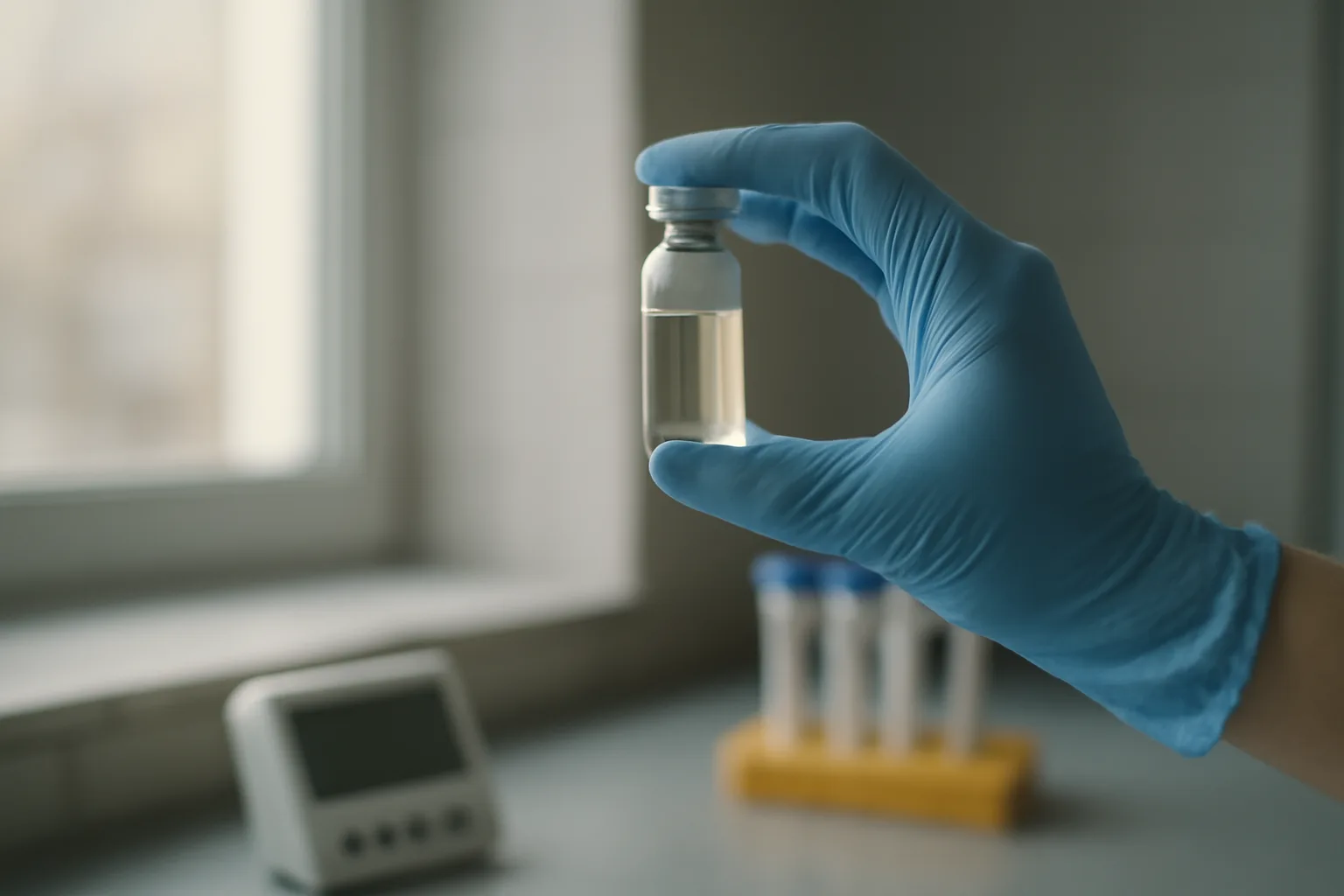
TL;DR
No peer-reviewed study has measured GHK-Cu's half-life in human blood or skin. What's published instead is decades of cell, animal, and formulation data on how the peptide behaves and degrades. Topical results (skin texture, hydration) are usually reported around 8-12 weeks of daily use in the wider cosmetic literature; injectable protocols run on physician-set cycles, not on a known clearance number.
What is the actual half-life of GHK-Cu in the body?
Nobody has published a clean, citable half-life number for GHK-Cu in human plasma or skin. That's the honest answer, and any serum label or forum post that gives you a specific figure in minutes or hours is not pointing to a real human pharmacokinetic study. What exists instead is a large body of mechanistic and formulation research showing how the tripeptide behaves in cells, tissue, and delivery vehicles, which is a different question than "how fast does it clear." GHK-Cu is a naturally occurring copper-binding tripeptide (glycyl-L-histidyl-L-lysine bound to Cu2+), and its levels in human plasma are already known to decline with age, which is part of why it drew research interest in the first place [1]. The 2018 review in the International Journal of Molecular Sciences describes its "regenerative and protective actions" at the gene expression level, covering how it modulates genes tied to tissue repair and antioxidant response, but this is transcriptional data, not a clearance curve [1]. Separately, analytical chemists have built tools specifically because measuring GHK-Cu accurately is hard. A 2023 paper in the Journal of Organic Chemistry describes a phenothiazine-based fluorescent sensor built to detect Cu(II) in the context of GHK-Cu sensing applications, and a 2023 Analytical Chemistry paper describes a GHK-modified nanochannel sensor for "ultrasensitive and label-free detection of copper ions" [2][3]. If detecting the compound reliably still needs new sensor chemistry as of 2023, that tells you plasma half-life studies in humans are not sitting in a file somewhere unpublished. The measurement problem is real, more than a marketing gap. For readers comparing routes, see our breakdown of ghk cu dosage and the difference between topical and ghk cu peptides injections.
How long does it take for copper peptides to work on skin?
For topical copper peptide products, the cosmetic literature generally reports visible changes in skin texture and hydration over weeks of daily use, not days. A 2025 review in BioImpacts specifically walks through GHK as a topical anti-wrinkle peptide, covering both its advantages and the practical problems with getting it to actually penetrate and act in skin, which is the more relevant question than blood half-life for anyone using a serum [4]. The biggest bottleneck for topical use is penetration, not decay. GHK-Cu is a small molecule but it's still hydrophilic and copper-bound, which makes plain aqueous serums a poor vehicle for getting it past the stratum corneum. That's why so much recent formulation research focuses on liposome encapsulation. A 2023 study in Pharmaceutics tested liposomes as carriers for GHK-Cu specifically for cosmetic application, and a 2025 paper in Molecules asked directly whether researchers are even equipped to measure skin permeation of liposome-encapsulated GHK-Cu accurately, concluding the measurement methods themselves need work [5][6]. A related 2024 paper in Electrophoresis describes using CE-ICP-MS/MS to monitor how much GHK-Cu cosmetic ingredient actually ends up encapsulated in liposomes, again underlining that quantifying delivery is still an active research problem, not a solved one [7]. On the fibroblast side, a 2023 study in the Journal of Cosmetic Dermatology found that combining GHK-Cu with hyaluronic acid boosted collagen IV upregulation beyond either ingredient alone, tested in both fibroblast cultures and ex-vivo skin models [8]. That's a mechanism-and-tissue-model result, useful for understanding why some formulations pair GHK-Cu with HA, but it isn't a timeline study in living human subjects. Bottom line for topical use: give a well-formulated product at least 8-12 weeks before judging it, in line with how most peptide cosmetic literature frames "visible improvement" windows, and don't expect a serum with no delivery technology behind it to match study conditions built around liposomes or ex-vivo skin.
How long does it take for GHK-Cu to work when injected?
Injectable GHK-Cu is a completely different regulatory and evidence category from a skin serum, and the timeline data is thinner. Most of what's published on injectable or implanted GHK-Cu comes from animal models and orthopaedic research settings, not human clinical trials with defined response curves. A 2015 study in the Journal of Orthopaedic Research tested a GHK-Cu(II) tripeptide-copper complex in a rat model of ACL reconstruction and found it "transiently improved healing outcome," which is a telling word choice: the benefit was time-limited even in the animal model, not a permanent shift in tissue quality [9]. Two 2026 papers add more context on how this class of peptide is being discussed clinically: a review in the Journal of the American Academy of Orthopaedic Surgeons Global Research & Reviews covers therapeutic peptides in orthopaedics generally, including the applications and open challenges, and a companion piece in the American Journal of Sports Medicine frames injectable peptide therapy as a primer for orthopaedic and sports medicine physicians, meaning the field is still at the stage of educating prescribers rather than citing settled timing protocols [10][11]. A 2026 paper in Sports Medicine specifically reviews the safety and efficacy of approved versus unapproved peptide therapies for musculoskeletal injuries and athletic performance, a useful reminder that most injectable peptide use in this space sits outside FDA-approved indications [12]. On the delivery-engineering side, a 2025 paper in Colloids and Surfaces B describes an injectable hydroxyapatite microsphere filler loaded with GHK-Cu tripeptide, designed for anti-inflammatory and antioxidant effect at an injection site, and a 2026 paper in the Journal of Controlled Release describes a Golgi-targeted copper delivery strategy aimed at fascia regeneration [13][14]. Both are engineering studies aimed at controlling where and how long the peptide acts locally, which again shows researchers are actively trying to solve the duration-of-action problem rather than having already solved it. If you're weighing routes, our page on ghk-cu peptides injections covers what's actually documented for injectable use versus what's extrapolated from topical studies.
How long can you take GHK-Cu peptide safely?
There's no published maximum duration for GHK-Cu use in humans, topical or injectable, because there's no large human safety trial establishing one. What exists is a mix of animal toxicology signal, mechanistic copper biology, and the general caution that applies to any long-term copper exposure. Copper is an essential trace mineral, but it is not benign at every dose or duration. The body regulates copper tightly through ceruloplasmin binding and biliary excretion, and chronic excess copper exposure from any source (diet, supplements, or topical/injectable products) raises accumulation concerns, particularly for anyone with impaired copper metabolism. This is a general toxicology principle about copper, not a GHK-Cu-specific finding, so treat duration limits as a matter of general caution rather than a number backed by a GHK-Cu trial. Animal research does show GHK-Cu behaving differently across organ systems depending on context, which argues against assuming it's simply inert everywhere. A 2020 study in Life Sciences found protective effects of GHK-Cu against bleomycin-induced pulmonary fibrosis via antioxidant and anti-inflammatory pathways in an animal model [15]. A 2024 paper in Redox Biology found the tripeptide complex attenuated lung inflammation and fibrosis in a silicosis model by targeting peroxiredoxin 6 [16]. A 2016 paper in Oncotarget found the same complex ameliorated lipopolysaccharide-induced acute lung injury in mice [17]. These are all protective findings in disease models, which is encouraging mechanistically, but none of them are duration-of-use safety studies in healthy humans, and none license an assumption that more is better or that it's fine indefinitely. For anyone asking about side effects specifically, see ghk-cu side effects. The practical answer on duration: follow whatever cycle a prescriber or the product labeling sets, don't stack topical and injectable copper peptide use without telling a clinician, and don't treat "more months" as automatically more benefit given that no study has defined an optimal duration.
How is GHK-Cu different from other copper peptide products in how long it lasts?
"GHK-Cu half-life" gets asked as if it's one number, but the honest answer depends entirely on the vehicle and route, which behave nothing alike.
| Form | What's actually documented | Typical evidence type |
|---|---|---|
| Plain aqueous topical serum | Poor stratum corneum penetration is the main limiting factor, not decay speed [4] | Cell/ex-vivo, limited human data |
| Liposome-encapsulated topical | Designed to improve delivery; measurement of actual skin permeation is still being methodologically refined as of 2025 [6] | Formulation science, ex-vivo |
| Injectable filler-bound (e.g. hydroxyapatite microsphere) | Engineered for local anti-inflammatory/antioxidant action at the injection site [13] | Animal/material science |
| Injectable free peptide-copper complex | Animal orthopaedic models show effects described as "transient" [9] | Rodent model |
| Hydrogel-bound (wound dressing context) | A 2025 Biomaterials Research paper describes a food-derived tripeptide-copper self-healing hydrogel built for infected wound healing, with the hydrogel structure itself controlling release [18] | Animal wound model |
The pattern across all of this: researchers keep building delivery vehicles (liposomes, hydroxyapatite microspheres, hydrogels, Golgi-targeted carriers) specifically to control where GHK-Cu goes and how long it stays active there [6][13][14][18]. That effort wouldn't exist if the peptide already had a well-characterized, controllable half-life in free form. The vehicle is doing a lot of the timing work, which is exactly why a serum and a physician-administered injectable are different products with different oversight, not two versions of the same half-life question.
What does GHK-Cu actually do at the cellular level that relates to timing?
GHK-Cu's copper-binding chemistry is central to almost everything it's studied for, and that chemistry is inherently about turnover, not persistence. The peptide's job in these models is largely to shuttle copper to where copper-dependent enzymes need it, not to sit in tissue accumulating. A 2020 paper in the International Journal of Molecular Sciences describes a ternary Cu(II) complex combining GHK peptide with cis-urocanic acid, studied as a potential "physiologically functional copper chelate," which is squarely about how the complex holds and releases copper, a chemistry question tied directly to how long the active form of the molecule persists in a given environment [19]. A 2025 Bioconjugate Chemistry paper on copper complexes with GHK-hyaluronan conjugates found antioxidant properties plus combined osteogenic and angiogenic effects, again a chemistry-and-cell-model paper rather than a pharmacokinetic one [20]. At the whole-organism level, a 2026 Biogerontology paper found GHK-Cu delayed aging in the roundworm Caenorhabditis elegans through coordinated regulation of mitochondrial function and activation of the DAF-16/SKN-1 pathways, a well-known longevity signaling axis in that model organism [21]. That's a genuinely interesting mechanistic result, but C. elegans lifespan biology does not translate to a human half-life number, and it would be a stretch to imply otherwise. On the muscle side, a 2023 paper in the Journal of Cachexia, Sarcopenia and Muscle found GHK-Cu rescued cigarette smoking-induced skeletal muscle dysfunction in a model via a sirtuin 1-dependent pathway, another mechanism-and-model finding [22]. None of these tell you how long a dose stays active in a person, but together they explain why researchers keep investigating GHK-Cu across such different tissue types: the copper-delivery mechanism is broadly relevant, even though the durability of any single application is still an open, tissue-specific question.
Does GHK-Cu accumulate in the body with repeated use?
There is no published human study directly tracking GHK-Cu accumulation over months or years of repeated topical or injectable use. What can be said honestly is narrower: copper itself is a mineral the body actively regulates, and chronic excess copper exposure from any source is a real toxicology concern independent of the delivery peptide. The wound-healing and fibrosis literature on GHK-Cu is mostly built around single-exposure or short-course animal models, which by design don't answer the accumulation question. A 2017 study in Wound Repair and Regeneration found GHK-Cu-liposomes accelerated scald wound healing in mice by promoting cell proliferation and angiogenesis, a short-course healing study, not a chronic-exposure one [23]. A 2025 paper in Frontiers in Pharmacology explored GHK-Cu's effects in an experimental colitis model and its underlying mechanisms, again a disease-model study over a defined treatment window rather than a long-term exposure study [24]. What this means practically: don't assume "natural tripeptide" equals "no accumulation risk." Copper toxicity from any chronic overexposure is a documented general concern in human metabolism, which is exactly why duration and combined-source exposure (serum plus injectable plus dietary supplements, for instance) deserves a conversation with whoever is overseeing your use, not a guess based on marketing copy. See ghk-cu side effects for more on what's actually reported.
Is GHK-Cu regulated as a drug, and does that affect what we know about its half-life?
Yes, and the regulatory picture explains part of why the human pharmacokinetic data gap exists. GHK-Cu is not an FDA-approved drug, and you won't find it in the Drugs@FDA database of approved products [25]. Cosmetic-grade topical GHK-Cu products are regulated as cosmetics, not drugs, meaning they don't require the kind of clinical pharmacokinetic study that would generate a citable half-life number. Injectable or compounded GHK-Cu preparations fall under a different framework entirely. Compounding pharmacies operate under 21 U.S.C. 353a, and bulk drug substances used in 503A compounding are governed by the list at 21 CFR 216.23, while substances usable in 503B outsourcing facility compounding are governed by 21 CFR 216.24 [26][27][28]. FDA maintains a public bulks list page explaining which substances qualify for 503A compounding, and a running list of substances nominated for compounding use [29][30]. Whether GHK-Cu appears on these lists, and under what conditions, is exactly the kind of detail that changes over time and that a provider or compounding pharmacy needs to confirm before dispensing, rather than something a cosmetics label can settle. This regulatory split is also why cosmetic intended-use rules matter here: under 21 CFR 201.128, a product's intended use (established by labeling, claims, and marketing) determines whether it's regulated as a drug or a cosmetic, and that classification shapes what evidence a manufacturer is required to generate in the first place [31]. A serum marketed only for "appearance of fine lines" doesn't need a pharmacokinetic study to sell; an injectable marketed for tissue repair sits in a different, more scrutinized category. That's the structural reason nobody can hand you a clean GHK-Cu half-life number today: the products that would justify funding that research are regulated in a way that doesn't require it for the cosmetic category, and the injectable category is still early-stage clinical territory per the 2026 orthopaedic peptide reviews [10][11][12]. Copper Peptide Direct works with a provider-reviewed sourcing pathway specifically because that regulatory line matters: a cosmetic serum and a provider-dispensed preparation are different products with different oversight, and conflating them is where a lot of bad information starts.
How should you judge whether GHK-Cu is 'working' if there's no known half-life?
Since there's no blood level or half-life number to track, judging whether GHK-Cu is doing anything comes down to tracking outcomes over a defined window, the same way any topical active or physician-supervised protocol gets evaluated in practice. For topical use, that means picking 2-3 concrete things to watch (skin texture, hydration, fine-line appearance) and giving it a real 8-12 week window with consistent daily use before deciding, because that's the timeframe the wider cosmetic peptide literature tends to use for visible change, and because a single week of use is not long enough for any collagen-related process to show up regardless of formulation quality. Photos under consistent lighting beat memory here. For injectable protocols, the honest answer is that timing and duration should be set by whoever is prescribing and monitoring, using whatever clinical markers apply to the specific indication (wound healing, post-surgical recovery, etc.), not by a fixed calendar pulled from cosmetic serum studies. The 2026 orthopaedic and sports medicine reviews are explicit that this is a developing clinical area with real open questions about protocol standardization [10][11][12], so a rigid "take it for X weeks" rule isn't something the literature currently supports for injectable use. If you're comparing before-and-after evidence specifically, our page on ghk-cu peptide injection before and after walks through what that documented evidence looks like versus anecdote.
Where can you find provider-reviewed GHK-Cu, and does sourcing affect timing?
Sourcing matters for timing indirectly: a poorly formulated topical product without real delivery technology behind it is unlikely to match the timeframes seen in liposome-based studies, and an injectable product outside a provider relationship carries risks around dosing accuracy, sterility, and copper load that have nothing to do with the peptide's biology and everything to do with quality control. Copper Peptide Direct's buy ghkcu guide covers what provider-reviewed sourcing looks like in practice, including why a compounding pharmacy relationship differs from an unregulated online purchase. If you're deciding between routes at all, start with our ghk-cu overview and the ghk cu dosage page before assuming any specific timeline applies to your situation, because the honest starting point is that dosing, duration, and route all shift the answer, and none of them are fixed by a known half-life number.
Frequently asked questions
What is the half-life of GHK-Cu in the human body?
There's no published, peer-reviewed measurement of GHK-Cu's half-life in human blood or skin. What's documented instead is cell, animal, and formulation research on how it behaves and is delivered [1][2][3]. Anyone quoting you a specific minutes-or-hours figure for humans is not citing a real clinical pharmacokinetic study.
How long does it take for copper peptides to work on skin?
Cosmetic peptide literature generally frames visible skin texture and hydration changes around 8-12 weeks of consistent daily use, though this comes from the wider topical peptide field rather than a GHK-Cu-specific human timeline trial. The BioImpacts 2025 review covers both the promise and the real penetration problems of topical GHK-Cu [4].
How long does it take for GHK-Cu peptide to work when injected?
There's no established human timeline for injectable GHK-Cu. Most evidence is animal-based; a 2015 rat ACL study found only "transiently improved healing outcome," meaning the benefit faded rather than lasting indefinitely [9]. Human injectable protocols in 2026 orthopaedic literature are still described as an emerging area without standardized timing [10][11].
How long can you take GHK-Cu peptide safely?
No published trial defines a maximum safe duration for humans. Because copper accumulates and is tightly regulated by the body, ongoing use of any copper-containing product deserves periodic check-ins with a prescriber rather than indefinite unsupervised use. Animal studies show organ-protective effects in disease models, but none establish a safe human duration ceiling [15][16][17].
Does GHK-Cu accumulate in the body over time?
No human study has directly tracked GHK-Cu accumulation with repeated use. Copper itself is a regulated mineral, and chronic excess copper from any source is a general toxicology concern, which is a reason for caution around long-term or combined-source use rather than a documented GHK-Cu-specific finding.
Is topical GHK-Cu the same as injectable GHK-Cu?
No. They're regulated differently, formulated differently, and have separate evidence bases. Topical products are mostly cosmetics regulated by intended-use rules under 21 CFR 201.128, while injectable or compounded preparations fall under pharmacy compounding law (21 U.S.C. 353a) and FDA's bulk drug substance lists [26][31]. Don't assume topical study timelines apply to injectable use.
Why is there no clinical trial measuring GHK-Cu's half-life in humans?
Partly regulatory: cosmetic products don't require pharmacokinetic trials to sell, and injectable/compounded GHK-Cu is still an early clinical area per 2026 orthopaedic peptide reviews [10][11][12]. Partly technical: reliably detecting and quantifying GHK-Cu is itself hard enough that researchers have built new sensor chemistries just to measure copper ion levels accurately [2][3].
Does liposome encapsulation change how long GHK-Cu lasts on skin?
Liposome encapsulation is designed to improve delivery through the skin barrier, but a 2025 Molecules paper found researchers are still working out whether current methods can even measure that permeation accurately [6]. A 2023 Pharmaceutics paper and a 2024 Electrophoresis paper both focus on quantifying encapsulation, showing this is active, unsettled formulation science [5][7].
Can you use GHK-Cu serum and injectable GHK-Cu at the same time?
There's no study on combined topical-plus-injectable copper peptide exposure, so this isn't something to decide alone. Because copper load from multiple sources is a legitimate toxicology consideration, anyone using an injectable protocol under provider supervision should tell that provider about any topical copper peptide products too.
How is GHK-Cu different from other peptides in terms of how long it lasts?
Unlike many peptides studied purely for a single receptor pathway, GHK-Cu's activity centers on copper-binding chemistry, meaning its "lifespan" of action depends heavily on the copper complex's stability and the delivery vehicle, more than enzymatic breakdown. That's why so much recent research (hydrogels, microspheres, liposomes) focuses on engineering how long and where it acts [13][14][18][20].
What does 'transiently improved' mean in the GHK-Cu orthopaedic research?
In the 2015 rat ACL reconstruction study, GHK-Cu(II) improved healing markers at some time points but the effect did not persist through the full observation period, hence "transiently" [9]. It's an honest, direct quote from the study title itself, and it's a useful caution against assuming any single dose produces a lasting effect.
Is GHK-Cu FDA-approved, and does that affect what's known about its duration of action?
No. GHK-Cu does not appear in the Drugs@FDA approved products database [25]. Because it isn't an approved drug, it hasn't gone through the phase of clinical trials that would normally generate a human half-life or duration-of-action figure, which is a major reason that number doesn't exist in the literature yet.
Sources
- International Journal of Molecular Sciences, 2018 (PMID 29986520): GHK-Cu plasma levels decline with age and the peptide has regenerative and protective actions studied at the gene expression level
- Journal of Organic Chemistry, 2023 (PMID 37830186): A phenothiazine-based Cu(II)-selective fluorescent sensor was developed specifically for GHK-Cu sensing applications
- Analytical Chemistry, 2023 (PMID 37624577): GHK-modified asymmetric nanochannels were developed for ultrasensitive, label-free detection of copper ions
- BioImpacts, 2025 (PMID 39963574): Topically applied GHK as an anti-wrinkle peptide has documented advantages and problems, including penetration challenges
- Pharmaceutics, 2023 (PMID 37896245): Liposomes have been tested as carriers of GHK-Cu tripeptide for cosmetic application
- Molecules, 2025 (PMID 39795193): Researchers questioned whether current methods can accurately measure skin permeation of liposome-encapsulated GHK-Cu
- Electrophoresis, 2024 (PMID 39451062): CE-ICP-MS/MS was used to monitor encapsulation of antiaging GHK-Cu cosmetic component in liposomes
- Journal of Cosmetic Dermatology, 2023 (PMID 37062921): GHK-Cu and hyaluronic acid together boosted collagen IV upregulation in fibroblast and ex-vivo skin tests
- Journal of Orthopaedic Research, 2015 (PMID 25731775): GHK-Cu(II) tripeptide-copper complex transiently improved healing outcome in a rat model of ACL reconstruction
- Journal of the American Academy of Orthopaedic Surgeons Global Research & Reviews, 2026 (PMID 41490200): Therapeutic peptides in orthopaedics have applications alongside open challenges and unresolved future directions
- American Journal of Sports Medicine, 2026 (PMID 41476424): Injectable peptide therapy is framed as an educational primer for orthopaedic and sports medicine physicians, indicating an early-stage clinical field
- Sports Medicine (Auckland), 2026 (PMID 41966639): A review covers safety and efficacy of approved versus unapproved peptide therapies for musculoskeletal injuries and athletic performance
- Colloids and Surfaces B: Biointerfaces, 2025 (PMID 40716276): An injectable hydroxyapatite microsphere filler was loaded with GHK-Cu tripeptide for anti-inflammatory and antioxidant effect
- Journal of Controlled Release, 2026 (PMID 41371501): A Golgi-targeted copper delivery strategy was developed for fascia regeneration
- Life Sciences, 2020 (PMID 31809714): GHK-Cu showed protective effects against bleomycin-induced pulmonary fibrosis via antioxidative and anti-inflammatory pathways in an animal model
- Redox Biology, 2024 (PMID 38879894): The GHK-Cu tripeptide complex attenuated lung inflammation and fibrosis in a silicosis model by targeting peroxiredoxin 6
- Oncotarget, 2016 (PMID 27517151): The GHK-Cu complex ameliorated lipopolysaccharide-induced acute lung injury in mice
- Biomaterials Research, 2025 (PMID 39902373): A food-derived tripeptide-copper self-healing hydrogel was developed for infected wound healing
- International Journal of Molecular Sciences, 2020 (PMID 32867146): A ternary Cu(II) complex with GHK peptide and cis-urocanic acid was studied as a potential physiologically functional copper chelate
- Bioconjugate Chemistry, 2025 (PMID 40123442): Copper complexes with GHK-hyaluronan conjugates showed antioxidant properties and combined osteogenic and angiogenic effects
- Biogerontology, 2026 (PMID 42084774): GHK-Cu delayed aging in Caenorhabditis elegans via coordinated regulation of mitochondrial function and DAF-16/SKN-1 pathway activation
- Journal of Cachexia, Sarcopenia and Muscle, 2023 (PMID 36905132): GHK-Cu rescued cigarette smoking-induced skeletal muscle dysfunction via a sirtuin 1-dependent pathway
- Wound Repair and Regeneration, 2017 (PMID 28370978): GHK-Cu-liposomes accelerated scald wound healing in mice by promoting cell proliferation and angiogenesis
- Frontiers in Pharmacology, 2025 (PMID 40672369): GHK-Cu showed beneficial effects in an experimental model of colitis with identified underlying mechanisms
- Drugs@FDA, FDA-approved drug products database: GHK-Cu does not appear as an FDA-approved drug product in the Drugs@FDA database
- 21 U.S.C. 353a, pharmacy compounding: Pharmacy compounding of drug substances, including for preparations like injectable GHK-Cu, is governed by this federal statute
- 21 CFR 216.23, the final 503A Bulks List: Bulk drug substances eligible for 503A pharmacy compounding are listed under this federal regulation
- 21 CFR 216.24, the 503B Bulks List: Bulk drug substances eligible for 503B outsourcing facility compounding are listed under this federal regulation
- FDA, bulk drug substances used in compounding under section 503A: FDA maintains public guidance on which bulk drug substances qualify for 503A compounding
- FDA, bulk drug substances nominated for use in compounding (current list): FDA maintains a running list of substances nominated for use in compounding, reflecting the evolving regulatory status of compounded ingredients
- 21 CFR 201.128, meaning of intended uses: A product's intended use, established through labeling and claims, determines whether it is regulated as a cosmetic or a drug