Last updated 2026-07-24
TL;DR
Copper PCA is a copper salt used mostly in hair and scalp products for copper delivery and antioxidant claims. GHK-Cu is a copper-bound tripeptide with a much deeper published record in wound healing, collagen signaling, and tissue repair. They are not interchangeable, and only GHK-Cu has meaningful injectable-route research behind it.
What is the actual difference between copper PCA and copper peptides?
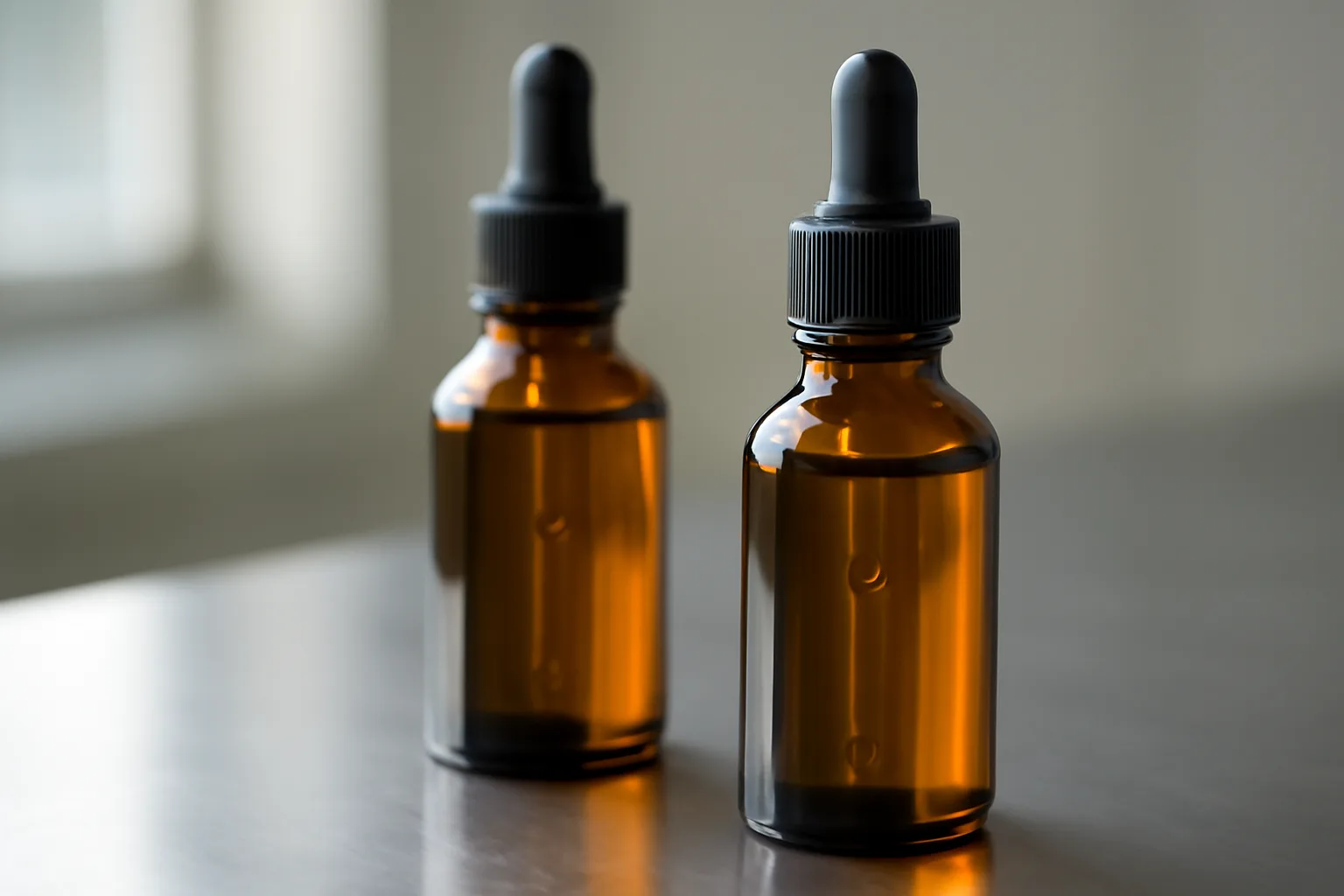
Copper PCA is copper bound to PCA (pyrrolidone carboxylic acid), a naturally occurring humectant molecule found in skin and hair. It's a simple copper salt complex, mostly used in shampoos, scalp serums, and some skincare as a copper delivery and moisture-binding ingredient. It shows up on ingredient lists as "copper PCA" or "copper PCA complex." GHK-Cu (copper peptide, glycyl-L-histidyl-L-lysine bound to copper) is a different animal entirely. It's a tripeptide, three amino acids in a specific sequence, that naturally chelates copper with very high affinity. This isn't a simple salt. The peptide backbone itself has documented biological signaling activity tied to tissue remodeling, first characterized in human plasma and studied for decades since [1]. The practical difference for a reader standing in front of two bottles: copper PCA is chosen for hair and scalp products largely on the logic that copper deficiency and hair changes are linked, plus its humectant properties. GHK-Cu is chosen because it has an actual published mechanistic and wound-healing literature that copper PCA does not have. That's not a marketing distinction, it's a literature-search distinction. If you search PubMed for "copper PCA" mechanism studies, you get very little. Search "GHK-Cu" and you get hundreds of papers across dermatology, orthopedics, pulmonology, and materials science.
Does copper PCA have research behind it the way GHK-Cu does?
Not to the same depth, and that's worth being honest about upfront. Copper PCA's use case rests mostly on general copper physiology (copper as a cofactor for lysyl oxidase and other enzymes involved in collagen and elastin crosslinking) rather than a dedicated study record for the PCA-copper complex itself. GHK-Cu, by contrast, has a review literature specifically built around it. A 2018 review in the International Journal of Molecular Sciences covers GHK-Cu's regenerative and protective actions in light of newer gene expression data [1]. A 2020 review in Aging Pathobiology and Therapeutics evaluates GHK's potential as an anti-aging peptide specifically [2]. A 2025 review in BioImpacts walks through GHK's use as a topical anti-wrinkle peptide, including the practical problems with formulating it, more than the upside [3]. There's no equivalent review stack for copper PCA. That doesn't mean copper PCA does nothing, copper is a real cofactor nutrient and topical copper delivery in general has a rationale. It means the specific ingredient "copper PCA" hasn't been isolated and studied the way GHK-Cu has. If your standard for choosing a product is "show me the study on this exact molecule," GHK-Cu clears that bar far more often.
Copper PCA vs copper peptides: side-by-side comparison
| Factor | Copper PCA | GHK-Cu (copper peptide) |
|---|---|---|
| Chemical type | Copper salt of PCA (humectant amino acid derivative) | Copper bound to a 3-amino-acid peptide (glycyl-L-histidyl-L-lysine) |
| Typical use | Hair/scalp serums, some skin humectant blends | Skin serums, wound dressings, injectable/provider-administered formulations |
| Dedicated review literature | Sparse, mostly folded into general copper nutrition | Multiple dedicated reviews (2018, 2020, 2025) [1][2][3] |
| Wound healing data | Limited direct study | Mouse scald wound healing acceleration via liposomal GHK-Cu [4] |
| Route diversity studied | Mostly topical | Topical, injectable/provider-administered, and biomaterial-embedded (hydrogels, fillers, coatings) [5][6][7] |
| Delivery challenge documented | Not well characterized in literature | Skin permeation and stability formally studied via liposome encapsulation [8][9] |
The honest takeaway from that table: copper PCA is a narrower ingredient with a narrower use case, mostly hair and scalp cosmetics. GHK-Cu is a peptide with a genuinely wide research footprint, from cosmetic dermatology to orthopedics to lung fibrosis models, though most of that footprint is still preclinical (cell culture and animal studies) rather than large human trials.
Is copper PCA the same thing as a copper peptide?
No. This is a common mix-up because both ingredients put "copper" on the label and both get pitched for hair and skin. But copper PCA has no peptide bond in the delivery molecule, it's copper attached to a small humectant acid. GHK-Cu is copper chelated to an actual tripeptide with a documented amino acid sequence. Think of it like the difference between iron in a multivitamin (iron salt) versus iron bound to a specific transport protein. Both deliver iron. The chemistry and the biological handling are not the same, and neither is the evidence base built around each form. For readers comparing shampoos: if a scalp product lists copper PCA, that's a different ingredient decision than a serum built around GHK-Cu read more on ghk-cu. Don't assume research on one transfers to the other.
Which one actually works better for skin, hair or wound healing?
For skin, the GHK-Cu literature is deeper and more specific. A 2023 study in the Journal of Cosmetic Dermatology found GHK-Cu combined with hyaluronic acid produced a stronger effect than either alone on collagen IV upregulation in fibroblast and ex-vivo skin tests [10]. A 2017 study in Wound Repair and Regeneration found GHK-Cu liposomes accelerated scald wound healing in mice by promoting cell proliferation and angiogenesis [4]. These are specific, citable mechanistic findings, not general copper-is-good-for-skin gesturing. For hair, neither ingredient has a strong dedicated human trial record that I can point to with confidence. Copper PCA's hair use rests on plausibility (copper enzyme cofactor roles) more than dedicated trials. GHK-Cu's hair-growth reputation online outruns its published evidence; the deep literature on GHK-Cu is overwhelmingly about skin, wound tissue, lung tissue, and orthopedic tissue, not scalp follicles specifically. For actual wound healing (cuts, burns, surgical sites), GHK-Cu has real preclinical traction. Beyond the burn study above, GHK-Cu tripeptide-hyaluronan conjugates showed combined antioxidant, osteogenic, and angiogenic effects in a 2025 Bioconjugate Chemistry study [11], and a 2025 Biomaterials Research paper describes a food-derived tripeptide-copper self-healing hydrogel built for infected wound healing [12]. Copper PCA doesn't have a comparable applied wound-healing study stack that I can find.
Does the route of delivery (topical vs injectable) change which one you'd even consider?
Yes, and this is where people conflate two very different product categories. Copper PCA is essentially topical-only in commercial use, mostly leave-on or rinse-out hair and skin products. There isn't a meaningful injectable copper PCA literature or product category to speak of. GHK-Cu has both. The cosmetic and wound-care literature (liposomal serums, wound hydrogels, biomaterial coatings) is topical or locally applied [4][6][13]. Separately, there's an emerging orthopedic and sports-medicine literature discussing peptide therapies, including copper-binding peptides, in the context of injectable, provider-administered protocols. A 2026 review in the Journal of the American Academy of Orthopaedic Surgeons Global Research & Reviews covers therapeutic peptides in orthopedics broadly, including copper-related agents [14]. A 2026 primer in the American Journal of Sports Medicine walks orthopedic and sports medicine physicians through injectable peptide therapy considerations [15]. A 2026 Sports Medicine review specifically weighs safety and efficacy questions for approved versus unapproved peptide therapies used for musculoskeletal injury and athletic performance [16], which is a useful reality check: "unapproved" here means most of these applications sit outside FDA-approved drug indications. That orthopedic literature is not the same evidence as the topical wound-healing studies. A cell-culture or animal-model finding about GHK-Cu accelerating wound closure does not automatically justify an injectable protocol for tendon or joint injury, and the reviews above are largely describing an emerging, provider-supervised research space, not a settled treatment standard. If you're looking at ghk-cu peptides injections content, treat topical and injectable evidence as two separate literatures that happen to share a molecule.
Is copper safe to put on skin or inject, and does the form matter?
Copper is not automatically benign just because it's a trace nutrient your body needs. Systemic copper accumulation is a real toxicological concern independent of which delivery form you're discussing; this is why any provider-administered copper peptide protocol should include a conversation about total copper exposure across diet, supplements, and topical or injectable products, more than the product itself. On the injectable side specifically, GHK-Cu is not an FDA-approved drug. You can confirm this yourself by searching Drugs@FDA, the FDA's own database of approved drug products [17]; GHK-Cu does not appear there as an approved therapeutic. That matters because it puts injectable GHK-Cu preparations in the compounded-drug space rather than the approved-drug space, and compounded preparations are governed by a different, narrower set of federal rules. Under federal law, compounding pharmacies can only prepare formulations using bulk drug substances that meet specific criteria under 21 U.S.C. 353a, the pharmacy compounding statute [18]. FDA maintains bulk drug substance lists for both 503A compounding (21 CFR 216.23) [19] and 503B outsourcing facilities (21 CFR 216.24) [20], and also keeps a running list of substances nominated for compounding use that FDA is still evaluating [21]. Whether a given copper peptide is on an accepted list, or still under evaluation, changes what a legitimate compounding pharmacy can legally prepare. That's a meaningfully different oversight structure than a cosmetic serum sold over the counter, which falls under cosmetic labeling rules (see 21 CFR 201.128 on intended use claims) [22] rather than drug compounding law. For a fuller breakdown of adverse effect patterns and copper load concerns, see ghk-cu side effects.
Why does GHK-Cu formulation quality vary so much between products?
Because getting a copper-peptide complex to actually survive in a stable, skin-penetrating form is a harder formulation problem than it looks. A 2025 study in Molecules directly asks whether researchers are even equipped to reliably measure GHK-Cu skin permeation from liposome-encapsulated formulas, which tells you the measurement science itself is still being worked out [8]. A related 2023 Pharmaceutics paper on liposomes as carriers for GHK-Cu in cosmetic applications, and a 2024 Electrophoresis paper using capacitary electrophoresis-ICP-MS/MS to monitor GHK-Cu encapsulation in liposomes, both exist because plain GHK-Cu in a bottle is not straightforward to verify or stabilize [9][23]. This is a real practical warning for shoppers: a serum that lists "copper tripeptide" on the label tells you almost nothing about whether the complex is intact, properly concentrated, or capable of penetrating skin in that specific formulation. Copper PCA doesn't carry the same formulation fragility concern because it's a simpler, more stable salt complex, but it also doesn't need the same sophistication because the underlying molecule isn't trying to do as much biologically.
What other conditions has GHK-Cu been studied for, beyond skin?
This is where GHK-Cu's literature genuinely outpaces copper PCA's by a wide margin, and it's worth knowing the range even if most of it is animal-model and mechanistic work rather than human clinical trials. Lung tissue: GHK-Cu reduced lung inflammation and fibrosis in a bleomycin-induced pulmonary fibrosis model [24], attenuated lung inflammation and fibrosis in a silicosis model by targeting peroxiredoxin 6 [6], and ameliorated lipopolysaccharide-induced acute lung injury in mice [25]. Muscle and metabolic tissue: a 2023 study in the Journal of Cachexia, Sarcopenia and Muscle found GHK-Cu rescued cigarette smoking-induced skeletal muscle dysfunction via a sirtuin 1-dependent pathway in an animal model [26]. Gut tissue: a 2025 Frontiers in Pharmacology study explored GHK-Cu's beneficial effects in an experimental colitis model [27]. Orthopedic tissue: a 2015 study in the Journal of Orthopaedic Research found GHK-Cu(II) transiently improved healing outcomes in a rat model of ACL reconstruction, with the word "transiently" doing real work there, the benefit didn't appear to be permanent or fully durable [28]. Separately, a 2026 Journal of Controlled Release paper describes a Golgi-targeted copper delivery strategy aimed at fascia regeneration . None of this is copper PCA's territory. Copper PCA has never been positioned or studied as a systemic tissue-repair agent; it's a topical cosmetic ingredient. GHK-Cu's research footprint spans lungs, muscle, gut, and joints, almost entirely in cell and animal models, which is exactly why the orthopedic reviews above are careful to frame injectable use as an emerging, not established, practice [14][15][16].
How do I know which product I'm actually buying, and does sourcing matter?
Read the actual ingredient list, not the marketing copy. "Copper peptide" and "copper PCA" are not interchangeable terms and a page that uses them loosely is a page that hasn't done its homework. Look for the specific INCI name: "copper PCA" or "Copper Palmitoyl..." derivatives are salts and conjugates, while "Copper Tripeptide-1" is the standard INCI name tied to GHK-Cu specifically. For topical GHK-Cu, formulation stability is the differentiator between products, given the permeation and encapsulation challenges documented above [8][9]. For anyone considering a provider-administered injectable route rather than a cosmetic topical, the sourcing question changes entirely: you want a preparation compounded by a licensed pharmacy under a provider's oversight, not a product bought directly online for self-injection. See buy ghkcu for how the provider-reviewed route works, and ghk-cu dosage for how topical and provider-guided dosing protocols differ. Copper Peptide Direct's role here is informational and points readers toward provider-reviewed options and the pharmacy partners that actually fulfill those prescriptions; it doesn't compound or manufacture anything itself.
Frequently asked questions
Is copper PCA the same as GHK-Cu?
No. Copper PCA is copper bound to a humectant amino acid derivative, used mostly in hair and scalp cosmetics. GHK-Cu is copper chelated to a specific three-amino-acid peptide (glycyl-L-histidyl-L-lysine) with a much deeper published research record in wound healing and tissue repair [1][2][3].
Which one is better for hair growth, copper PCA or copper peptides?
Neither has a strong dedicated human hair-growth trial record. Copper PCA's use in hair products rests on general copper cofactor physiology. GHK-Cu's hair reputation outruns its published evidence; its deep literature is mostly about skin, wound, lung, and joint tissue, not scalp follicles specifically.
Can copper peptides be injected, or only used topically?
Most of the strongest GHK-Cu evidence (wound healing, collagen signaling) is topical or locally applied [4][10]. Separate orthopedic and sports-medicine literature discusses injectable peptide protocols under provider supervision [14][15][16], but GHK-Cu is not FDA-approved as an injectable drug [17], so this route sits in the compounded-drug space, not the approved-drug space.
Is copper PCA or GHK-Cu safer to use long-term?
Copper accumulation is a real concern with any copper-delivering product, regardless of form. Topical copper PCA and topical GHK-Cu are both generally considered low systemic-absorption products, but no copper product should be treated as automatically benign, especially combined with oral copper supplements. See ghk-cu side effects for accumulation and interaction details.
Does copper PCA have any published wound-healing studies?
Not a dedicated literature comparable to GHK-Cu's. GHK-Cu has specific published wound-healing findings, including a 2017 mouse scald-wound study showing accelerated healing via liposomal GHK-Cu [4], and 2025 work on tripeptide-copper hydrogels for infected wounds [12]. Copper PCA's evidence base is thinner and more indirect.
Why is GHK-Cu often delivered in liposomes instead of a plain serum?
Because plain GHK-Cu is hard to stabilize and verify in skin-penetrating form. Studies in Molecules (2025) and Pharmaceutics (2023) specifically address liposomal encapsulation to improve skin permeation and measurement reliability of GHK-Cu formulas [8][9], a formulation challenge copper PCA, as a simpler salt, doesn't carry to the same degree.
Is GHK-Cu FDA-approved?
No. A search of Drugs@FDA, FDA's approved drug products database, shows no approved GHK-Cu drug product [17]. Any injectable or provider-administered GHK-Cu preparation is a compounded product, governed by the pharmacy compounding statute (21 U.S.C. 353a) and FDA's bulk drug substance lists, not by standard drug approval [18][19][20].
What's the difference in evidence quality between copper PCA and GHK-Cu studies?
GHK-Cu has multiple dedicated reviews (2018, 2020, 2025) plus dozens of primary mechanistic and animal studies across skin, lung, muscle, gut, and joint tissue [1][2][3][24][26][27][28]. Copper PCA's evidence is mostly folded into general copper nutrition literature rather than studied as its own distinct complex.
Can copper peptides help with orthopedic or joint healing?
There's early, mostly animal-model evidence. A 2015 rat ACL reconstruction study found GHK-Cu(II) transiently improved healing outcomes [28], and 2026 reviews describe an emerging interest in copper-related peptides for orthopedic and sports medicine use [14][15][16]. This is not the same as an established human treatment protocol.
Does copper PCA cause the same skin reactions as copper peptides?
Both can theoretically cause irritation in sensitive skin, as with most active cosmetic ingredients, but there isn't a large comparative irritation dataset for copper PCA specifically. GHK-Cu's topical safety profile is discussed more in the dermatology literature reviewed in ghk-cu-side-effects.
Should I pick a product based on whether it says copper PCA or copper peptide?
Yes, treat them as different ingredient decisions. If you want a product backed by a specific, citable mechanistic and wound-healing literature, GHK-Cu (listed as Copper Tripeptide-1) has that. Copper PCA is a reasonable, simpler humectant-copper ingredient but doesn't carry the same dedicated research weight.
What does 'transiently improved' mean in the GHK-Cu ACL study, and why does it matter?
In the 2015 Journal of Orthopaedic Research study, GHK-Cu(II) improved healing outcomes in a rat ACL reconstruction model, but the effect was described as transient rather than durable [28]. That word matters: it suggests an early advantage that may fade, not a permanent structural fix, and it's a reason to be cautious about extrapolating to human joint treatment.
Sources
- International Journal of Molecular Sciences, 2018 (PMID 29986520): Review of GHK-Cu's regenerative and protective actions in light of newer gene expression data
- Aging Pathobiology and Therapeutics, 2020 (PMID 35083444): Review evaluating GHK's potential specifically as an anti-aging peptide
- BioImpacts, 2025 (PMID 39963574): Review of topically applied GHK as an anti-wrinkle peptide covering advantages and formulation problems
- Wound Repair and Regeneration, 2017 (PMID 28370978): GHK-Cu liposomes accelerated scald wound healing in mice by promoting cell proliferation and angiogenesis
- Colloids and Surfaces B: Biointerfaces, 2025 (PMID 40716276): Injectable hydroxyapatite microsphere filler loaded with GHK-Cu tripeptide for anti-inflammatory and antioxidant effect
- Redox Biology, 2024 (PMID 38879894): GHK-Cu tripeptide complex attenuates lung inflammation and fibrosis in silicosis by targeting peroxiredoxin 6
- Materials Science & Engineering C, 2019 (PMID 31500015): Electrophoretic deposition of GHK-Cu loaded MSN-chitosan coatings with pH-responsive copper release
- Molecules, 2025 (PMID 39795193): Study questioning readiness to reliably measure skin permeation of liposome-encapsulated GHK-Cu
- Pharmaceutics, 2023 (PMID 37896245): Liposomes studied as carriers of GHK-Cu tripeptide for cosmetic application
- Journal of Cosmetic Dermatology, 2023 (PMID 37062921): GHK-Cu combined with hyaluronic acid on collagen IV upregulation in fibroblast and ex-vivo skin tests
- Bioconjugate Chemistry, 2025 (PMID 40123442): GHK-hyaluronan copper conjugates show combined antioxidant, osteogenic and angiogenic effects
- Biomaterials Research, 2025 (PMID 39902373): Food-derived tripeptide-copper self-healing hydrogel developed for infected wound healing
- JAAOS Global Research & Reviews, 2026 (PMID 41490200): Review of therapeutic peptides in orthopedics covering applications, challenges and future directions
- American Journal of Sports Medicine, 2026 (PMID 41476424): Primer for orthopedic and sports medicine physicians on injectable peptide therapy
- Sports Medicine, 2026 (PMID 41966639): Review of safety and efficacy of approved and unapproved peptide therapies for musculoskeletal injuries and athletic performance
- FDA, Drugs@FDA database: Searchable database confirms GHK-Cu has no FDA-approved drug product listing
- 21 U.S.C. 353a, pharmacy compounding statute: Federal statute governing conditions under which compounding pharmacies may prepare drug formulations
- 21 CFR 216.23, the 503A Bulks List: Federal regulation listing bulk drug substances approved for 503A pharmacy compounding
- 21 CFR 216.24, the 503B Bulks List: Federal regulation listing bulk drug substances approved for 503B outsourcing facility compounding
- FDA, bulk drug substances nominated for compounding (current list): FDA's running list of substances nominated for compounding use still under agency evaluation
- 21 CFR 201.128, meaning of intended uses: Federal regulation defining intended use, relevant to distinguishing cosmetic claims from drug claims
- Electrophoresis, 2024 (PMID 39451062): CE-ICP-MS/MS method developed to monitor GHK-Cu cosmetic encapsulation in liposomes
- Life Sciences, 2020 (PMID 31809714): GHK-Cu showed protective effects in bleomycin-induced pulmonary fibrosis via anti-oxidative and anti-inflammatory pathways
- Oncotarget, 2016 (PMID 27517151): GHK-Cu complex ameliorated lipopolysaccharide-induced acute lung injury in mice
- Journal of Cachexia, Sarcopenia and Muscle, 2023 (PMID 36905132): GHK-Cu rescued cigarette smoking-induced skeletal muscle dysfunction via a sirtuin 1-dependent pathway
- Frontiers in Pharmacology, 2025 (PMID 40672369): GHK-Cu showed beneficial effects in an experimental colitis model
- Journal of Orthopaedic Research, 2015 (PMID 25731775): GHK-Cu(II) transiently improved healing outcome in a rat model of ACL reconstruction
- Journal of Controlled Release, 2026 (PMID 41371501): Golgi-targeted copper delivery strategy developed for fascia regeneration