Last updated 2026-07-24
TL;DR
There's no single "best" GHK-Cu topical because no product is FDA-approved and brands rarely publish penetration or stability data. The strongest evidence favors liposome-encapsulated formulations over plain aqueous serums, since intact GHK-Cu is a hydrophilic tripeptide that struggles to cross the stratum corneum unencapsulated [1][2]. Judge products by formulation type, copper source, and third-party testing, not marketing claims.
Is there actually a "best" GHK-Cu topical, or is that the wrong question?
Honestly, it's a little bit the wrong question. No topical GHK-Cu product carries FDA approval for any medical claim, and the cosmetic peptide market has no standardized potency or purity requirement the way a prescription drug does. So "best" can't mean "most proven" in the way it would for an approved drug. It has to mean something narrower: best formulation science, best documented stability, best sourcing transparency. The research record on GHK-Cu itself is genuinely deep for a peptide, deeper than most things sold in serum bottles. It includes work on wound healing, anti-wrinkle mechanisms, antioxidant effects, and gene expression changes tied to tissue remodeling [1][2][3]. But almost all of that record is either cell-culture, animal-model, or mechanistic chemistry work, not blinded human trials of a specific retail serum. When you buy a jar off a shelf, you're buying a delivery system built around a peptide with real preclinical support, not a peptide with a specific proven face cream behind it. So the buyer-reality version of "best" is this: which formulation approach gets the most GHK-Cu to where it needs to go, intact, and which sourcing practices reduce your risk of buying something that's mostly water and marketing copy. That's what this article actually answers.
What does the study record say GHK-Cu does in skin?
GHK-Cu's dermatology literature covers collagen signaling, wound repair, and antioxidant activity, mostly from cell and animal work rather than large human trials. A 2018 review in the International Journal of Molecular Sciences describes GHK-Cu's regenerative and protective actions in light of newer gene expression data, tying it to tissue remodeling pathways [1]. A 2020 review in Aging Pathobiology and Therapeutics covers GHK's proposed anti-aging mechanisms [4]. A 2025 review in BioImpacts specifically evaluates GHK as a topical anti-wrinkle peptide and discusses both its advantages and the practical problems with using it that way, including delivery and stability issues [2]. Older foundational work, like the 2008 paper on GHK and tissue remodeling in the Journal of Biomaterials Science, Polymer Edition, laid out the copper-binding tripeptide's role in extracellular matrix signaling that later studies keep building on [3]. Wound healing has some of the more concrete data. A 2017 study in Wound Repair and Regeneration found that GHK-Cu-loaded liposomes accelerated scald wound healing in mice by promoting cell proliferation and angiogenesis [5]. That's a mouse burn model, not a human cosmetic trial, but it's one of the more direct "this specific formulation did this specific measurable thing" results in the topical literature. A related 2023 study looked at GHK-Cu paired with hyaluronic acid and found it upregulated collagen IV in fibroblast cultures and ex-vivo skin tests [6]. Again: cell and tissue-sample work, not a clinical trial with human subjects tracked over months. None of this adds up to "proven to reduce wrinkles in humans by X percent." It adds up to a peptide with a genuinely unusual amount of mechanistic and animal-model support, and very little in the way of the large controlled human cosmetic trials that would let you rank actual products.
Why is getting GHK-Cu into skin harder than the marketing suggests?
GHK-Cu is a small, hydrophilic, charged tripeptide-copper complex, and that chemistry is exactly the profile that struggles to cross the lipid-rich stratum corneum unassisted. This is the core practical problem that separates a well-formulated topical from a bottle of expensive flavored water. A 2025 paper in Molecules, titled bluntly "Are We Ready to Measure Skin Permeation of Modern Antiaging GHK-Cu Tripeptide Encapsulated in Liposomes?", takes on this exact question and highlights how difficult it still is to reliably measure how much GHK-Cu actually penetrates skin, even in encapsulated form [7]. That title alone tells you something: as of 2025, researchers were still working out how to measure penetration accurately, let alone confirm which commercial products achieve it. Liposome encapsulation is the delivery strategy with the most direct research behind it. A 2023 study in Pharmaceutics examined liposomes as carriers for GHK-Cu specifically for cosmetic application and evaluated their behavior as delivery vehicles [8]. A 2024 paper in Electrophoresis used capacitance electrophoresis coupled with ICP-MS/MS, a serious analytical chemistry technique, specifically to monitor how well GHK-Cu was encapsulated in liposomes for cosmetic use [9]. That's the kind of quality-control method you'd want a manufacturer using, more than trusting a listed ingredient percentage. What this means for a buyer: a serum that lists "copper tripeptide-1" in a plain aqueous or gel base has essentially no delivery advantage documented in the literature. A liposomal or lipid-encapsulated formulation has actual published chemistry method behind the idea, even if no one has published a head-to-head human trial proving one retail product outperforms another.
How do I read a GHK-Cu serum label like someone who's read the research?
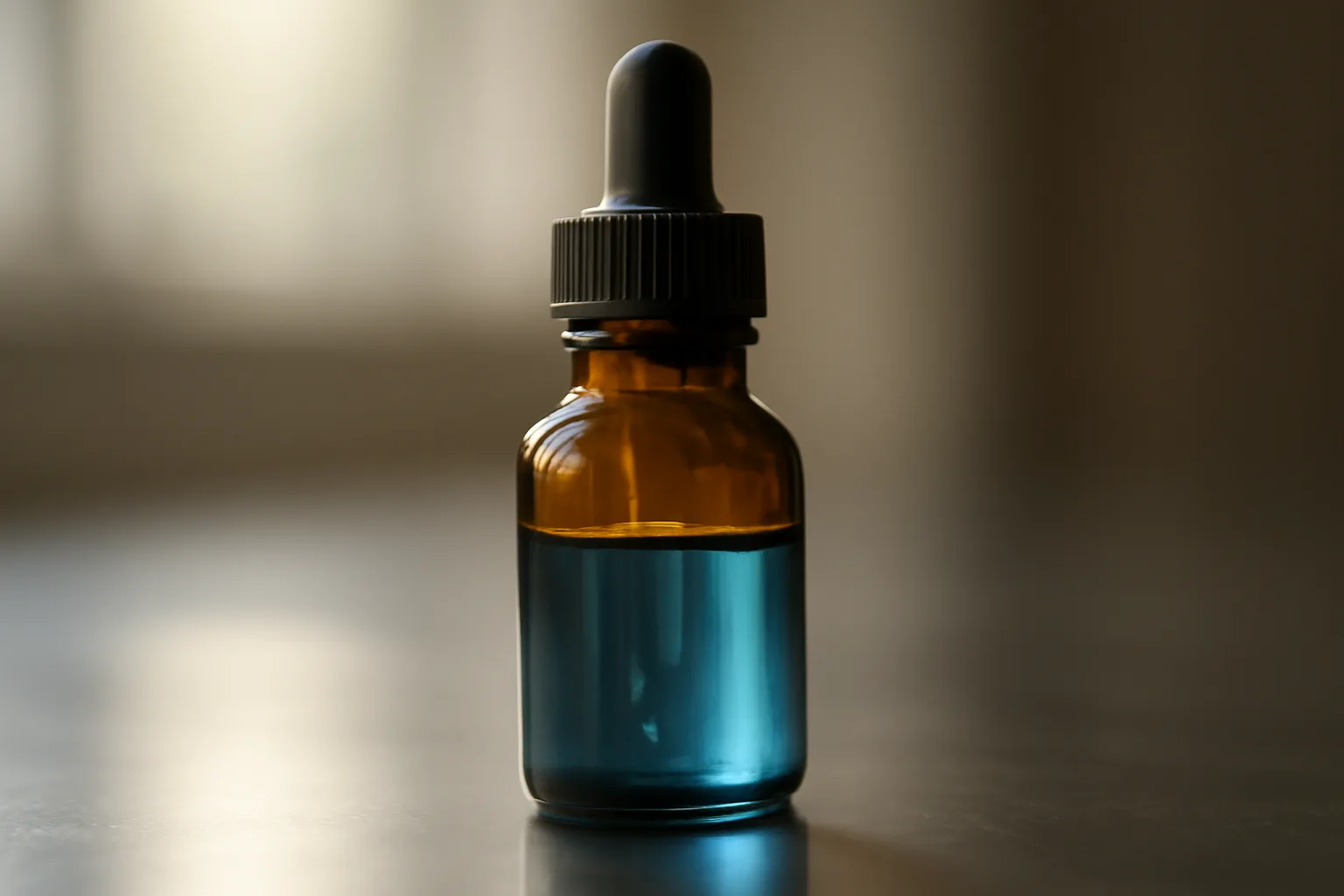
Look for three things on the label and in the brand's disclosures: the delivery system, the copper source, and any third-party testing claim. A label that just says "copper peptide complex" without specifying liposomal or encapsulated delivery is telling you less than it should. Delivery system. Terms like "liposomal," "encapsulated," or "nano-carrier" at least point toward the approach that has published analytical chemistry behind it [7][8][9]. Plain aqueous copper tripeptide in a serum has real mechanistic literature behind the molecule itself but no penetration advantage documented for that format. Concentration and stability. Most cosmetic GHK-Cu serums run somewhere in the 1-4% range for the copper peptide complex, though there's no regulatory standard forcing accurate labeling of this, and independent testing of retail serums for actual peptide content is rare. Copper peptide complexes are also sensitive to light, air, and pH drift over time, so packaging (opaque, airless pump) matters more than people think. Color. Genuine GHK-Cu solution has a characteristic blue color from the copper-peptide complex. A serum claiming GHK-Cu that's colorless is worth questioning, though color alone doesn't confirm concentration or purity, and a blue tint can come from other copper sources too. Third-party testing. Very few cosmetic brands publish certificates of analysis for peptide content, heavy metals, or microbial contamination. If a brand does publish one, that's meaningfully more transparent than the category norm. If you want more detail on how to vet a supplier's documentation before buying, see buy ghkcu.
Topical vs injectable GHK-Cu: does the skin evidence carry over?
No, and this is the single most important distinction in the whole GHK-Cu conversation. Topical evidence and injectable evidence come from almost entirely different bodies of research, tested at different doses, in different tissues, with different oversight. The topical and cosmetic literature (liposome delivery, wrinkle mechanisms, wound dressings) is what's covered above. The injectable literature is a separate, newer, and in some ways more clinically-oriented conversation, largely in sports medicine and orthopaedics. A 2026 review in the Journal of the American Academy of Orthopaedic Surgeons: Global Research & Reviews covers therapeutic peptides in orthopaedics broadly, including applications and open challenges [10]. A 2026 primer in The American Journal of Sports Medicine specifically addresses injectable peptide therapy for orthopaedic and sports medicine physicians [11]. A 2026 review in Sports Medicine looks at safety and efficacy across both approved and unapproved peptide therapies used for musculoskeletal injuries and athletic performance, a useful reminder that "peptide therapy" spans very different regulatory categories [12]. A 2015 study in the Journal of Orthopaedic Research tested GHK-Cu(II) injections in a rat model of ACL reconstruction and found the complex transiently improved healing outcomes, meaning the effect didn't hold up as a lasting difference . That word "transiently" matters: it's an honest, unglamorous result, and it's the kind of nuance that gets lost when a product page just cites "studies show." Injectable GHK-Cu is also legally a different category. Compounded injectable preparations fall under pharmacy compounding law, specifically 21 U.S.C. 353a governing compounding under section 503A [13], and FDA maintains bulk drug substance lists under 21 CFR 216.23 (503A) [14] and 21 CFR 216.24 (503B) [15] that determine what a compounding pharmacy can legally use. None of that applies to a cosmetic serum sitting on a shelf. If you're weighing the injectable route specifically, read ghk cu peptides injections and ghk-cu peptide injection before and after before assuming topical findings apply.
Are cosmetic serums and provider-dispensed GHK-Cu the same product?
No. They're regulated differently, sourced differently, and often dosed at different orders of magnitude, and conflating them is one of the most common mistakes buyers make. A cosmetic serum is regulated as a cosmetic, not a drug, as long as the marketing doesn't make disease or structural-change claims under 21 CFR 201.128's definition of intended use [16]. That's a much lighter regulatory bar than a drug product. There's no premarket approval, no required efficacy trial, no standardized purity testing mandated by the FDA for a copper peptide serum. A provider-dispensed preparation, by contrast, if injectable or otherwise compounded, moves under pharmacy compounding law and FDA's bulk drug substance framework [13][14][15]. That doesn't mean every compounded GHK-Cu preparation is rigorously tested either, compounding oversight varies significantly by state board and by whether the pharmacy is a 503A or 503B facility, but it's a genuinely different oversight structure with different accountability than a cosmetics shelf product. The practical takeaway: never assume a serum's marketing claims about "clinical-grade" or "pharmaceutical-grade" formulation mean it went through the same scrutiny as a provider-dispensed product. Those terms have no fixed legal meaning on a cosmetic label.
What does GHK-Cu's non-dermatology research tell us about how it behaves in the body?
A surprising amount of GHK-Cu's most rigorous chemistry comes from fields that have nothing to do with skincare, and that work is actually useful for understanding the molecule's behavior, even if it doesn't directly validate any face cream. Analytical chemists have used GHK-Cu's copper-binding behavior to build sensors: a 2023 paper in Analytical Chemistry describes an ultrasensitive, label-free method for detecting copper ions using GHK-modified nanochannels [17]. A 2026 paper in Biosensors examines a laccase-like enzymatic property of GHK-Cu and applies it to colorimetric sensing of phenolic compounds . None of that is skin research, but it confirms GHK-Cu's copper-binding chemistry is well-characterized and reproducible, which matters because that same binding chemistry is what any topical formulation depends on to stay stable in a bottle. GHK-Cu also shows up in materials science, oddly: a 2021 paper in ACS Applied Materials & Interfaces used GHK-Cu to help tune the crystallinity of polymer solar cells [18]. That's a genuinely strange crossover and a good reminder that a molecule showing up across totally unrelated fields doesn't automatically mean it's a magic ingredient for wrinkles. It means it's a chemically interesting, copper-chelating small peptide that different specialties have found different uses for.
What does GHK-Cu research beyond skin (lungs, muscle, bone) tell a topical buyer?
Quite a lot, actually, because it shows how consistently the compound's antioxidant and anti-inflammatory mechanisms repeat across totally different tissues, which is reassuring mechanistically even though none of it validates a face serum directly. In lung tissue, a 2020 study in Life Sciences found GHK-Cu had protective effects against bleomycin-induced pulmonary fibrosis, working through anti-oxidative stress and anti-inflammatory pathways [19]. A 2016 study in Oncotarget found the tripeptide-copper complex ameliorated lipopolysaccharide-induced acute lung injury in mice [20]. A 2024 study in Redox Biology found GHK-Cu attenuated lung inflammation and fibrosis in a silicosis model by targeting an antioxidant enzyme called peroxiredoxin 6 [21]. In muscle, a 2023 study in the Journal of Cachexia, Sarcopenia and Muscle found GHK-Cu rescued cigarette-smoking-induced skeletal muscle dysfunction in an animal model through a pathway involving sirtuin 1 [14]. And in aging biology more broadly, a 2026 study in Biogerontology found GHK-Cu delayed aging in the roundworm C. elegans via coordinated regulation of mitochondrial function and activation of two longevity pathways, DAF-16 and SKN-1 [22]. All of that is animal or model-organism data, and none of it proves anything about a face cream. But it does build a consistent picture: GHK-Cu's antioxidant and anti-inflammatory signaling shows up again and again across different tissue types and species. That consistency is part of why the compound keeps attracting research funding, even without a slam-dunk human cosmetic trial to point to.
How much copper does a topical really deliver, and should I worry about accumulation?
This is the honest safety question most serum marketing skips entirely, and it deserves a straight answer: copper is not automatically benign just because it's applied to skin instead of injected. Copper is an essential trace mineral, but the body tightly regulates how much it absorbs and stores, and chronic excess copper exposure is a real toxicological concern, most seriously documented in conditions like Wilson's disease where copper accumulates in the liver and brain. Topical GHK-Cu absorption through intact skin is thought to be low compared to oral or injectable routes, largely because of the stratum corneum penetration barrier discussed above [7], but "low" is not "zero," and there's no published long-term human safety data specifically tracking copper accumulation from years of daily cosmetic GHK-Cu use. Practical precautions: don't apply GHK-Cu topicals to broken skin, open wounds, or right after microneedling or laser procedures without checking with whoever performed the procedure, since a compromised skin barrier changes absorption. Don't combine multiple copper-containing products (serum plus copper-infused pillowcase plus copper supplement) without thinking about cumulative exposure. And if you're on medication for a copper-related condition, or have any liver condition, mention topical copper peptide use to your physician, the same way you'd mention any topical medication. For a fuller rundown of interaction and side effect concerns, see ghk-cu side effects.
What's a realistic price range for a well-formulated GHK-Cu topical, and what am I paying for?
Retail GHK-Cu serums generally run somewhere between $25 and $90 for a one-to-two-month supply, though there's no standardization forcing that price to reflect actual peptide concentration or delivery quality. A $30 serum and a $80 serum can both list "copper tripeptide-1" as an ingredient with wildly different actual concentrations and formulation quality behind that label, because concentration disclosure isn't mandated the way it is for drug products. What you're paying more for, when a product is genuinely better formulated, isn't the peptide itself (GHK-Cu as a raw material isn't especially expensive) but the delivery engineering: liposome encapsulation processes, stabilization against oxidation, opaque or airless packaging, and any documented testing [7][8][9]. Those cost real money to do properly and cheap manufacturers often skip them. If you want to understand realistic dosing ranges people discuss for topical use, and how that compares with injectable dosing protocols, ghk cu dosage walks through what's actually published versus what's just repeated online. And if you're trying to sort credible suppliers from resellers just dropping the ingredient name into a generic serum base, buy ghkcu covers what documentation to actually ask for.
Should I go topical, injectable, or ask a provider about a compounded option?
For general cosmetic goals, wrinkle-adjacent skin support, that's what the topical literature is oriented toward, and a well-formulated liposomal topical is a reasonable, low-risk starting point [2][8]. For anything involving deeper tissue repair, post-procedure healing, or musculoskeletal application, the relevant literature shifts to the injectable and orthopaedic space, and that's a conversation to have with a prescriber, not a decision to make off a product page [10][11][12]. The honest reality check: nobody has published a large, blinded, human clinical trial comparing specific retail GHK-Cu topical products against each other or against placebo for wrinkle reduction. The topical literature is strong on mechanism (why GHK-Cu might work) and weak on head-to-head human outcome data (which product, at what concentration, does what, measurably, over what time frame). If a brand claims a specific percentage improvement in wrinkle depth or elasticity from their exact formula, ask for the actual published trial. Usually there isn't one specific to that product; the citation, if given at all, is usually to the general GHK-Cu mechanism literature, not a trial of that bottle. For anyone looking at provider-reviewed options rather than open-market serums, Copper Peptide Direct works with a provider-reviewed pathway and names Tailor Made Compounding as the fulfilling pharmacy partner for those preparations, which at least puts the product under pharmacy compounding oversight rather than cosmetics-only rules. That's a meaningfully different oversight path than an unregulated serum, even though it still isn't the same as an FDA-approved drug.
How does GHK-Cu compare to other options for the same delivery-and-evidence questions?
| Factor | Plain aqueous GHK-Cu serum | Liposomal GHK-Cu serum | Provider-dispensed compounded preparation |
|---|---|---|---|
| Regulatory category | Cosmetic (21 CFR 201.128) [16] | Cosmetic (21 CFR 201.128) [16] | Compounding under 21 U.S.C. 353a [13] |
| Delivery evidence | Minimal penetration data | Some liposome delivery chemistry published [7][8][9] | Varies by pharmacy, injectable bypasses skin barrier entirely |
| Concentration disclosure | Not mandated | Not mandated | Set by prescription/formulation record |
| Typical price | $25-$60 | $40-$90 | Varies, provider quote |
| Oversight body | None premarket | None premarket | State pharmacy board, 503A/503B rules [14][15] |
This table isn't ranking "better" or "worse" outcomes, because no one has run that head-to-head trial. It's ranking oversight and delivery evidence, which is the honest axis buyers actually have data on.
Frequently asked questions
What is the best GHK-Cu topical to buy?
There's no single best product because no topical GHK-Cu has been through FDA-approved clinical trials for a cosmetic claim. The most defensible choice, based on the literature, is a liposome-encapsulated formulation, since that delivery method has published analytical chemistry behind it [11][12][23], over a plain aqueous serum with no penetration data.
Does topical GHK-Cu actually penetrate the skin?
Partially, and it depends heavily on formulation. GHK-Cu is a small hydrophilic peptide that struggles to cross the stratum corneum unassisted. A 2025 study in Molecules notes researchers are still working out reliable methods to measure how much even liposome-encapsulated GHK-Cu actually penetrates skin [11].
Is GHK-Cu FDA-approved for skin or wound healing?
No. There's no FDA-approved GHK-Cu drug product for skin, wrinkles, or wound healing. Cosmetic serums containing it are regulated as cosmetics under intended-use rules like 21 CFR 201.128 [10], not as approved drugs, and no product appears in the FDA's approved drug database for this use.
What's the difference between topical and injectable GHK-Cu?
Topical GHK-Cu is applied to skin and relies on penetrating the stratum corneum, with cosmetic-level oversight. Injectable GHK-Cu bypasses the skin barrier entirely and falls under pharmacy compounding law (21 U.S.C. 353a) [7]. The injectable literature, largely in orthopaedics and sports medicine [4][5][6], does not transfer to or validate topical cosmetic use.
Can copper from a GHK-Cu serum build up to unsafe levels?
There's no published long-term human data specifically tracking copper accumulation from years of topical GHK-Cu use. Absorption through intact skin is believed to be low given the penetration barrier [11], but low isn't zero, and anyone with a copper-related condition (like Wilson's disease) or liver issues should tell their doctor about topical copper peptide use.
Do liposomal GHK-Cu serums work better than regular serums?
The published chemistry favors liposomal delivery for getting GHK-Cu past the skin barrier intact, with studies in Pharmaceutics and Electrophoresis specifically developing and monitoring liposome encapsulation for this peptide [12][23]. No trial has directly compared a specific liposomal retail product against a plain serum for clinical skin outcomes, though.
How much does GHK-Cu topical usually cost?
Retail GHK-Cu serums generally run $25 to $90 for a one-to-two-month supply. Price doesn't reliably track concentration or formulation quality since disclosure isn't mandated for cosmetics, so a cheaper serum can occasionally be similarly formulated to a pricier one, and vice versa.
Is GHK-Cu proven to reduce wrinkles in humans?
The mechanistic and animal-model literature on GHK-Cu's collagen and tissue remodeling effects is genuinely deep [1][3][24], but large blinded human clinical trials of specific commercial wrinkle products are not part of the published record reviewed here. Treat wrinkle-reduction percentage claims on product pages with real skepticism unless a specific trial is cited.
What should I check on a GHK-Cu serum label before buying?
Look for whether it specifies a delivery system (liposomal or encapsulated, more than "copper peptide complex"), whether the brand discloses concentration, whether packaging is opaque or airless (copper peptides degrade with light and air exposure), and whether any third-party testing or certificate of analysis is available.
Is provider-dispensed GHK-Cu the same as a cosmetic serum?
No. Cosmetic serums are regulated as cosmetics with no premarket approval requirement. Provider-dispensed and compounded preparations fall under pharmacy compounding law (21 U.S.C. 353a) and FDA bulk drug substance lists (21 CFR 216.23, 216.24) [7][8][9], a genuinely different oversight structure, though quality still varies by pharmacy.
Does GHK-Cu help with wound healing, based on real studies?
Animal studies support this specifically for certain formulations: a 2017 study found GHK-Cu-loaded liposomes accelerated scald wound healing in mice via cell proliferation and angiogenesis [14], and a 2025 study developed a tripeptide-copper self-healing hydrogel for infected wound healing [27]. These are preclinical models, not human clinical trial results.
Why is GHK-Cu solution blue, and does that mean it's authentic?
The blue color comes from the copper-peptide complex itself. A colorless product claiming GHK-Cu content is worth questioning, but color alone doesn't confirm the concentration or purity of the formulation, since other copper compounds can also produce blue tints.
Sources
- International Journal of Molecular Sciences, 2018 (PMID 29986520): GHK-Cu's regenerative and protective actions are tied to tissue remodeling pathways identified through gene expression data
- Aging Pathobiology and Therapeutics, 2020 (PMID 35083444): Review of GHK's proposed mechanisms as an anti-aging peptide
- BioImpacts, 2025 (PMID 39963574): Review of topical GHK as an anti-wrinkle peptide covering advantages and delivery/stability problems
- Journal of the American Academy of Orthopaedic Surgeons: Global Research & Reviews, 2026 (PMID 41490200): Review of therapeutic peptide applications and challenges in orthopaedics
- The American Journal of Sports Medicine, 2026 (PMID 41476424): Primer for orthopaedic and sports medicine physicians on injectable peptide therapy
- Sports Medicine (Auckland, N.Z.), 2026 (PMID 41966639): Review of safety and efficacy of approved and unapproved peptide therapies for musculoskeletal injuries and athletic performance
- 21 U.S.C. 353a, pharmacy compounding statute: Compounded preparations, including injectables, are governed under federal pharmacy compounding law separate from cosmetic regulation
- 21 CFR 216.23, the 503A Bulks List: FDA maintains a list of bulk drug substances that may be used under 503A compounding
- 21 CFR 216.24, the 503B Bulks List: FDA maintains a separate bulk drug substance list for 503B outsourcing facility compounding
- 21 CFR 201.128, meaning of intended uses: Cosmetic products are regulated differently from drugs based on their intended use claims, not premarket approval
- Molecules, 2025 (PMID 39795193): Researchers are still developing reliable methods to measure skin permeation of liposome-encapsulated GHK-Cu
- Pharmaceutics, 2023 (PMID 37896245): Study of liposomes as carrier systems for GHK-Cu tripeptide specifically for cosmetic application
- Redox Biology, 2024 (PMID 38879894): GHK-Cu attenuated lung inflammation and fibrosis in a silicosis model by targeting peroxiredoxin 6
- Wound Repair and Regeneration, 2017 (PMID 28370978): GHK-Cu-loaded liposomes accelerated scald wound healing in mice by promoting cell proliferation and angiogenesis
- Life Sciences, 2020 (PMID 31809714): GHK-Cu showed protective effects in bleomycin-induced pulmonary fibrosis via anti-oxidative and anti-inflammatory pathways
- Journal of Cosmetic Dermatology, 2023 (PMID 37062921): GHK-Cu combined with hyaluronic acid upregulated collagen IV in fibroblast and ex-vivo skin tests
- Analytical Chemistry, 2023 (PMID 37624577): GHK-modified nanochannels enable ultrasensitive label-free detection of copper ions
- Biogerontology, 2026 (PMID 42084774): GHK-Cu delayed aging in C. elegans via mitochondrial regulation and DAF-16/SKN-1 pathway activation
- ACS Applied Materials & Interfaces, 2021 (PMID 34546033): GHK-Cu was used to tune crystallinity and phase separation in polymer solar cell active layers
- Oncotarget, 2016 (PMID 27517151): GHK-Cu ameliorated lipopolysaccharide-induced acute lung injury in mice
- Electrophoresis, 2024 (PMID 39451062): CE-ICP-MS/MS methods were developed to monitor GHK-Cu cosmetic encapsulation in liposomes
- Journal of Biomaterials Science, Polymer Edition, 2008 (PMID 18644225): Foundational review of the human tri-peptide GHK's role in tissue remodeling
- Biomaterials Research, 2025 (PMID 39902373): A food-derived tripeptide-copper self-healing hydrogel was developed for infected wound healing
- Journal of Orthopaedic Research, 2015 (PMID 25731775): GHK-Cu(II) injections transiently improved healing outcomes in a rat model of ACL reconstruction