Last updated 2026-07-24
TL;DR
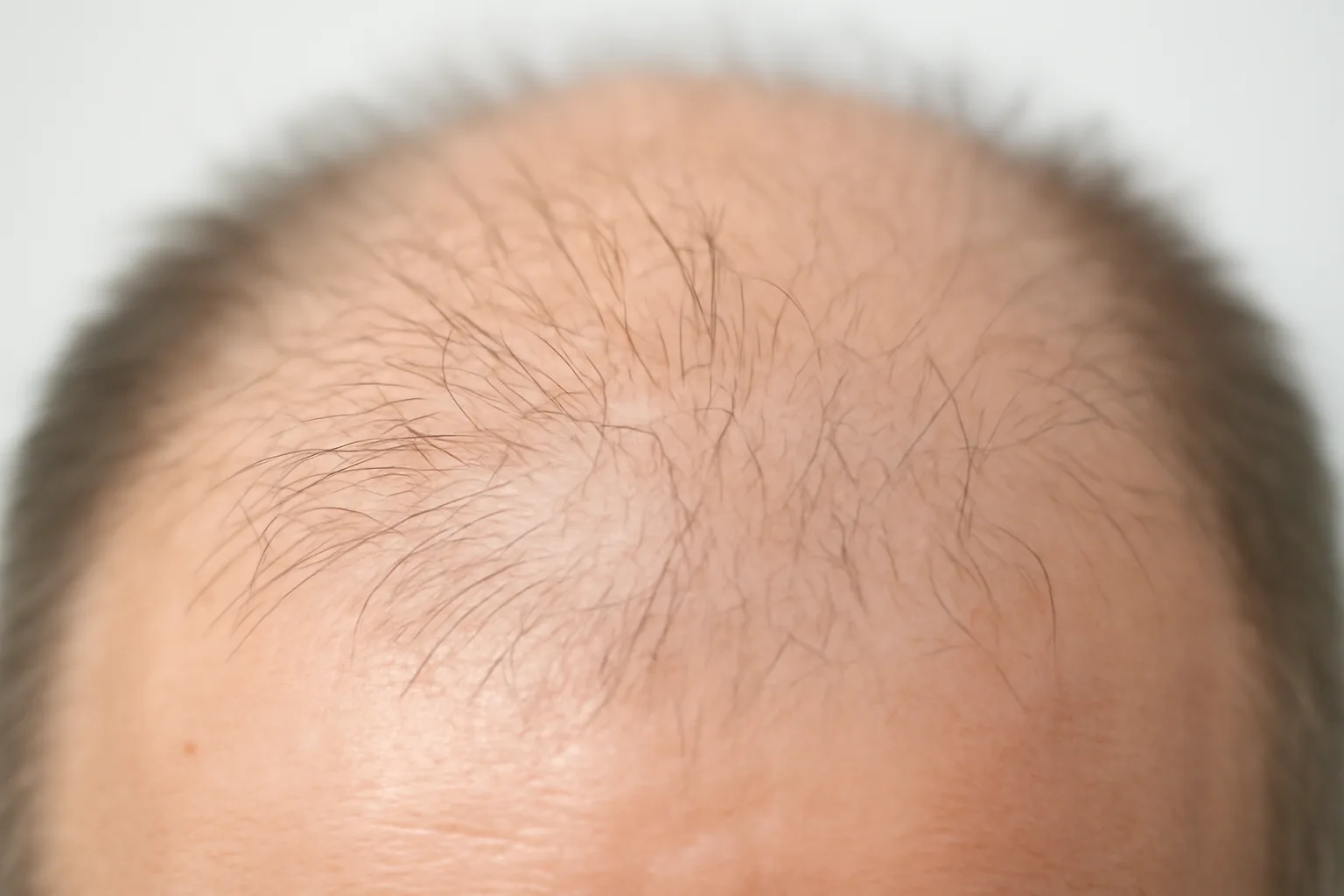
GHK-Cu does not block DHT directly. The published literature on copper peptides and hair growth centers on follicle stimulation, angiogenesis, and inflammation reduction, not androgen receptor antagonism or 5α-reductase inhibition. If you're managing androgenic alopecia, copper peptides may support scalp health and wound healing but are not a substitute for proven DHT blockers like finasteride or dutasteride.
What does GHK-Cu actually do in skin and tissue?
GHK-Cu is a naturally occurring tripeptide that binds copper(II) and has been studied primarily for wound healing, collagen synthesis, and anti-inflammatory effects [1]. A 2018 gene data analysis found that GHK-Cu modulates the expression of genes involved in tissue remodeling, inflammation, and oxidative stress, but the paper makes no mention of androgen metabolism or DHT inhibition [1]. The peptide promotes angiogenesis (new blood vessel formation) and accelerates wound closure in animal models [2]. A 2017 mouse study showed that GHK-Cu liposomes increased cell proliferation and blood vessel density in scald wounds, reducing healing time [2]. A 2015 rat ACL reconstruction trial found temporary improvement in tendon healing with GHK-Cu treatment, though the effect plateaued after six weeks [3]. These actions matter for hair follicles because a well-vascularized, inflammation-controlled scalp environment can support better hair growth. But vascularization is not the same as blocking the hormone that miniaturizes follicles in androgenic alopecia.
Does GHK-Cu inhibit 5α-reductase or block androgen receptors?
No published study demonstrates that GHK-Cu inhibits 5α-reductase (the enzyme that converts testosterone to DHT) or antagonizes androgen receptors. The gene modulation data from Pickart and colleagues shows GHK-Cu affecting metalloproteinases, growth factors, and inflammatory cytokines, but not androgen pathway genes [1]. A 2020 review on GHK's anti-aging potential covers its effects on collagen, elastin, and protease inhibitors, again without reference to DHT or androgen signaling [4]. A 2025 review on topical GHK-Cu as an anti-wrinkle peptide discusses skin penetration challenges and formulation methods but does not claim hormonal modulation [5]. If you're using finasteride (which inhibits type II 5α-reductase) or dutasteride (which inhibits both type I and II), you're directly lowering scalp DHT by 60 to 90 percent. GHK-Cu does not produce that mechanism.
What does the orthopaedic and sports medicine literature say about GHK-Cu?
Recent reviews classify GHK-Cu as a tissue-healing peptide, not a hormonal agent. A 2026 primer for orthopaedic physicians lists GHK-Cu under wound healing and regenerative peptides, noting its use in soft tissue repair but classifying it as investigational with limited human trial data [6]. Another 2026 safety review on peptides for musculoskeletal injuries does not mention androgen modulation among GHK-Cu's effects [7]. These sources focus on collagen deposition, fibroblast activity, and anti-inflammatory signaling. The sports medicine context is ligament or tendon injury, where the peptide's copper-dependent lysyl oxidase activation (which cross-links collagen) may help. None of that translates to blocking DHT.
Can GHK-Cu help with hair loss if it doesn't block DHT?
Possibly, but through a different pathway. Hair follicles miniaturize in androgenic alopecia because DHT shortens the growth phase and prolongs the resting phase. If you don't address DHT, the follicle shrinks. GHK-Cu won't stop that process. What it might do is improve the scalp microenvironment. A 2023 study in a cigarette smoke-induced muscle dysfunction model (admittedly not hair-specific) showed GHK-Cu restored mitochondrial function and reduced oxidative damage via a sirtuin 1-dependent pathway [8]. A 2020 study in bleomycin-induced pulmonary fibrosis found GHK-Cu reduced oxidative stress and inflammatory cytokines [9]. If chronic scalp inflammation or poor circulation is a co-factor in your hair thinning, addressing those might slow the process or improve the response to a DHT blocker. A 2023 ex-vivo human skin study found that GHK-Cu combined with hyaluronic acid increased collagen IV expression in the dermal-epidermal junction [10]. Collagen IV is a basement membrane component; healthier basement membranes might support better follicle anchoring. But that's speculative extrapolation from skin biopsies, not a hair growth trial.
How is GHK-Cu typically formulated for skin or scalp use?
Most published dermatology data involves topical application, often in liposomal carriers to improve penetration [11]. A 2023 formulation study tested several liposome compositions for GHK-Cu delivery and found that lipid bilayer charge and size significantly affected peptide encapsulation efficiency [11]. A 2025 analytical paper asked whether current methods can reliably measure GHK-Cu permeation through skin, concluding that detection limits and stability challenges remain [12]. Liposomal encapsulation increases stability and may deliver the peptide to deeper skin layers, but whether enough reaches living follicle cells to produce a growth effect is unknown. A 2024 capillary electrophoresis study developed a method to track GHK-Cu inside liposomes, showing the peptide can degrade or leak if the formulation isn't optimized [13]. Injectable GHK-Cu is less common in published studies. The rat ACL reconstruction trial used subcutaneous injection near the surgical site [3], and the mouse wound studies used topical liposomal application [2]. No published hair growth trial uses injectable GHK-Cu, and compounded injectable peptides are regulated differently than topical cosmetics.
What do orthopaedic reviews say about injectable peptide regulation?
A 2026 primer on injectable peptide therapy for orthopaedic physicians notes that many peptides, including GHK-Cu, are not FDA-approved as drugs but may be available through compounding pharmacies under 21 U.S.C. 353a [6]. That statute allows pharmacies to compound patient-specific prescriptions from bulk drug substances if certain conditions are met, but GHK-Cu does not appear on the final 503A bulk substances list as of this writing [14]. The 503B list (for outsourcing facilities that compound without individual prescriptions) also does not include GHK-Cu [15]. This means most injectable GHK-Cu in the U.S. is compounded under the broader 503A pathway, which requires a prescriber-patient relationship and does not permit large-scale production or interstate distribution without meeting 503B registration. If you're considering injectable GHK-Cu, ask the prescribing provider which pharmacy is compounding it and whether the formulation has been tested for sterility and potency. A 2026 safety review on peptides for musculoskeletal injuries cautions that unapproved peptides carry risks of contamination, incorrect dosing, and unknown long-term effects [7].
Does GHK-Cu carry copper accumulation or toxicity risk?
Copper is an essential trace element, but excess copper is toxic. GHK-Cu delivers copper in a chelated form, which changes its bioavailability. A 2020 study on a ternary GHK-Cu complex with cis-urocanic acid examined copper binding stability and suggested that the peptide prevents free copper from causing oxidative damage [16]. But that same binding means the peptide is delivering copper to tissues. A 2025 study on injectable hydroxyapatite filler loaded with GHK-Cu noted anti-inflammatory and antioxidant effects in vitro but did not report long-term copper levels in treated animals [17]. If you're using topical GHK-Cu on large skin areas daily or injecting it repeatedly, you're increasing your copper load. People with Wilson's disease or other copper metabolism disorders should avoid GHK-Cu entirely. No published study has measured serum copper levels in humans using GHK-Cu long-term. If you're also taking oral copper supplements or using copper-IUD contraception, the cumulative exposure adds up. Copper overload can damage the liver and kidneys, though it usually takes months to years of high intake.
What about combining GHK-Cu with a proven DHT blocker?
That's the rational approach if you want to try both. Finasteride or dutasteride addresses the androgen side. GHK-Cu might improve scalp circulation, reduce inflammation, or support collagen structure. No study has tested this combination, so the interaction risk is unknown. A 2026 review on therapeutic peptides in aesthetic medicine lists GHK-Cu as an adjunct for skin rejuvenation but does not claim it treats androgenic alopecia [18]. If you're already on a DHT blocker and minoxidil, adding a topical copper peptide serum is low-risk (assuming you're not copper-sensitive). Adding injectable GHK-Cu is higher-risk because of the sterility and dosing issues mentioned above. One theoretical concern: copper is a cofactor for several enzymes, including some involved in free radical generation. If you're using minoxidil (which opens potassium channels and may induce mild oxidative stress as part of its growth signal), adding high-dose copper could theoretically shift the redox balance. No one has studied this in humans, so it's speculative.
Where does the DHT-blocking claim come from, then?
Probably from cosmetic marketing and confusion with other copper compounds. Some cosmetic brands market copper peptides as "hair growth" ingredients without specifying the mechanism, and consumers infer that means DHT inhibition because that's the most talked-about pathway in male pattern baldness. There's also historical interest in copper itself (not GHK-Cu) for hair pigmentation and keratin cross-linking. Copper is part of the enzyme tyrosinase, which produces melanin, and lysyl oxidase, which strengthens hair shafts. But none of that involves blocking DHT. Another source of confusion may be mixing up GHK-Cu with other peptides that do affect hormones. For example, some labs sell peptides that modulate growth hormone or IGF-1. GHK-Cu is not one of those. A 2023 sensor development paper describes a fluorescent probe for detecting GHK-Cu binding to copper ions, showing the specificity of the peptide-copper interaction [19], but that's analytical chemistry, not pharmacology.
Is there any animal or in vitro data on GHK-Cu and hair follicles?
Very little published. The wound healing studies show faster re-epithelialization and angiogenesis, which might indirectly support hair follicle recovery if the scalp wound environment is holding back growth. But those are burn or surgical wound models, not androgenic alopecia models. A 2026 study in *C. elegans* worms found that GHK-Cu extended lifespan and activated longevity pathways (DAF-16 and SKN-1), which are analogous to mammalian FOXO and Nrf2 [20]. That's interesting for aging biology but doesn't connect to hair follicle androgen sensitivity. A 2025 study on fascia regeneration used a Golgi-targeted copper delivery strategy and found enhanced activity of copper-dependent enzymes [21], but the context was tendon repair, not hair. The rat ACL model mentioned earlier is the closest to a hair-relevant tissue (both involve collagen remodeling), and the effect was modest and transient [3].
What should you actually use if you want to block DHT?
Finasteride (typically 1 mg daily for hair loss) or dutasteride (0.5 mg daily, off-label for hair) are the drugs with the most evidence. Finasteride reduces scalp DHT by about 64 percent; dutasteride reduces it by roughly 90 percent because it inhibits both isoforms of 5α-reductase. Both require a prescription and carry risk of sexual side effects in a subset of users. Topical finasteride formulations (often 0.25% in a solution or liposomal gel) are emerging as a way to reduce systemic exposure while still lowering scalp DHT. Some compounding pharmacies make topical finasteride, and a few companies are pursuing FDA approval for spray formulations. If you want to add GHK-Cu, you'd use it in addition to a DHT blocker, not as a replacement. Minoxidil (2% or 5% topical foam or solution) doesn't block DHT but prolongs the growth phase and may increase follicle size through potassium channel modulation. It's over-the-counter and has decades of safety data. Combining minoxidil with a DHT blocker is standard practice in dermatology. Adding GHK-Cu to that stack is your call, but don't expect it to replace the proven drugs. Provider-reviewed GHK-Cu formulations are available through compounding pharmacies like Olympia or Empower for patients with a prescription. If you're interested in injectable GHK-Cu, discuss it with a provider who can order from a licensed 503A pharmacy and monitor for adverse effects. Topical serums are sold as cosmetics and don't require a prescription, but quality varies widely.
Frequently asked questions
Does GHK-Cu lower DHT levels?
No published study shows GHK-Cu reduces DHT. The peptide modulates genes involved in wound healing, inflammation, and collagen synthesis but does not inhibit 5α-reductase or block androgen receptors.
Can copper peptides replace finasteride for hair loss?
No. Finasteride inhibits the enzyme that produces DHT and has decades of clinical trial data. GHK-Cu does not block DHT and is not FDA-approved for treating androgenic alopecia.
Will topical GHK-Cu help with male pattern baldness?
It might improve scalp circulation and reduce inflammation, but it won't stop follicle miniaturization from DHT. If you're using it, combine it with a proven DHT blocker like finasteride or dutasteride.
Is injectable GHK-Cu legal in the U.S.?
Compounding pharmacies can prepare injectable GHK-Cu under 21 U.S.C. 353a if a prescriber orders it for a specific patient. GHK-Cu is not on the FDA's final 503A or 503B bulk substances lists, so availability depends on the pharmacy's interpretation of the law.
Can I use GHK-Cu with minoxidil and finasteride?
No study has tested the combination, but there's no obvious pharmacological conflict. Topical GHK-Cu is low-risk to add to a minoxidil/finasteride regimen, though injectable forms carry sterility and dosing concerns.
Does GHK-Cu increase hair follicle blood flow?
Animal studies show GHK-Cu promotes angiogenesis in wound healing, which could theoretically improve follicle blood supply. No human trial has measured scalp blood flow changes with GHK-Cu.
How much copper am I getting from GHK-Cu serum?
It depends on the formulation. A 1% GHK-Cu serum applied to the face delivers an unknown amount of absorbed copper because skin penetration data is limited. If you're using large amounts on the scalp daily, cumulative copper exposure could matter.
Can people with Wilson's disease use copper peptides?
No. Wilson's disease is a genetic disorder of copper metabolism, and any additional copper load can worsen liver and neurological damage. Avoid GHK-Cu entirely if you have this condition.
Do liposomal GHK-Cu formulations work better?
Lab studies show liposomes improve GHK-Cu stability and may increase skin penetration, but whether that translates to better hair growth is unknown. Liposomal formulations cost more and may degrade if not stored properly.
Is there a safe way to try injectable GHK-Cu for hair?
If you want to try it, work with a provider who can write a prescription for a licensed 503A compounding pharmacy. Ask for sterility and potency testing documentation. Start with a low dose and monitor for injection site reactions or signs of copper overload.
What's the typical dose of injectable GHK-Cu?
Published studies use widely varying doses. The rat ACL trial used 10 μg per injection site three times per week. Human dose-finding studies for hair loss don't exist, so any injectable protocol is off-label experimentation.
Can GHK-Cu cause scalp irritation?
Topical GHK-Cu is generally well-tolerated at cosmetic concentrations (up to 3%), but higher concentrations or repeated injections can cause local inflammation. Some users report stinging or redness, especially with alcohol-based serum vehicles.
Does GHK-Cu increase collagen in the scalp?
A 2023 ex-vivo skin study found GHK-Cu increased collagen IV in the dermal-epidermal junction. Whether that effect occurs in scalp tissue or improves follicle anchoring is speculative.
Where can I buy pharmaceutical-grade GHK-Cu?
For injectable formulations, you need a prescription and a compounding pharmacy like Empower or Olympia. For topical serums, buy from sources that provide third-party purity testing and specify the copper:peptide ratio.
Sources
- PubMed PMID 29986520, International Journal of Molecular Sciences, 2018: GHK-Cu modulates genes involved in tissue remodeling, inflammation, and oxidative stress, but not androgen metabolism.
- PubMed PMID 28370978, Wound Repair and Regeneration, 2017: GHK-Cu liposomes increased cell proliferation and angiogenesis in mouse scald wounds.
- PubMed PMID 25731775, Journal of Orthopaedic Research, 2015: GHK-Cu transiently improved tendon healing in a rat ACL reconstruction model.
- PubMed PMID 35083444, Aging Pathobiology and Therapeutics, 2020: Review covers GHK's effects on collagen, elastin, and protease inhibitors, not androgen signaling.
- PubMed PMID 39963574, BioImpacts, 2025: Review discusses topical GHK-Cu skin penetration challenges and formulation methods, not hormonal modulation.
- PubMed PMID 41476424, The American Journal of Sports Medicine, 2026: Orthopaedic primer classifies GHK-Cu as investigational for soft tissue repair, not a hormonal agent.
- PubMed PMID 41966639, Sports Medicine, 2026: Safety review on musculoskeletal peptides notes contamination and dosing risks for unapproved compounds.
- PubMed PMID 36905132, Journal of Cachexia, Sarcopenia and Muscle, 2023: GHK-Cu restored mitochondrial function and reduced oxidative damage via sirtuin 1 pathway in a muscle model.
- PubMed PMID 31809714, Life Sciences, 2020: GHK-Cu reduced oxidative stress and inflammatory cytokines in bleomycin-induced pulmonary fibrosis.
- PubMed PMID 37062921, Journal of Cosmetic Dermatology, 2023: GHK-Cu combined with hyaluronic acid increased collagen IV expression in ex-vivo human skin.
- PubMed PMID 37896245, Pharmaceutics, 2023: Liposome charge and size significantly affected GHK-Cu encapsulation efficiency in cosmetic formulations.
- PubMed PMID 39795193, Molecules, 2025: Current analytical methods face detection limits and stability challenges for measuring GHK-Cu skin permeation.
- PubMed PMID 39451062, Electrophoresis, 2024: Capillary electrophoresis method tracked GHK-Cu inside liposomes, showing peptide can degrade or leak.
- 21 CFR 216.23, FDA final 503A bulk substances list: Federal regulation listing bulk drug substances permitted for pharmacy compounding under 503A; GHK-Cu not listed.
- 21 CFR 216.24, FDA 503B bulk substances list: Federal regulation listing bulk substances for outsourcing facilities under 503B; GHK-Cu not listed.
- PubMed PMID 32867146, International Journal of Molecular Sciences, 2020: Ternary GHK-Cu complex study examined copper binding stability and prevention of oxidative damage.
- PubMed PMID 40716276, Colloids and Surfaces B: Biointerfaces, 2025: Injectable hydroxyapatite filler loaded with GHK-Cu showed anti-inflammatory and antioxidant effects in vitro.
- PubMed PMID 42123471, International Journal of Molecular Sciences, 2026: Review lists GHK-Cu as an adjunct for skin rejuvenation, not for treating androgenic alopecia.
- PubMed PMID 37830186, The Journal of Organic Chemistry, 2023: Fluorescent sensor paper describes specificity of GHK-Cu peptide-copper binding for analytical detection.
- PubMed PMID 42084774, Biogerontology, 2026: GHK-Cu extended lifespan in C. elegans via DAF-16 and SKN-1 pathway activation.
- PubMed PMID 41371501, Journal of Controlled Release, 2026: Golgi-targeted copper delivery strategy enhanced copper-dependent enzyme activity in fascia regeneration.