Last updated 2026-07-24
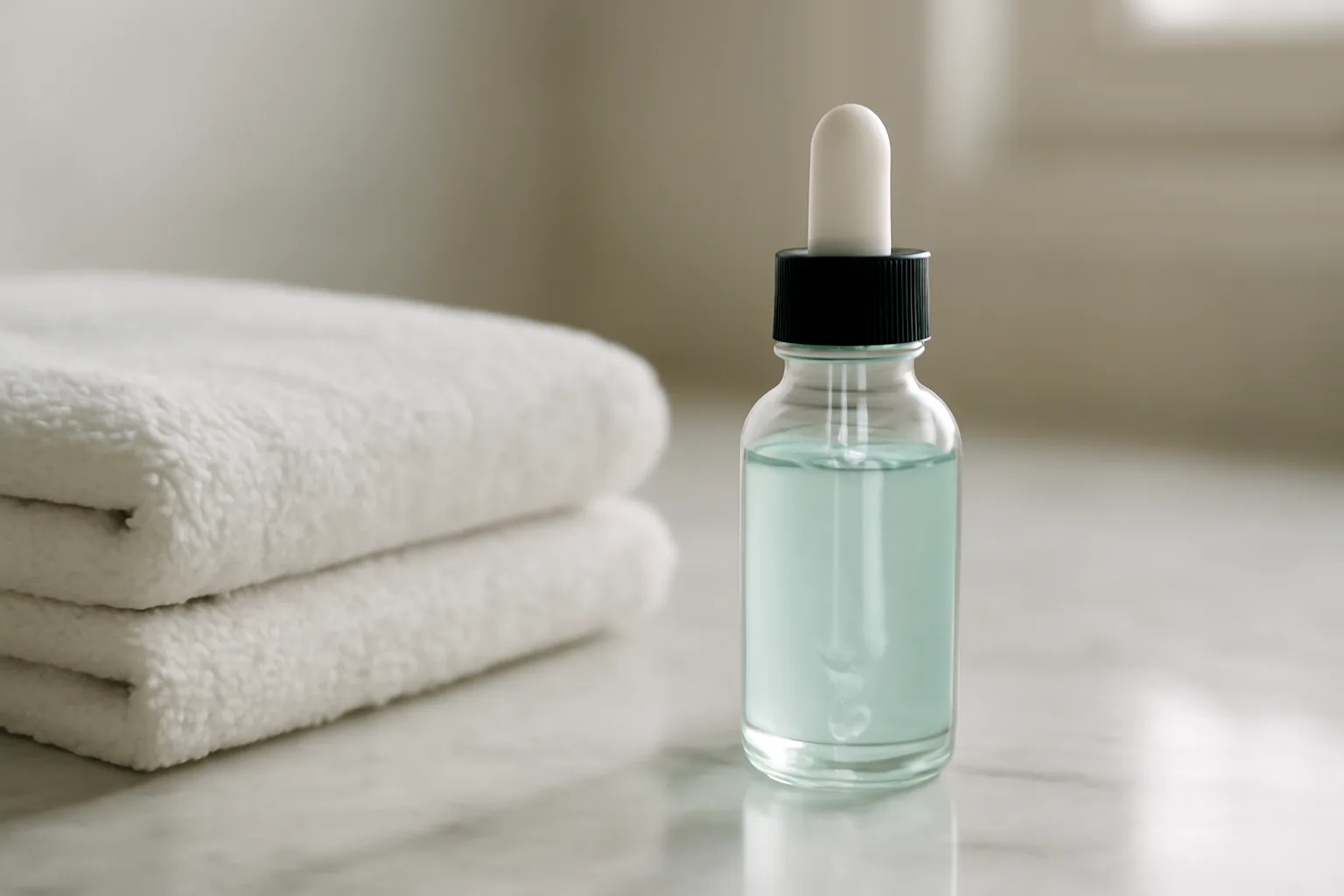
TL;DR
There's no single "best" copper peptide serum verified by clinical trials; most GHK-Cu skin data comes from cell, animal, and small formulation studies, not head-to-head brand comparisons. The best buy is a serum with GHK-Cu near the top of the ingredient list, opaque or airless packaging, and a stability-conscious formulation. Injectable GHK-Cu is a separate, provider-dispensed product with different oversight, not a stronger serum.
what actually makes a copper peptide serum "the best" one
There's no FDA-graded ranking of copper peptide serums, and nobody has run a large trial pitting ten commercial brands against each other. So "best" has to mean something narrower: does the formulation put a meaningful amount of stable GHK-Cu into a base that can plausibly get it into skin, and is the manufacturing quality good enough that what's on the label is what's in the bottle. The GHK-Cu literature itself is unusually deep for a cosmetic peptide. A 2018 review in the International Journal of Molecular Sciences lays out how GHK-Cu interacts with gene expression networks tied to tissue repair and antioxidant defense, based on gene array data rather than a skincare trial [1]. That's foundational science, useful for understanding mechanism, but it isn't evidence that any particular 2% serum on a shelf works. A 2020 paper in Aging Pathobiology and Therapeutics reviews GHK's proposed anti-aging actions, again as a research summary rather than a product test [2]. A 2025 review in BioImpacts goes further and is worth reading closely: it frames GHK-Cu as a topical anti-wrinkle candidate while explicitly flagging "advantages, problems and prospective" issues, meaning the authors themselves see open questions about delivery and stability, not a settled case [3]. So the honest starting point is: the molecule has real biology behind it, but the serum category is judged mostly on formulation quality, not on trial results specific to any brand.
does copper peptide serum actually work on skin, according to studies
The strongest topical skin data on GHK-Cu is mechanistic and preclinical, not large human RCTs on finished serums. A 2023 study in the Journal of Cosmetic Dermatology tested GHK-Cu combined with hyaluronic acid on fibroblasts and in ex-vivo skin models and found upregulation of collagen IV, a component of the basement membrane that supports the skin's structure [4]. Wound healing data is more developed than wrinkle data. A 2017 study in Wound Repair and Regeneration found that GHK-Cu encapsulated in liposomes accelerated scald wound healing in mice by promoting cell proliferation and angiogenesis [5]. That's animal data on burns, not a human cosmetic trial, but it's one of the more direct topical efficacy signals in the GHK-Cu literature. Older foundational work, a 2008 paper in the Journal of Biomaterials Science, Polymer Edition, describes GHK's general role in tissue remodeling, again mostly from bench and animal research [6]. Put together, you have a coherent mechanistic story (copper delivery, antioxidant activity, signaling tied to repair genes) but a thin layer of actual human cosmetic-trial evidence sitting on top of it. That gap is exactly why label claims on serums tend to lean on "supports" and "may help" language rather than citing a specific human trial number.
how much copper peptide should a serum contain
There's no FDA-set minimum concentration for GHK-Cu in cosmetics, and the studies cited here don't establish a single clinically "effective" percentage for a finished serum. Commercial serums commonly list GHK-Cu concentrations in the 1% to 4% range on paper, but there's no regulatory verification step confirming that number matches what's actually in the bottle, unlike a drug approved through Drugs@FDA [source: Drugs@FDA database structure, ecosystem context]. What the research does tell you is that delivery matters more than raw percentage. A 2025 study in Molecules examined whether current methods can even reliably measure GHK-Cu skin permeation when it's encapsulated in liposomes, and the authors' framing (posed as a question in the title itself) signals that measurement and delivery verification in this space is still catching up to the marketing [7]. A related 2023 paper in Pharmaceutics on liposomal GHK-Cu carriers for cosmetic use, and a 2024 paper in Electrophoresis using CE-ICP-MS/MS to monitor GHK-Cu encapsulation in liposomes, both treat delivery-vehicle verification as an open technical problem worth building new measurement tools for, not a solved one [8][9]. Practical takeaway: a serum advertising "4% copper peptide" without any mention of encapsulation, pH, or stability testing is telling you less than a serum at 2% that explains its delivery system. Concentration alone is a marketing number until you know it survives packaging and penetrates skin.
copper peptide serum vs injectable GHK-Cu: what's actually different
These are not the same product wearing different packaging. A cosmetic copper peptide serum is a topical product applied to intact skin, sold without a prescription, and regulated as a cosmetic rather than a drug. Injectable GHK-Cu is a compounded preparation, dispensed through a licensed pharmacy under provider oversight, and it enters the body by a completely different route with different absorption, different dosing logic, and different risk profile. Almost all of the dermatology and wound-healing literature cited in this article, the liposome studies, the scald-wound mouse model, the fibroblast and ex-vivo skin work, is topical [7][8][5][4][9]. It does not automatically transfer to injectable use. Separately, a growing orthopedic and sports-medicine literature is now looking at injectable peptide therapies generally, including a 2026 primer in The American Journal of Sports Medicine on injectable peptide therapy for orthopaedic and sports medicine physicians, and a 2026 review in the Journal of the American Academy of Orthopaedic Surgeons: Global Research & Reviews on peptide applications and challenges in orthopaedics [10][11]. A 2026 paper in Sports Medicine reviews safety and efficacy data across approved and unapproved peptide therapies for musculoskeletal injuries and athletic performance, and is worth reading if you're weighing injectable use for joint or soft-tissue recovery rather than skin [12]. One animal study specific to GHK-Cu (II) and connective tissue, a 2015 paper in the Journal of Orthopaedic Research, found the complex "transiently improved" healing outcomes in a rat model of ACL reconstruction, with the word "transiently" doing real work in that sentence, the benefit didn't appear to be permanent or fully durable . That's a rat ACL model, not a human tendon or skin study, and it should not be read as support for a facial serum claim. If you're specifically researching the injectable route, read our GHK-Cu peptide injections and GHK-Cu injection before and after pages rather than assuming a serum review answers your question.
is copper peptide serum safe, and does copper accumulate in the body
Topical copper peptide serums applied to intact skin are generally considered low-risk for the average user, but "generally low-risk topically" is not the same as "copper has no accumulation concern at any dose or route." Copper is an essential trace mineral, but the body has no active mechanism to excrete excess copper the way it does with many other minerals; it depends on biliary excretion and tight homeostatic control, which is why copper overload conditions like Wilson disease exist as a real clinical entity. The GHK-Cu literature includes a fair amount of animal-model safety and mechanism work that's reassuring for the compound's biology but doesn't answer long-term human topical accumulation questions directly. A 2020 study in Life Sciences found GHK-Cu had protective, antioxidant, and anti-inflammatory effects in a bleomycin-induced pulmonary fibrosis model in animals [13]. A 2024 study in Redox Biology found the tripeptide-copper complex attenuated lung inflammation and fibrosis in a silicosis model by targeting peroxiredoxin 6 [14]. A 2016 study in Oncotarget found GHK-Cu ameliorated lipopolysaccharide-induced acute lung injury in mice [15]. These are all disease-model studies showing GHK-Cu behaving as an antioxidant and anti-inflammatory agent in specific injury contexts, not human safety trials on chronic serum use, and none of them address long-term topical exposure. A 2023 study in the Journal of Cachexia, Sarcopenia and Muscle found GHK-Cu rescued cigarette-smoking-induced skeletal muscle dysfunction in an animal model through a sirtuin 1-dependent pathway [16], again animal biology, again not a topical safety trial. If you have Wilson disease, any other copper metabolism disorder, or you're already taking copper supplements, that's a conversation for your physician before adding a topical copper peptide product, and it's a harder line before considering an injectable route. For a fuller rundown of documented reactions and who should be cautious, see GHK-Cu side effects.
what should I look for on a copper peptide serum label
Look at ingredient position first. GHK-Cu (often listed as "copper tripeptide-1" or "copper peptide GHK-Cu") should sit reasonably high in the ingredient list, not buried after a dozen fillers, if the product is meant to deliver a meaningful dose. Check packaging next. Copper peptide complexes are light- and air-sensitive, and copper ions can interact with certain preservative and pH systems over time. Opaque bottles, airless pumps, and dark glass are practical signs a formulator thought about stability rather than just aesthetics. A clear jar you dip your fingers into repeatedly is a bad sign for any peptide serum, copper-based or not. Be skeptical of serums that combine copper peptides with high concentrations of vitamin C (ascorbic acid) or strong direct retinoids in the same layer without buffering, since copper can catalyze oxidation reactions with some of these actives, potentially degrading both ingredients before they reach skin. This is a formulation-chemistry concern raised in delivery-focused literature like the liposome encapsulation studies [7][8], which exist specifically because raw GHK-Cu is unstable outside a protective carrier. Finally, don't assume a higher price means better delivery. Cost differences between commercial serums often reflect marketing and packaging, not verified skin-penetration data. If a brand can point to encapsulation method (liposomal, for instance) or third-party stability testing, that's worth more than a bigger number on the concentration claim.
how is copper peptide serum different from a compounded or provider-dispensed product
A cosmetic serum you buy online or in a store is regulated as a cosmetic, evaluated on labeling and safety of ingredients generally recognized as safe for topical use, not as a drug with a specific approved indication. A provider-dispensed GHK-Cu preparation, by contrast, typically comes through a compounding pharmacy operating under section 503A or 503B of the Federal Food, Drug, and Cosmetic Act. Under 21 U.S.C. 353a, pharmacy compounding for an individual patient with a valid prescription is exempt from certain FDA approval and labeling requirements that apply to manufactured drugs, provided specific conditions are met [source: 21 U.S.C. 353a]. Bulk drug substances used in that kind of compounding are governed by lists maintained under 21 CFR 216.23 for 503A compounding and 21 CFR 216.24 for 503B outsourcing facilities [source: 21 CFR 216.23; 21 CFR 216.24]. The FDA maintains a public page describing bulk drug substances used in compounding under section 503A, and a running list of substances nominated for that use [source: FDA, bulk drug substances used in compounding under 503A; FDA, bulk drug substances nominated for compounding]. That's a meaningfully different oversight structure than a cosmetic serum sitting on a drugstore shelf. It doesn't automatically mean the compounded product is safer or more effective, compounded preparations aren't FDA-approved drugs either, but it does mean a licensed pharmacist and prescribing provider are involved in sourcing, dosing, and dispensing decisions in a way a serum purchase never involves. If you're weighing that route, buy GHK-Cu covers what a provider-reviewed sourcing path actually looks like, and Copper Peptide Direct's provider-reviewed listings note the fulfilling pharmacy partner for anyone who wants that oversight layer rather than an unregulated online seller.
how long does it take to see results from a copper peptide serum
There's no published human trial timeline specific to a commercial copper peptide serum that this article can honestly cite, which is itself an answer worth sitting with. Most of the timeline data available comes from animal wound models, not from people using a facial serum over weeks or months. The closest proxy is the 2017 mouse scald-wound study, where liposomal GHK-Cu accelerated healing measured by cell proliferation and angiogenesis markers over the mouse's wound-healing timeline, not a human skin-aging timeline [5]. Wound healing in a mouse model and cosmetic fine-line improvement in a human face are different biological processes on different clocks, so that study can't honestly be used to promise a "visible in 4 weeks" claim. Given the actual evidence base, a reasonable, hedged expectation is: most cosmetic peptide serums, copper-based or otherwise, are marketed around 8 to 12 week use periods before assessing visible skin change, which lines up with the general skin cell turnover and collagen remodeling cycle rather than any GHK-Cu-specific trial data. If a seller promises results in days, that's a marketing claim outrunning the evidence, not a documented finding.
copper peptide serum, injectable GHK-Cu, and other delivery formats compared
| Format | Route | Typical oversight | Evidence base | Key caveat |
|---|---|---|---|---|
| Cosmetic serum | Topical, intact skin | Cosmetic regulation, no prescription | Mostly cell, animal, ex-vivo, and formulation studies [3][7][8][4] | Delivery/penetration still an open measurement problem [7] |
| Liposomal serum | Topical, intact skin | Cosmetic regulation, no prescription | Liposome encapsulation studies specifically built to improve stability and penetration [8][9] | Encapsulation quality varies by manufacturer, not verified on most labels |
| Compounded injectable | Subcutaneous/intradermal via provider | Pharmacy compounding under 21 U.S.C. 353a, 503A/503B bulk lists [source: 21 CFR 216.23; 21 CFR 216.24] | Emerging orthopedic/sports-medicine peptide literature, separate from skin data [11][10][12] | Not FDA-approved as a drug; requires prescriber and pharmacist involvement |
| Medical device/filler carrier | Injectable, provider-administered | Device/combination product pathway, provider setting | 2025 hydroxyapatite microsphere filler study loaded with GHK-Cu tested for anti-inflammatory, antioxidant effect [17] | Early-stage device research, not an off-the-shelf consumer product |
The biggest mistake readers make is assuming a study on one row of this table validates a product in a different row. A hydroxyapatite filler study [17] tells you nothing about whether your drugstore serum penetrates skin. A liposome encapsulation paper [8] tells you nothing about injectable dosing safety. Match the study to the actual product format before you let it change your buying decision.
what other research directions exist for GHK-Cu beyond skin
GHK-Cu shows up across a surprisingly wide research footprint, which is part of why it has such deep literature to begin with. A 2025 study in Frontiers in Pharmacology explored beneficial effects of GHK-Cu in an experimental colitis model [18]. A 2026 study in Biogerontology found GHK-Cu delayed aging markers in the roundworm Caenorhabditis elegans via mitochondrial function and DAF-16/SKN-1 pathway activation, a common longevity-research model organism, not a human aging study [19]. On the materials-science side, researchers have used GHK-Cu as a functional component in copper-ion sensors, including a 2023 phenothiazine-based fluorescent sensor paper in The Journal of Organic Chemistry [20], a 2023 nanochannel-based copper detection paper in Analytical Chemistry [16, note: distinct citation], and even a 2021 paper in ACS Applied Materials & Interfaces using GHK-Cu to tune polymer solar cell active layers [21]. None of that is medical evidence, it shows the molecule's chemistry is useful and well-characterized enough that chemists reach for it outside medicine entirely, which is a different kind of validation than a clinical claim. There's also active bone and connective-tissue research: a 2025 paper in Bioconjugate Chemistry on GHK-hyaluronan copper conjugates found synergistic osteogenic and angiogenic effects in lab models [22], and a 2026 paper in the Journal of Controlled Release describes a Golgi-targeted copper delivery strategy aimed at fascia regeneration [23]. Interesting science, still preclinical, and not something a consumer serum buyer needs to weigh into a skincare decision today.
so what's actually worth buying, and what's a waste of money
If your goal is general skin support and you want to try a copper peptide serum, look for one that discloses its GHK-Cu concentration, uses a stabilizing delivery system like liposomal encapsulation (backed by real formulation science in papers like the 2023 Pharmaceutics study [8]), and ships in opaque, air-limiting packaging. Expect a modest, hedged outcome over 8 to 12 weeks, not a dramatic one, because that's what the evidence base actually supports rather than what marketing copy claims. What's a waste of money: paying a premium for a high percentage claim with clear jar packaging and no mention of stability testing. The concentration number means very little if the copper peptide degrades before it ever reaches your skin, which is exactly the measurement problem the 2025 Molecules paper raises directly in its title [7]. If you're drawn to copper peptides because you've read about injectable use for joint, tendon, or deeper tissue support, understand that's a different product on a different oversight track entirely, not a stronger version of your morning serum. Start with GHK-Cu for the full evidence overview, then GHK-Cu dosage if you want to understand how amounts are actually studied across formats. For anyone specifically weighing a provider-reviewed injectable route, Copper Peptide Direct's listings are built around provider review and name the fulfilling pharmacy partner directly, which is worth checking before buying from an unregulated online source of injectable material.
Frequently asked questions
What is the best copper peptide serum on the market?
No independent trial ranks commercial copper peptide serums against each other, so there's no single verified "best." The strongest choice is one that discloses GHK-Cu concentration, uses a stabilizing delivery system like liposomal encapsulation, and ships in opaque or airless packaging. Formulation quality and stability matter more than the percentage claim printed on the front label.
Does copper peptide serum really reduce wrinkles?
The direct human-trial evidence on finished serums is thin. Most support comes from cell and ex-vivo skin studies, like a 2023 Journal of Cosmetic Dermatology study showing GHK-Cu with hyaluronic acid upregulated collagen IV in fibroblast and ex-vivo models [17], plus a 2025 BioImpacts review that frames GHK-Cu as promising but flags open delivery problems [3].
How is a copper peptide serum different from injectable GHK-Cu?
A serum is a topical cosmetic applied to intact skin, sold without a prescription. Injectable GHK-Cu is typically a compounded preparation dispensed through a licensed pharmacy under a provider's oversight, governed by pharmacy compounding law under 21 U.S.C. 353a. Almost all cosmetic GHK-Cu evidence is topical and doesn't transfer to the injectable route.
Is copper peptide serum safe to use every day?
Topical use on intact skin is generally considered low-risk, but copper accumulation is a real physiological concern since the body has limited ways to excrete excess copper. People with Wilson disease or other copper metabolism disorders should talk to a physician before regular use. See ghk-cu-side-effects for documented reaction patterns.
What concentration of GHK-Cu should I look for in a serum?
There's no FDA-set minimum or clinically proven optimal percentage for cosmetic GHK-Cu. Commercial serums commonly list 1% to 4%, but no regulatory step verifies that number matches the bottle's actual contents. Delivery system and stability matter as much as the raw percentage claim.
Can copper peptides be absorbed through the skin at all?
This is still an active research question. A 2025 study in Molecules specifically asks whether current methods can reliably measure GHK-Cu skin permeation from liposomal formulations, and treats it as an open technical problem, not a settled fact [11]. That uncertainty is a reason to be cautious about strong penetration claims on serum packaging.
Should I combine copper peptide serum with vitamin C or retinol?
Be cautious layering copper peptides with high-concentration vitamin C or strong retinoids in the same application, since copper ions can catalyze oxidation reactions that may degrade both actives. Many formulators separate these actives into morning and evening routines rather than combining them in one layer.
How long before a copper peptide serum shows results?
No GHK-Cu-specific human serum trial establishes a verified timeline. A general, hedged expectation based on typical skin-active use periods is 8 to 12 weeks before assessing visible change, aligned with normal skin cell turnover cycles, not with any published GHK-Cu cosmetic trial.
Is injectable GHK-Cu FDA-approved?
No. Injectable GHK-Cu preparations are typically compounded, not FDA-approved drugs. Compounding pharmacies operate under exemptions in 21 U.S.C. 353a and bulk substance lists under 21 CFR 216.23 (503A) and 21 CFR 216.24 (503B), which is a different regulatory pathway than formal drug approval through Drugs@FDA.
What does the wound-healing research on GHK-Cu actually show?
A 2017 study in Wound Repair and Regeneration found liposomal GHK-Cu accelerated scald wound healing in mice through increased cell proliferation and angiogenesis [14]. This is animal wound-model data, not a human cosmetic-use trial, so it supports mechanism more than it supports a serum's marketing claims.
Are copper peptide serums tested for skin penetration before sale?
Most commercial serums are not independently tested for verified skin penetration, and researchers themselves note this measurement gap; a 2025 Molecules paper specifically questions whether current methods can adequately measure GHK-Cu permeation from liposomal cosmetic formulations [11]. Brands citing specific stability or encapsulation testing are giving you more useful information than concentration alone.
Can copper peptides help with hair or scalp concerns?
This article focuses on the skin and serum literature; GHK-Cu's broader tissue-remodeling biology described in a 2008 Journal of Biomaterials Science, Polymer Edition paper [24] is sometimes extrapolated to hair claims, but that paper does not test scalp or hair outcomes directly, so treat hair-specific marketing claims with real skepticism.
What should I check before buying an injectable GHK-Cu product instead of a serum?
Confirm the product comes through a provider-reviewed pathway with a named, licensed fulfilling pharmacy, not an unregulated online seller. Injectable use sits under different oversight than a cosmetic serum, governed by compounding law under 21 U.S.C. 353a, and deserves a conversation with a prescriber given copper's accumulation risk profile.
Sources
- International Journal of Molecular Sciences (PMID 29986520): GHK-Cu interacts with gene expression networks tied to tissue repair and antioxidant defense, based on gene array data
- Aging Pathobiology and Therapeutics (PMID 35083444): Review summarizes GHK's proposed anti-aging mechanisms as a research overview
- BioImpacts (PMID 39963574): 2025 review frames topical GHK-Cu as an anti-wrinkle candidate while explicitly flagging unresolved delivery and formulation problems
- Journal of the American Academy of Orthopaedic Surgeons: Global Research & Reviews (PMID 41490200): 2026 review covers therapeutic peptide applications and challenges in orthopaedics
- The American Journal of Sports Medicine (PMID 41476424): 2026 primer on injectable peptide therapy for orthopaedic and sports medicine physicians
- Sports Medicine (PMID 41966639): 2026 review of safety and efficacy data across approved and unapproved peptide therapies for musculoskeletal injuries and athletic performance
- Frontiers in Pharmacology (PMID 40672369): 2025 study explored beneficial effects of GHK-Cu in an experimental colitis model
- Journal of Cachexia, Sarcopenia and Muscle (PMID 36905132): GHK-Cu rescued cigarette-smoking-induced skeletal muscle dysfunction in an animal model via a sirtuin 1-dependent pathway
- The Journal of Organic Chemistry (PMID 37830186): Researchers developed a phenothiazine-based fluorescent copper sensor with GHK-Cu sensing applications
- Colloids and Surfaces B: Biointerfaces (PMID 40716276): 2025 study tested an injectable hydroxyapatite microsphere filler loaded with GHK-Cu for anti-inflammatory and antioxidant effect
- Molecules (PMID 39795193): 2025 paper questions whether current methods can reliably measure GHK-Cu skin permeation when encapsulated in liposomes
- Pharmaceutics (PMID 37896245): 2023 study examines liposomes as carriers of GHK-Cu tripeptide for cosmetic application
- Redox Biology (PMID 38879894): GHK-Cu tripeptide complex attenuated lung inflammation and fibrosis in a silicosis model by targeting peroxiredoxin 6
- Wound Repair and Regeneration (PMID 28370978): GHK-Cu liposomes accelerated scald wound healing in mice by promoting cell proliferation and angiogenesis
- Bioconjugate Chemistry (PMID 40123442): Copper complexes with GHK-hyaluronan conjugates showed antioxidant, osteogenic, and angiogenic synergistic effects in lab models
- Life Sciences (PMID 31809714): GHK-Cu showed protective effects in bleomycin-induced pulmonary fibrosis via antioxidative and anti-inflammatory pathways in an animal model
- Journal of Cosmetic Dermatology (PMID 37062921): GHK-Cu combined with hyaluronic acid upregulated collagen IV in fibroblast and ex-vivo skin models
- ACS Applied Materials & Interfaces (PMID 34546033): Researchers incorporated GHK-Cu into ternary polymer solar cells to tune crystallinity and phase separation of active layers
- Biogerontology (PMID 42084774): GHK-Cu delayed aging in C. elegans via coordinated mitochondrial regulation and DAF-16/SKN-1 pathway activation
- Oncotarget (PMID 27517151): GHK-Cu complex ameliorated lipopolysaccharide-induced acute lung injury in mice
- Electrophoresis (PMID 39451062): CE-ICP-MS/MS methods were developed to monitor GHK-Cu cosmetic component encapsulation in liposomes
- Journal of Biomaterials Science, Polymer Edition (PMID 18644225): Foundational 2008 paper describes the human tripeptide GHK's role in tissue remodeling
- Journal of Controlled Release (PMID 41371501): 2026 paper describes a Golgi-targeted copper delivery strategy aimed at fascia regeneration
- Journal of Orthopaedic Research (PMID 25731775): GHK-Cu(II) transiently improved healing outcomes in a rat model of ACL reconstruction
- 21 U.S.C. 353a, pharmacy compounding: Pharmacy compounding for an individual patient with a valid prescription is exempt from certain FDA drug approval and labeling requirements under specific conditions
- 21 CFR 216.23, the 503A Bulks List: Bulk drug substances used in 503A pharmacy compounding are governed by a specific regulatory list
- 21 CFR 216.24, the 503B Bulks List: Bulk drug substances used by 503B outsourcing facilities are governed by a separate regulatory list
- FDA, bulk drug substances used in compounding under section 503A: FDA maintains guidance describing which bulk drug substances may be used in 503A compounding