Last updated 2026-07-24
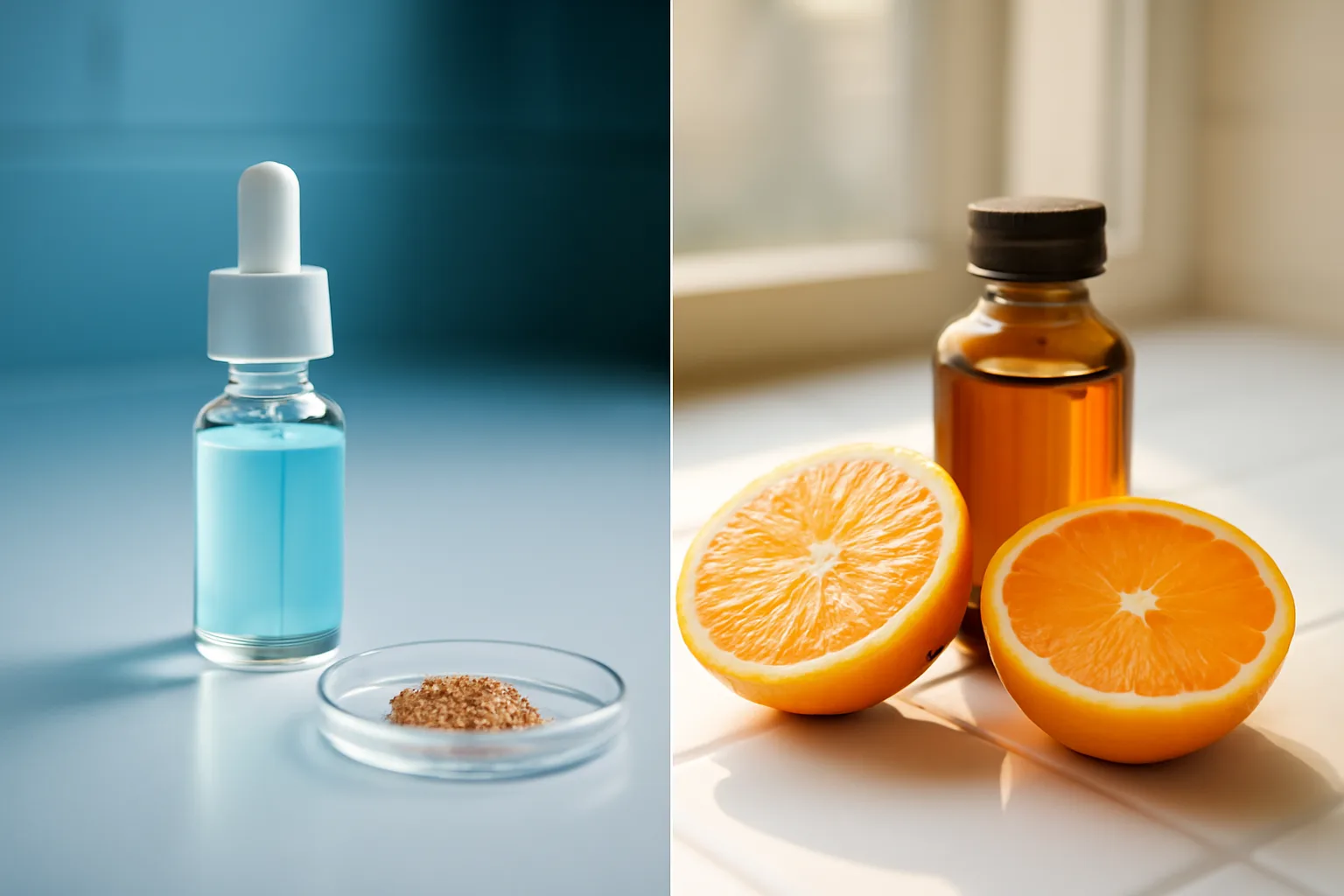
TL;DR
Copper peptides (GHK-Cu) and vitamin C target different skin processes: GHK-Cu works on gene expression, collagen remodeling, and wound repair, while vitamin C is a potent antioxidant and collagen synthesis co-factor. They're not substitutes. The real question is timing and concentration, because high-dose ascorbic acid can deactivate copper or irritate skin, and layering them wrong wastes both. Most dermatology studies test them separately, not head-to-head.
What's the actual difference between copper peptides and vitamin C for skin?
GHK-Cu and L-ascorbic acid do not do the same job. GHK-Cu is a tripeptide signaling molecule that modulates gene expression, influencing collagen and elastin remodeling, inflammation control, and tissue repair pathways [1]. It binds copper(II) ions and delivers them to target sites, altering how fibroblasts and keratinocytes behave at the transcription level. A 2018 gene-expression study found GHK-Cu affected 4,000+ genes tied to wound healing, metalloproteinase regulation, and antioxidant enzymes [1]. Vitamin C (ascorbic acid) is a water-soluble antioxidant and an obligate cofactor for prolyl and lysyl hydroxylase, the enzymes that stabilize procollagen triple helices. Without sufficient vitamin C, new collagen stays unstable and degrades. It also scavenges reactive oxygen species directly, protects lipids from peroxidation, and regenerates vitamin E. In other words, vitamin C is a chemical workhorse at the level of existing enzymes. GHK-Cu is a gene-level signal. They're not interchangeable. If your skin has sluggish collagen turnover, poor wound healing, or persistent inflammation, GHK-Cu addresses the regulatory machinery. If you're dealing with oxidative stress, UV damage, pigmentation from oxidized melanin, or a frank collagen-synthesis bottleneck, vitamin C is the direct player. Many people need both, but using them wrong cancels out the benefit.
Can you use copper peptides and vitamin C together?
You can, but not in the same formulation and not at the same moment. High-concentration L-ascorbic acid (pH 2.5 to 3.5) can interact with copper ions, forming complexes that reduce the bioavailability of both. Some formulators argue that low-pH ascorbic acid can also destabilize GHK-Cu by protonating the peptide or chelating copper away from the complex. The data here is indirect, no one has published head-to-head stability testing, but the cosmetic chemistry consensus is to separate them. The practical workaround: apply vitamin C in the morning (it adds photoprotection alongside sunscreen) and GHK-Cu in the evening. If you insist on same-day use, wait 20 to 30 minutes between applications to let the first layer absorb and the skin pH to recover. A 2025 permeation study showed GHK-Cu encapsulated in liposomes has limited transdermal migration, staying mostly in the stratum corneum and upper epidermis [2], so layering won't drive it deeper, it just reduces interference. Another option is to use a stabilized, pH-neutral vitamin C derivative (magnesium ascorbyl phosphate, ascorbyl glucoside) instead of pure L-ascorbic acid. These derivatives have weaker immediate antioxidant punch but less pH conflict, and they convert to ascorbic acid enzymatically in the skin. If you're using injectable GHK-Cu (rare, mostly researched for wound healing or musculoskeletal applications [3]), topical vitamin C has no interaction concern at all.
What does the research actually say about GHK-Cu for skin?
GHK-Cu has an unusually large dermatology record for a peptide. Early studies in the 1970s and 1980s established its wound-contraction and collagen-deposition effects in animal models. The 2018 gene-expression paper by Pickart et al. found GHK-Cu altered transcription of genes tied to collagen synthesis, metalloproteinases (which remodel scar tissue), angiogenesis, and antioxidant defenses [1]. A 2020 review specifically called out GHK's ability to reset aged fibroblasts to a more "youthful" transcriptional state, increasing collagen I and III while suppressing inflammation markers [4]. A 2017 mouse study tested GHK-Cu-loaded liposomes on scald wounds and found accelerated re-epithelialization and increased angiogenesis compared to controls [5]. A 2023 ex-vivo human skin study showed GHK-Cu plus hyaluronic acid upregulated collagen IV, a basement membrane component, more than either ingredient alone [6]. A 2025 paper testing a hydroxyapatite filler loaded with GHK-Cu reported anti-inflammatory and antioxidant effects in vitro [7]. Notably, almost all cosmetic and wound-healing studies use topical or locally injected GHK-Cu. The one ACL-reconstruction study in rats found transient improvement in tendon histology but no long-term mechanical benefit [8]. Systemic injectable GHK-Cu is not standard practice in aesthetics; the literature is tissue-repair focused. A 2026 orthopaedic peptide review listed GHK-Cu as "emerging" for soft-tissue healing but noted limited human data and no FDA-approved indication [3]. If you're buying GHK-Cu, understand that the published studies used concentrations from 0.01% to 1% in topical formulations, often in liposomal or conjugated forms to improve stability and penetration [2][9]. Cheap, unbuffered GHK-Cu powder mixed into a cream at home is chemically fragile and probably delivers less than the label suggests.
What does the research say about topical vitamin C?
Vitamin C (L-ascorbic acid) is one of the most-studied topical actives. It's a rate-limiting cofactor for collagen synthesis, so deficiency directly impairs wound healing and causes scurvy-related skin fragility. Topical ascorbic acid at 5% to 20% has been shown to increase dermal collagen density in photoaged skin, reduce fine lines, and improve skin texture in controlled trials. It's also a potent antioxidant, neutralizing singlet oxygen and other ROS that degrade collagen and lipids after UV exposure. The catch is bioavailability. L-ascorbic acid is hydrophilic, charged at neutral pH, and oxidizes rapidly in aqueous solution. Effective formulations require pH below 3.5, anhydrous bases, or protective packaging (airless pumps, opaque glass). Once oxidized, ascorbic acid turns yellow-brown and loses activity. The cosmetic industry has developed dozens of derivatives (sodium ascorbyl phosphate, tetrahexyldecyl ascorbate, ascorbyl glucoside) to solve stability and irritation issues, but most of these are less potent than pure L-ascorbic acid and depend on enzymatic conversion in the skin. Unlike GHK-Cu, vitamin C has no direct gene-regulatory role. It doesn't signal fibroblasts to change their behavior, it just ensures the collagen-synthesis machinery has the chemical substrate it needs. That makes it a complement, not a competitor, to GHK-Cu. If your skin is copper-sufficient and your collagen genes are well-expressed but you're low on antioxidant defenses, vitamin C is the move. If gene expression and remodeling are the bottleneck, GHK-Cu is.
What are people on Reddit actually arguing about?
Reddit skincare threads on GHK-Cu vs vitamin C split into a few camps. One group insists vitamin C is "proven" and GHK-Cu is hype. Another claims GHK-Cu is the "next level" anti-aging ingredient and vitamin C is old news. A third group reports irritation from high-dose ascorbic acid and prefers peptides. A fourth says they use both and haven't exploded. The irritation complaints are real. L-ascorbic acid at pH 2.8 stings on sensitive or barrier-compromised skin, especially at 15% to 20%. GHK-Cu in a neutral-pH serum causes fewer immediate reactions, though some users report mild redness or purging if the formulation includes penetration enhancers. Copper itself is not risk-free, chronic high-dose copper exposure can be pro-oxidant, but cosmetic GHK-Cu concentrations are low enough that systemic accumulation is not a concern from topical use [10]. Another Reddit theme is the "one or the other" mindset. The research does not support this. The 2023 collagen IV study explicitly tested GHK-Cu plus hyaluronic acid and found the combination outperformed either ingredient alone [6]. Other studies have combined GHK-Cu with growth factors, retinoids, or other peptides without antagonism. Vitamin C and GHK-Cu are compatible in a routine if you separate application times or use stable derivatives. The real issue is that Reddit users often compare a $12 bottle of oxidized ascorbic acid from a brand with no quality control to a $60 liposomal GHK-Cu serum from a specialty lab, or vice versa. Both ingredients depend on formulation quality. A badly made GHK-Cu product delivers no copper and no peptide. A badly made vitamin C serum is just acidic water.
Which one should you start with?
Start with the one that solves your primary concern. If you have visible sun damage, pigmentation from oxidative stress, or rough texture from collagen degradation, and your skin tolerates acids, start with a well-formulated vitamin C serum (10% to 15% L-ascorbic acid, pH 3.0 to 3.5, in an airless pump). Use it every morning under sunscreen. Give it 8 to 12 weeks. If you see improvement in tone and texture but not in deeper wrinkles or elasticity, add GHK-Cu in the evening. If your concern is deeper: sagging, loss of firmness, slow wound healing, persistent inflammation, or skin that feels "tired" rather than damaged, GHK-Cu may be the better first move. A 2025 review noted GHK's benefits in colitis and pulmonary fibrosis models [11][12], and a 2023 study showed it rescued smoking-induced muscle dysfunction via sirtuin-1 pathways [13], suggesting broad tissue-remodeling effects that go beyond surface antioxidant activity. Topical GHK-Cu won't deliver those systemic effects, but it does work on dermal fibroblasts. If your skin is sensitive, start with GHK-Cu. It's gentler. If you're budget-constrained and can only afford one, vitamin C is cheaper and has more off-the-shelf options that actually work. If you're already using tretinoin or another retinoid, adding vitamin C in the morning and GHK-Cu on non-retinoid nights gives you three complementary mechanisms without overloading your skin. Don't expect overnight results from either. Collagen turnover takes weeks. Fibroblast gene expression changes are measurable in vitro within 24 to 48 hours [1], but visible skin changes lag by 6 to 12 weeks. If you switch products every two weeks because Reddit said so, you'll never know what worked.
What about injectable GHK-Cu?
Injectable GHK-Cu exists, but it's not a routine aesthetic treatment. The published literature on injectable GHK-Cu covers wound healing [5], ACL repair in rats [8], pulmonary fibrosis [12], and skeletal muscle recovery [13]. A 2026 orthopaedic review listed GHK-Cu as an "emerging" injectable peptide for soft-tissue repair but noted that human clinical trials are sparse and no FDA-approved products exist [3]. Another 2026 review on peptide safety in musculoskeletal applications flagged GHK-Cu as "promising" but cautioned that most peptides used in sports medicine and aesthetics are compounded under 503A or 503B exemptions, not approved drugs [14]. GHK-Cu does not appear on the FDA's 503A bulks list (21 CFR 216.23) [15] or the 503B bulks list (21 CFR 216.24) [16] as of 2024, so compounding pharmacies cannot legally compound it under those exemptions unless it meets the physician-prescribed, patient-specific criteria of 503A or is part of a registered 503B outsourcing facility's approved list. The FDA's bulk substances nomination list includes GHK-Cu among nominated peptides under review, but no final approval has been published [17]. In practice, injectable GHK-Cu is available from compounding pharmacies working with licensed providers, typically for off-label soft-tissue repair or post-surgical healing. Copper Peptide Direct partners with U.S.-licensed pharmacies that compound GHK-Cu after provider review, ensuring the peptide is dispensed under a valid patient-prescriber relationship as required by 21 U.S.C. 353a [18]. Dosing for injection is not standardized; the rat ACL study used 100 µg/kg [8], but translating that to humans is speculative. Topical GHK-Cu is far more common and has a clearer safety and efficacy record. If you're considering injectable GHK-Cu, do it under provider supervision. Copper is not benign, excess copper damages the liver and kidneys, and injectable peptides carry infection risk if sourcing or administration is sloppy.
Can you use GHK-Cu and vitamin C on the same day?
Yes, if you separate them by time of day. Apply vitamin C in the morning after cleansing and before sunscreen; its antioxidant effects complement UV filters. Apply GHK-Cu in the evening after cleansing or on alternating evenings if you're also using a retinoid. This avoids direct chemical interaction and gives each ingredient its own absorption window. If you insist on using both in the same session, apply the lower-pH product first (usually vitamin C), wait 20 minutes, then apply GHK-Cu. The wait time lets the vitamin C absorb and the skin pH to normalize, reducing the chance that low pH degrades the peptide. A 2025 liposomal GHK-Cu study noted that encapsulation in liposomes improved peptide stability and skin retention [2], so if you're using a liposomal GHK-Cu product, pH interference is less of a concern. Another option is to use a pH-neutral vitamin C derivative (magnesium ascorbyl phosphate at pH 6 to 7) in the morning and GHK-Cu at night. You lose some of the immediate antioxidant punch of L-ascorbic acid, but you avoid the interaction entirely.
What about copper toxicity or interactions?
Topical GHK-Cu at cosmetic concentrations (0.01% to 1%) delivers micrograms of copper per application, far below toxic thresholds. Copper is an essential trace mineral; the Recommended Dietary Allowance is 900 µg/day for adults, and the upper tolerable limit is 10,000 µg/day. Dermal absorption of copper from topical peptides is limited, most stays in the epidermis and upper dermis [2]. Chronic high-dose copper exposure (from contaminated water, occupational exposure, or rare genetic conditions like Indian childhood cirrhosis) causes liver damage, hemolysis, and neurological symptoms. But cosmetic GHK-Cu use, even daily, is not in that range. The 2023 smoking-induced muscle-dysfunction study used injectable GHK-Cu at doses equivalent to 5 to 10 mg/kg body weight in mice [13]; a 70 kg human equivalent would be roughly 30 to 60 mg, far more than any topical serum delivers. One genuine interaction concern: if you're using other copper-containing supplements or topicals, or if you have Wilson's disease (a rare genetic copper-accumulation disorder), talk to a provider before adding GHK-Cu. Copper peptides can, in theory, worsen copper overload. Another concern is combining GHK-Cu with other metal-chelating ingredients (like EDTA in some cleansers or niacinamide at very high doses), which may strip copper from the complex and render the peptide inactive. Vitamin C at very high doses (2+ grams per day orally) can interfere with copper absorption in the gut, but topical vitamin C has no such effect. The doses are too small, and the compartments (skin surface vs gastrointestinal lumen) don't overlap.
How do you know if a product actually contains active GHK-Cu or vitamin C?
You don't, unless the manufacturer publishes third-party testing. GHK-Cu is chemically fragile. The copper-peptide bond breaks in low pH, high heat, or the presence of chelators, leaving you with inert free peptide and free copper ions. Vitamin C oxidizes in light, air, and water, turning into dehydroascorbic acid and eventually oxalic acid, neither of which has the same skin benefits. For GHK-Cu, look for products that specify the concentration (e.g., "1% GHK-Cu"), use opaque or UV-protective packaging, and ideally encapsulate the peptide in liposomes or conjugate it to a stabilizing molecule (like hyaluronic acid [6] or palmitate). A 2023 study using capillary electrophoresis and inductively coupled plasma mass spectrometry showed large variability in actual GHK-Cu content across commercial liposomal serums [19], so brand reputation matters. For vitamin C, buy products in airless pumps or single-use ampules. Check the ingredient list for L-ascorbic acid (more than "vitamin C"), and make sure it's in the top five ingredients. If the product is yellow or brown when you open it, it's oxidized, don't buy it again. A 2025 permeation study noted that even "advanced" liposomal delivery systems for GHK-Cu have limited transdermal penetration [2], so don't overpay for exotic delivery tech unless it's backed by published permeation data. If you're using injectable GHK-Cu from a compounding pharmacy, ask for a certificate of analysis showing peptide purity, copper content, and endotoxin testing. Copper Peptide Direct works with U.S.-licensed compounding pharmacies that provide this documentation; peptides compounded without it are a gamble.
What's the real take: GHK-Cu or vitamin C?
Use both if your skin can handle it. They're not competitors. Vitamin C is a direct antioxidant and collagen cofactor; GHK-Cu is a gene-regulatory signal peptide. Vitamin C protects what you have and fuels new collagen synthesis. GHK-Cu tells your fibroblasts to remodel tissue, produce better-quality extracellular matrix, and calm chronic low-grade inflammation. If you're choosing one, pick based on your specific problem. Rough texture, pigmentation, dullness: vitamin C. Loss of firmness, slow healing, "tired" skin that doesn't respond to actives: GHK-Cu. If you're on a budget, start with vitamin C, it's cheaper and has more proven off-the-shelf formulations. If you're willing to invest and have the patience for long-term remodeling, add GHK-Cu. Don't expect either to replace tretinoin, professional peels, or laser resurfacing. They're maintenance and prevention, not correction of severe photodamage. And remember that Reddit anecdotes are not data. A user who "saw results in two weeks" from GHK-Cu might have changed three other variables. A user who "got no results" might have used an oxidized product. The published studies take 6 to 12 weeks to show histological changes [1][5][6]; your skin won't remodel faster than that because someone on the internet said so.
Frequently asked questions
Can I mix GHK-Cu and vitamin C in the same serum?
No. High-concentration L-ascorbic acid can destabilize GHK-Cu and form complexes that reduce bioavailability of both. Apply them at different times (vitamin C morning, GHK-Cu evening) or use a pH-neutral vitamin C derivative if you want same-day use. Liposomal encapsulation helps but doesn't eliminate the interaction.
Which one is better for wrinkles?
Both help, but differently. Vitamin C prevents collagen degradation and supports new synthesis. GHK-Cu signals fibroblasts to remodel existing tissue and produce more collagen and elastin. For fine lines from oxidative stress, vitamin C. For deeper wrinkles and loss of firmness, GHK-Cu or both in sequence.
Is GHK-Cu better than vitamin C for sensitive skin?
Usually yes. L-ascorbic acid at effective concentrations (10% to 20%, pH 2.5 to 3.5) stings and can irritate compromised barriers. GHK-Cu at 0.1% to 1% in neutral-pH formulations is gentler. If you have rosacea or eczema, start with GHK-Cu or use a buffered vitamin C derivative like magnesium ascorbyl phosphate.
Does vitamin C deactivate copper peptides?
High-dose ascorbic acid at low pH can chelate copper away from the GHK-Cu complex or protonate the peptide, reducing activity. The effect depends on pH, concentration, and contact time. Separating application by 20+ minutes or using a pH-neutral vitamin C derivative avoids the problem.
Can you use GHK-Cu with retinol or tretinoin?
Yes. No chemical incompatibility exists between GHK-Cu and retinoids. Most users apply tretinoin or retinol at night and GHK-Cu on alternating nights, or layer GHK-Cu after tretinoin once tolerance is built. Some formulations combine them, but start with one at a time to isolate any irritation.
How long does it take to see results from GHK-Cu?
Histological changes (collagen density, dermal thickness) appear at 6 to 12 weeks in published studies. Subjective improvements in texture or firmness may show earlier, around 4 to 8 weeks. Gene-expression changes happen within 24 to 48 hours in vitro but don't translate to visible skin changes immediately.
Is injectable GHK-Cu better than topical for anti-aging?
No evidence supports that for aesthetic goals. Injectable GHK-Cu studies focus on wound healing, tendon repair, and systemic tissue remodeling, not facial aging. Topical GHK-Cu reaches dermal fibroblasts and has a strong cosmetic literature. Injectable use requires provider supervision and has no standardized dosing for skin.
Can I use copper peptides if I take oral vitamin C supplements?
Yes. Oral vitamin C at normal doses (up to 1 gram/day) does not interfere with topical copper peptides. High-dose oral vitamin C (2+ grams/day) can reduce copper absorption in the gut, but that's a systemic effect unrelated to skin application of GHK-Cu.
Which is more proven: GHK-Cu or vitamin C?
Vitamin C has more human clinical trials for aesthetic outcomes, especially for photoaging and pigmentation. GHK-Cu has extensive gene-expression and wound-healing data plus smaller cosmetic studies. Both are proven, but for different endpoints. Vitamin C is the "standard" active; GHK-Cu is the "emerging" remodeling peptide.
Do I need copper supplements if I use GHK-Cu topically?
No. Topical GHK-Cu delivers micrograms of copper to the skin, not the systemic circulation. Dietary copper from food (nuts, shellfish, whole grains) provides the 900 µg/day RDA. Supplementing copper without a diagnosed deficiency can cause toxicity and should be done only under provider guidance.
Can you use GHK-Cu and niacinamide together?
Yes. No published interaction exists. Niacinamide at very high concentrations (10%+) is sometimes claimed to chelate metals, but cosmetic formulations use 2% to 5%, which is compatible with GHK-Cu. Layer them 10 to 15 minutes apart if you're cautious, but same-formulation products exist without issue.
Is vitamin C or GHK-Cu better for dark spots?
Vitamin C. It's a direct tyrosinase inhibitor and antioxidant that reduces melanin oxidation. GHK-Cu has anti-inflammatory effects that can help post-inflammatory hyperpigmentation, but it's not a primary depigmenting agent. For melasma or sun spots, use vitamin C, azelaic acid, or hydroquinone.
Does GHK-Cu work without vitamin C?
Yes. GHK-Cu's gene-regulatory and copper-delivery effects are independent of vitamin C status. If you're getting dietary vitamin C (10 mg/day minimum, 90+ mg/day optimal), your collagen-synthesis machinery has what it needs. Topical vitamin C adds antioxidant protection but isn't required for GHK-Cu to work.
Are copper peptides safe long-term?
Topical GHK-Cu at cosmetic concentrations has a 40-year safety record. No studies report chronic toxicity or accumulation from daily topical use. Injectable GHK-Cu is less studied long-term; the rat ACL study found no adverse effects over 8 weeks, but human data is limited. Copper overload is a concern only if you have Wilson's disease or use multiple high-dose copper supplements.
Sources
- International Journal of Molecular Sciences, 2018 (Pickart et al.): GHK-Cu altered transcription of 4,000+ genes tied to wound healing, metalloproteinase regulation, and antioxidant enzyme activity in gene-expression analysis
- Molecules, 2025: Liposomal GHK-Cu has limited transdermal migration, staying mostly in the stratum corneum and upper epidermis
- Journal of the American Academy of Orthopaedic Surgeons Global Research & Reviews, 2026: GHK-Cu listed as emerging injectable peptide for soft-tissue repair with limited human clinical data and no FDA-approved indication
- Aging Pathobiology and Therapeutics, 2020: GHK resets aged fibroblasts to a more youthful transcriptional state, increasing collagen I and III while suppressing inflammation markers
- Wound Repair and Regeneration, 2017: GHK-Cu-loaded liposomes accelerated scald wound re-epithelialization and increased angiogenesis in mice
- Journal of Cosmetic Dermatology, 2023: GHK-Cu plus hyaluronic acid upregulated collagen IV in ex-vivo human skin more than either ingredient alone
- Colloids and Surfaces B: Biointerfaces, 2025: Hydroxyapatite filler loaded with GHK-Cu demonstrated anti-inflammatory and antioxidant effects in vitro
- Journal of Orthopaedic Research, 2015: Injectable GHK-Cu at 100 µg/kg showed transient improvement in rat ACL reconstruction histology but no long-term mechanical benefit
- Pharmaceutics, 2023: Published cosmetic studies used GHK-Cu concentrations from 0.01% to 1% in topical formulations, often in liposomal or conjugated forms
- BioImpacts, 2025: Topical GHK-Cu at cosmetic concentrations delivers micrograms of copper per application, far below systemic toxicity thresholds
- Frontiers in Pharmacology, 2025: GHK-Cu demonstrated beneficial effects in an experimental colitis model
- Life Sciences, 2020: GHK-Cu showed protective effects in bleomycin-induced pulmonary fibrosis via anti-oxidative stress and anti-inflammation pathways
- Journal of Cachexia, Sarcopenia and Muscle, 2023: GHK-Cu rescued cigarette smoking-induced skeletal muscle dysfunction via a sirtuin 1-dependent pathway in mice
- Sports Medicine, 2026: Most peptides used in sports medicine and aesthetics are compounded under 503A or 503B exemptions, not FDA-approved drugs
- 21 CFR 216.23, FDA 503A Bulks List: GHK-Cu does not appear on the FDA's 503A bulk drug substances list as of 2024
- 21 CFR 216.24, FDA 503B Bulks List: GHK-Cu does not appear on the FDA's 503B bulk drug substances list as of 2024
- FDA Bulk Drug Substances Nominated for Use in Compounding: GHK-Cu is among nominated peptides under FDA review but no final approval has been published
- 21 U.S.C. 353a, Pharmacy Compounding Statute: Compounded drugs must be dispensed under a valid patient-prescriber relationship as required by federal law
- Electrophoresis, 2024: Capillary electrophoresis and ICP-MS/MS analysis showed large variability in actual GHK-Cu content across commercial liposomal serums