Last updated 2026-07-24
TL;DR
Apply copper peptide serum to clean, dry skin, wait for other actives (retinoids, vitamin C, direct acids) to fully absorb first, then follow with moisturizer and SPF in the morning. Most product labels suggest once or twice daily. The peptide research behind GHK-Cu is mostly cell-culture and animal work plus a handful of human skin studies on wrinkles and collagen, not head-to-head serum trials.
What is the actual step-by-step for applying copper peptide serum?
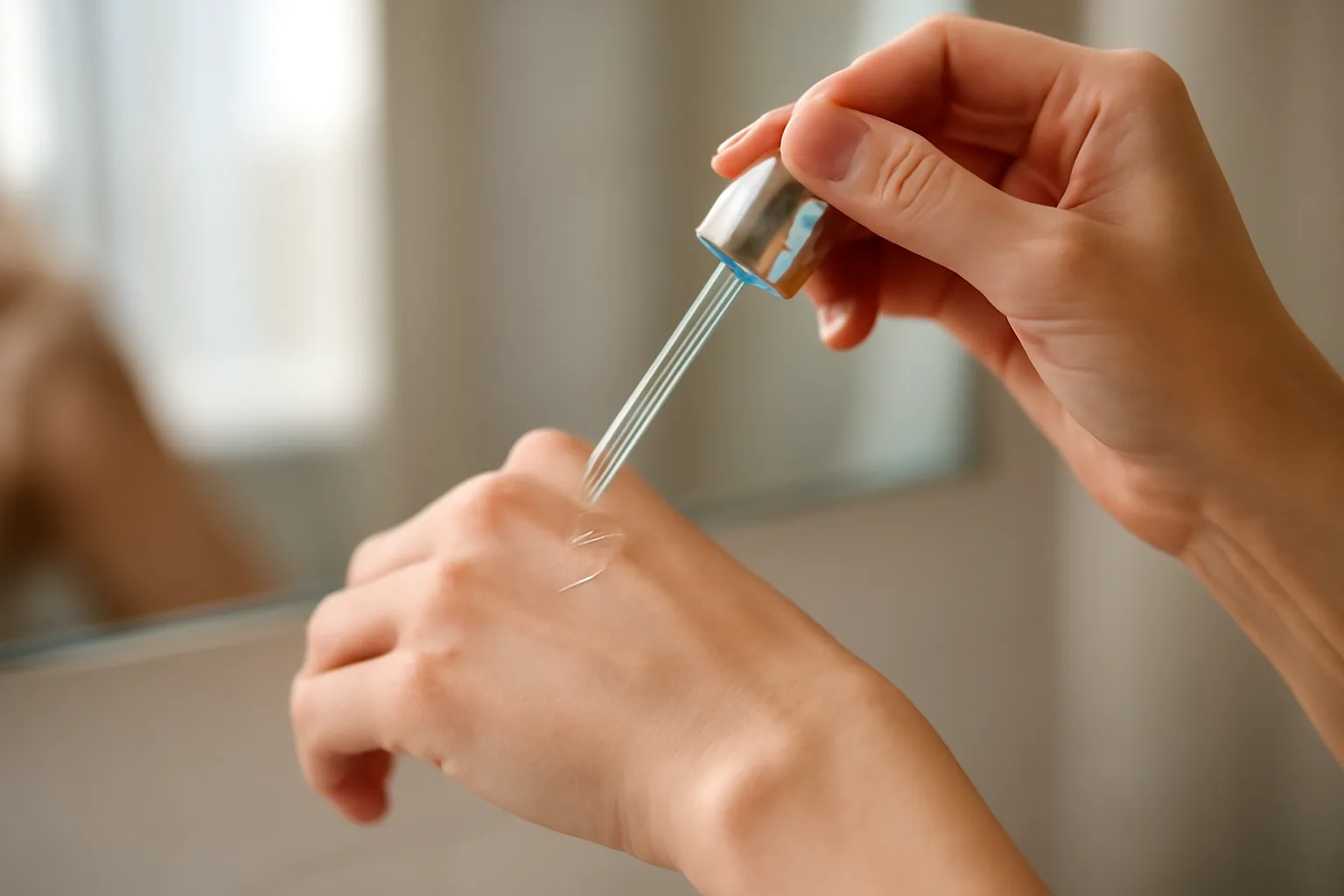
Wash your face, pat it dry, and wait about a minute so the skin isn't damp. Apply the copper peptide serum to your whole face (or just the area you're treating) using a few drops, pressed in rather than rubbed hard. Let it sit for a couple of minutes before layering anything else on top. Finish with a moisturizer, and if it's daytime, sunscreen. That's the routine part. What's less obvious is where copper peptide serum fits relative to your other actives, because copper ions are reactive and they don't play well with everything in your medicine cabinet. GHK-Cu, the copper tripeptide most serums use, is a small copper-binding peptide first isolated from human plasma decades ago and studied since for tissue remodeling, skin repair, and antioxidant effects [1]. The lab and animal literature on it is genuinely large. What's thinner is the number of controlled human trials testing a specific finished serum, at a specific concentration, against a placebo, on faces. Keep that gap in mind as you read ingredient claims. A reasonable default: apply once daily at night to start, watch your skin for two weeks, then decide whether twice daily makes sense for you.
Should copper peptide serum go before or after moisturizer?
Copper peptide serum goes before moisturizer, on clean skin, so it can sit directly on the skin barrier rather than diffusing through a layer of occlusive cream first. Water-thin serums generally go before thicker creams in any routine, and copper peptide serums are usually formulated as light, water- or gel-based liquids. If you use a hydrating toner or essence, that typically goes first (it preps the skin), then the copper peptide serum, then moisturizer, then sunscreen in the morning. Face oils, if you use one, go last since oil sits on top and can block penetration of everything underneath. One practical wrinkle: some copper peptide formulas are quite thin and dry down fast, others are gel-like and take longer. Follow the specific product's absorption time rather than a fixed clock, and don't layer three more products on top before it has actually sunk in.
Can I use copper peptides with vitamin C, retinol, or AHA/BHA?
This is the question that generates the most conflicting advice, and the honest answer is: separate them by time of day or by several minutes to hours, don't mix them in the same application. Copper ions can oxidize vitamin C (L-ascorbic acid) on contact, degrading the vitamin C before it does its job, and copper can also react with the reduced forms of some antioxidants. Direct acids (glycolic, salicylic) and retinoids change the skin's surface pH and penetration dynamics in ways that can also affect how a metal-peptide complex behaves on skin. The practical routine most formulators and estheticians land on: vitamin C in the morning, copper peptides at night, or copper peptides one day and retinol/acids the next, alternating nights. If you want to use both in a day, apply one, wait 20 to 30 minutes minimum, then the other, with the more likely reactive pair (copper and L-ascorbic acid vitamin C specifically) getting the most separation. None of this is regulated dosing guidance, because copper peptide serums are cosmetics, not drugs, and the label instructions come from the manufacturer's own formulation testing, not FDA-reviewed clinical trials. If you want a fuller breakdown of what's known and unknown about GHK-Cu as a compound, see our GHK-Cu overview.
How often should you apply copper peptide serum, and for how long before you see results?
Most commercial copper peptide serums are labeled for once or twice daily use, and that's a manufacturer formulation choice, not a dose established by clinical trial. In the peptide literature broadly, a 2020 review on GHK's anti-aging potential and a 2025 review on GHK as a topical anti-wrinkle peptide both describe cosmetic use patterns and known mechanisms, but neither establishes a single validated human dosing schedule for finished serums [2] [3]. On timeline: skin cell turnover and visible collagen changes take weeks, not days. If a product claims overnight results, that's marketing, not biology. A fair expectation, based on how slowly skin remodels, is 8 to 12 weeks of consistent use before judging whether a serum is doing anything for fine lines or firmness, and that's true of most active skincare ingredients, more than copper peptides. Stopping and restarting doesn't reset the clock to zero, but it does mean you're not accumulating the same steady low-grade signaling that daily use provides. If you're inconsistent, don't expect the same trajectory as someone who used it every day.
Do you need to patch test copper peptide serum first?
Yes. Apply a small amount to the inner forearm or behind the ear, wait 24 to 48 hours, and check for redness, itching, or breakouts before putting it on your face. This matters more with copper peptides than with a lot of inert moisturizing ingredients because you're applying a reactive metal ion complex, and individual tolerance varies. Most people tolerate topical copper peptides well; it's a commonly used cosmetic ingredient. But 'commonly used' isn't the same as 'risk-free for everyone.' If you have known copper sensitivity, active dermatitis, or you're using multiple active ingredients already, patch testing is not optional, it's the only way to find out before your whole face is exposed. Stop use and rinse thoroughly if you get stinging that doesn't fade in a few minutes, visible redness that persists past an hour, or any swelling. That's not a normal 'purging' reaction, that's your skin telling you to back off.
What does the actual research say copper peptides do for skin?
Here's where it's worth being precise instead of hand-wavy, because a lot of marketing gestures vaguely at 'studies show' without saying which study, on what model, showing what. A 2023 study in the Journal of Cosmetic Dermatology tested GHK-Cu combined with hyaluronic acid and found synergistic upregulation of collagen IV in fibroblast cultures and ex-vivo skin tests [4]. That's a real, specific, mechanistic finding, and it's a fibroblast/ex-vivo model, not a randomized trial on faces over months. A 2017 study in Wound Repair and Regeneration found that GHK-Cu encapsulated in liposomes accelerated scald wound healing in mice, by promoting cell proliferation and angiogenesis [5]. That's wound healing in a mouse model, not cosmetic anti-aging in humans, though the mechanisms (cell proliferation, new blood vessel formation) are the same biological processes cosmetic marketing points to when it talks about 'skin renewal.' A 2018 paper in the International Journal of Molecular Sciences reviewed GHK-Cu's regenerative and protective actions in light of newer gene expression data, describing broad effects on genes involved in tissue repair and antioxidant response [6]. This is a mechanistic/genomic review, useful for understanding why researchers keep studying this peptide, but it's not a clinical trial outcome you can point to for 'my wrinkles improved.' A 2025 review specifically on GHK as a topical anti-wrinkle peptide lays out both the advantages researchers see in it and the practical problems, including formulation stability and how much actually penetrates skin, calling out delivery as a real, unresolved issue rather than a solved one [3]. So: real cellular and mechanistic evidence, real animal wound-healing data, real ex-vivo skin data. What's thin is large, randomized, placebo-controlled human trials on a specific finished cosmetic serum measuring wrinkle depth or firmness at defined weeks. If a brand cites 'over 100 studies,' ask which ones are actually on intact human skin over time, because most of the deep literature is cell culture, animal models, or mechanism papers, not consumer-serum trials.
Does copper peptide serum actually penetrate the skin barrier?
This is genuinely an open technical question, and researchers are still working on how to even measure it reliably. A 2025 paper in Molecules asked directly whether the field is 'ready to measure skin permeation' of GHK-Cu encapsulated in liposomes, which tells you the measurement methods themselves are still being refined, more than the penetration numbers [7]. Because plain GHK-Cu is a small but still relatively bulky charged tripeptide-copper complex, formulators have turned to liposome encapsulation to try to improve delivery through the stratum corneum. A 2023 study in Pharmaceutics on liposomes as carriers of GHK-Cu for cosmetic use, and a related 2024 paper using CE-ICP-MS/MS to monitor GHK-Cu encapsulation in liposomes, both focus on this exact problem: getting more of the peptide-copper complex to actually reach viable skin layers rather than sitting on the surface or degrading before it gets there [8] [9]. The practical takeaway for a shopper: 'contains GHK-Cu' on a label tells you almost nothing about how much reaches active skin layers. Concentration, pH, vehicle (liposomal versus plain aqueous), and stability during manufacturing and storage all matter, and most consumer labels don't disclose any of that.
Is copper peptide serum the same thing as injectable GHK-Cu?
No, and conflating them is one of the most common and most misleading things people do when reading about this peptide. Topical copper peptide serum is a cosmetic, applied to intact skin, regulated as a cosmetic product, sold over the counter, with no requirement for clinical trial data before sale. Injectable or provider-compounded GHK-Cu preparations are a different category entirely. Compounded drug preparations fall under pharmacy compounding law, specifically 21 U.S.C. 353a for licensed pharmacies compounding under a prescription, and FDA maintains specific bulk drug substance lists (the 503A list under 21 CFR 216.23 and the 503B list under 21 CFR 216.24) governing what substances can legally be compounded and under what oversight [10] [11] [12] [13]. GHK-Cu is not an FDA-approved drug; you won't find it in the Drugs@FDA database of approved products [14]. Whether it appears on FDA's nominated bulk substances list for compounding is a separate regulatory question from whether a cosmetic serum containing it is legal to sell, and the two shouldn't be blurred [15]. The injectable/orthopedic literature on GHK-Cu is also its own separate body of evidence, mostly animal and mechanistic. A 2015 study in the Journal of Orthopaedic Research found GHK-Cu(II) transiently improved healing outcomes in a rat model of ACL reconstruction [16]. A 2026 review in JAAOS Global Research & Reviews covers therapeutic peptides in orthopedics broadly, including challenges and open questions around this class of compounds [17]. A 2026 primer in the American Journal of Sports Medicine walks orthopedic and sports medicine physicians through injectable peptide therapy generally [18], and a 2026 review in Sports Medicine specifically evaluates safety and efficacy data (and gaps) for approved versus unapproved peptide therapies used for musculoskeletal injuries and athletic performance [19]. None of that literature is about face serum, and none of it should be used to justify claims about a topical cosmetic product, or vice versa. If you're specifically researching the injectable route rather than skincare, our GHK-Cu peptides injections page and GHK-Cu dosage page cover that territory, and it is genuinely a different conversation than 'how do I layer a serum.'
Are there safety concerns with using copper peptide serum long-term?
Copper is not an inert or automatically safe substance just because it's naturally occurring in the body; it's a metal your body regulates tightly, and excess copper exposure (through any route) is a real toxicological concern, not a theoretical one. Topical use on intact skin, in the concentrations typically used in cosmetics, is generally considered low risk for systemic copper accumulation, because skin absorption of the whole complex is limited (see the penetration section above), but 'generally considered low risk' is not the same as 'zero risk' or 'studied at scale over years.' Local skin reactions (irritation, redness, breakouts in acne-prone skin, contact dermatitis in sensitive individuals) are the most commonly reported issue, and they're a reason to patch test, not a reason to panic. There isn't good long-term human safety data specifically tracking years of daily copper peptide serum use and systemic copper markers; most of the safety reasoning is inference from copper's known toxicology plus the (still being refined) skin penetration data, rather than direct longitudinal cosmetic-user studies. If you have Wilson's disease or any condition involving impaired copper metabolism, talk to a physician before using any copper-containing product, topical or otherwise, since your body's ability to regulate copper load is exactly the mechanism that's compromised in that condition. For a fuller rundown of documented and theoretical side effects, see GHK-Cu side effects.
How is copper peptide serum different from a provider-dispensed GHK-Cu preparation?
A cosmetic serum you buy online or at a counter is manufactured to cosmetic standards: no requirement for a prescriber, no requirement for clinical efficacy data, and quality control that varies enormously by brand, since cosmetics don't go through FDA pre-market approval the way drugs do. A provider-reviewed or provider-dispensed preparation is a different product category, made under pharmacy compounding oversight, with a prescriber involved in the decision and a pharmacy accountable for the compounding process under the legal framework in 21 U.S.C. 353a [12]. That doesn't mean it's 'better' in some vague sense, it means it sits under a different, more accountable oversight structure, with different labeling and quality expectations, than a jar of serum on a shelf. Copper Peptide Direct works with a provider-reviewed pathway for readers who want that oversight rather than an unregulated cosmetic purchase; the fulfilling pharmacy in that pathway operates under standard compounding pharmacy rules, and we don't compound or manufacture anything ourselves. If you're trying to decide which route fits your situation, our buy GHK-Cu guide walks through sourcing considerations, and it's worth reading before you buy either type of product, since the label 'GHK-Cu' shows up on both cosmetic and provider-reviewed products and the term alone doesn't tell you which oversight model you're getting.
What results have people actually documented, and how should you read before/after claims?
Before-and-after photos are the least reliable form of evidence in skincare, full stop, because lighting, makeup, skin hydration on the day of the photo, and camera angle all change apparent wrinkle depth and skin tone more than most active ingredients do over a similar timeframe. That's true whether the product is a $20 serum or a provider-administered injectable. The more reliable signal is the mechanistic and ex-vivo literature: collagen IV upregulation in fibroblast and ex-vivo skin models [4], cell proliferation and angiogenesis in animal wound models [5], and broad gene-expression-level regenerative and antioxidant signaling described in reviews of the newer genomic data on GHK-Cu [6]. These findings support a plausible biological mechanism for skin benefit. They are not the same evidentiary weight as a large randomized human trial measuring wrinkle depth at 12 weeks against placebo, and to date that specific kind of trial, on a defined finished serum, is not well represented in the public literature for GHK-Cu. If you want to see what documented before/after evidence exists specifically for the injectable route (a different product category, discussed above), that's covered separately in our GHK-Cu peptide injection before and after piece. Don't use injectable outcome data to predict what a face serum will do, and don't use serum marketing claims to predict what an injectable will do. They're different delivery routes with different, mostly non-overlapping evidence bases.
Quick reference: applying copper peptide serum without wrecking your routine
| Step | What to do | Why |
|---|---|---|
| 1. Cleanse | Wash face, pat dry, wait ~1 minute | Damp skin changes absorption and dilutes actives |
| 2. Apply serum | A few drops, press in, don't rub hard | Even, controlled application |
| 3. Wait | 1-2 minutes minimum before next product | Lets the serum start absorbing before you layer |
| 4. Moisturize | Standard moisturizer on top | Seals in serum, supports barrier |
| 5. SPF (AM only) | Broad-spectrum sunscreen, always last | Copper peptides don't replace sun protection |
| Vitamin C | Separate to a different time of day | Copper can oxidize L-ascorbic acid on contact |
| Retinol/AHA/BHA | Alternate nights or space by hours | pH and penetration changes can cause irritation stacking |
| Frequency | Start once daily, assess at 2 weeks | Matches typical label guidance; not clinically dosed |
This table reflects standard formulation and skincare-layering logic, not a specific clinical dosing protocol, because no such protocol exists in the public trial record for finished copper peptide serums.
Frequently asked questions
Can I use copper peptide serum every day?
Most labels are written for once or twice daily use, and that's generally fine for tolerant skin. Start with once daily at night for two weeks, watch for irritation, then increase frequency if your skin handles it well. There's no clinical trial establishing an optimal daily dose for finished cosmetic serums, so label guidance and personal tolerance are your main references.
Should copper peptides go on before or after retinol?
Don't layer them in the same application; alternate nights (copper peptides one night, retinol the next) or use copper peptides in the morning and retinol at night. Both ingredients affect skin turnover and pH, and stacking them can increase irritation without clear added benefit, since neither has been tested in combination in controlled human trials.
Can copper peptides be mixed with vitamin C serum?
It's better to separate them by time of day rather than apply both together. Copper ions can oxidize L-ascorbic acid (the active form of vitamin C) on contact, degrading it before it works. A common approach is vitamin C in the morning and copper peptide serum at night.
How long does it take to see results from copper peptide serum?
Give it 8 to 12 weeks of consistent use before judging. Skin cell turnover and any collagen-related changes happen over weeks, not days, and that timeline applies to most topical actives, more than copper peptides. Overnight or one-week claims on packaging aren't backed by how skin biology actually works.
Is copper peptide serum the same as injectable GHK-Cu?
No. Topical serum is a cosmetic product applied to intact skin with no prescription required. Injectable or provider-compounded GHK-Cu falls under pharmacy compounding law (21 U.S.C. 353a) and is a completely different product category with different oversight, different evidence base, and different risk profile.
Do I need to patch test copper peptide serum before using it on my face?
Yes. Apply a small amount to your inner forearm, wait 24 to 48 hours, and check for redness, itching, or bumps before using it on your face. This matters more with copper-containing products than with many inert ingredients because you're applying a reactive metal complex.
Can copper peptides cause skin irritation or breakouts?
Yes, in some people. Reported issues include redness, stinging, and breakouts in acne-prone skin, though most users tolerate topical copper peptides without problems. If irritation persists past an hour or comes with swelling, stop use and rinse thoroughly rather than pushing through it.
Is topical copper peptide serum backed by clinical trials?
The deep GHK-Cu literature is real but mostly cell-culture, animal, and ex-vivo skin studies, plus mechanistic reviews of gene expression data, rather than large randomized trials on finished consumer serums. A 2025 review in BioImpacts specifically discusses the advantages and unresolved problems of topical GHK as an anti-wrinkle peptide, including delivery challenges.
Does copper peptide serum actually penetrate the skin?
That's still being worked out. A 2025 study in Molecules directly questions whether current methods can reliably measure GHK-Cu skin permeation even with liposome encapsulation, which is one reason formulators use liposomal delivery systems to try to improve how much reaches viable skin layers.
Can I use copper peptide serum with niacinamide or hyaluronic acid?
Generally yes; neither is known to react with copper the way L-ascorbic acid vitamin C can. A 2023 study in the Journal of Cosmetic Dermatology found GHK-Cu combined with hyaluronic acid produced synergistic collagen IV upregulation in fibroblast and ex-vivo skin models, suggesting the combination is at least compatible.
Is copper toxic if absorbed through the skin long-term?
Copper is tightly regulated by the body, and excess accumulation is a genuine toxicological concern, not a theoretical one, particularly for people with impaired copper metabolism such as Wilson's disease. Topical use is generally considered lower risk than systemic exposure because skin absorption of the intact peptide-copper complex appears limited, but long-term human safety data on daily cosmetic use is not well established.
What's the difference between cosmetic copper peptide serum and a provider-reviewed GHK-Cu product?
Cosmetic serum requires no prescriber and no pre-market efficacy review; quality varies by brand. A provider-reviewed preparation goes through a prescriber and a compounding pharmacy operating under 21 U.S.C. 353a, a different legal and quality-oversight framework entirely. Neither is a stand-in for FDA drug approval, since GHK-Cu isn't an FDA-approved drug.
Sources
- PubMed, Journal of Biomaterials Science Polymer Edition, 2008: GHK is a human tripeptide studied for its role in tissue remodeling.
- PubMed, Aging Pathobiology and Therapeutics, 2020: Review of GHK's potential as an anti-aging peptide, describing known mechanisms and cosmetic use context.
- PubMed, BioImpacts, 2025: Review of topically applied GHK as an anti-wrinkle peptide covering advantages, formulation problems, and prospects.
- PubMed, Journal of Cosmetic Dermatology, 2023: GHK-Cu combined with hyaluronic acid showed synergistic collagen IV upregulation in fibroblast and ex-vivo skin tests.
- PubMed, Wound Repair and Regeneration, 2017: GHK-Cu-liposomes accelerated scald wound healing in mice by promoting cell proliferation and angiogenesis.
- PubMed, International Journal of Molecular Sciences, 2018: Review of GHK-Cu's regenerative and protective actions in light of newer gene expression data.
- PubMed, Molecules, 2025: Study questions whether current methods can reliably measure skin permeation of liposome-encapsulated GHK-Cu.
- PubMed, Pharmaceutics, 2023: Study on liposomes as carriers of GHK-Cu tripeptide for cosmetic application, addressing delivery to skin.
- PubMed, Electrophoresis, 2024: CE-ICP-MS/MS method developed to monitor GHK-Cu encapsulation in liposomes for cosmetic use.
- Cornell Law School Legal Information Institute, 21 U.S.C. 353a: Federal statute governing pharmacy compounding of drug preparations, including provider-dispensed GHK-Cu.
- eCFR, 21 CFR 216.23: Regulation establishing the final 503A bulk drug substances list for compounding pharmacies.
- eCFR, 21 CFR 216.24: Regulation establishing the 503B bulk drug substances list for outsourcing facilities.
- FDA, Bulk Drug Substances Used in Compounding Under Section 503A: FDA guidance page describing which bulk drug substances may legally be used in 503A compounding.
- FDA, Drugs@FDA database: GHK-Cu does not appear as an FDA-approved drug product in the Drugs@FDA database.
- FDA, Bulk Drug Substances Nominated for Use in Compounding: FDA's current list of bulk drug substances nominated for use in compounding under section 503A.
- PubMed, Journal of Orthopaedic Research, 2015: GHK-Cu(II) transiently improved healing outcomes in a rat model of ACL reconstruction.
- PubMed, JAAOS Global Research & Reviews, 2026: Review of therapeutic peptides in orthopedics covering applications, challenges, and future directions.
- PubMed, American Journal of Sports Medicine, 2026: Primer for orthopedic and sports medicine physicians on injectable peptide therapy.
- PubMed, Sports Medicine, 2026: Review of safety and efficacy data for approved and unapproved peptide therapies used in musculoskeletal injury and athletic performance.