Last updated 2026-07-24
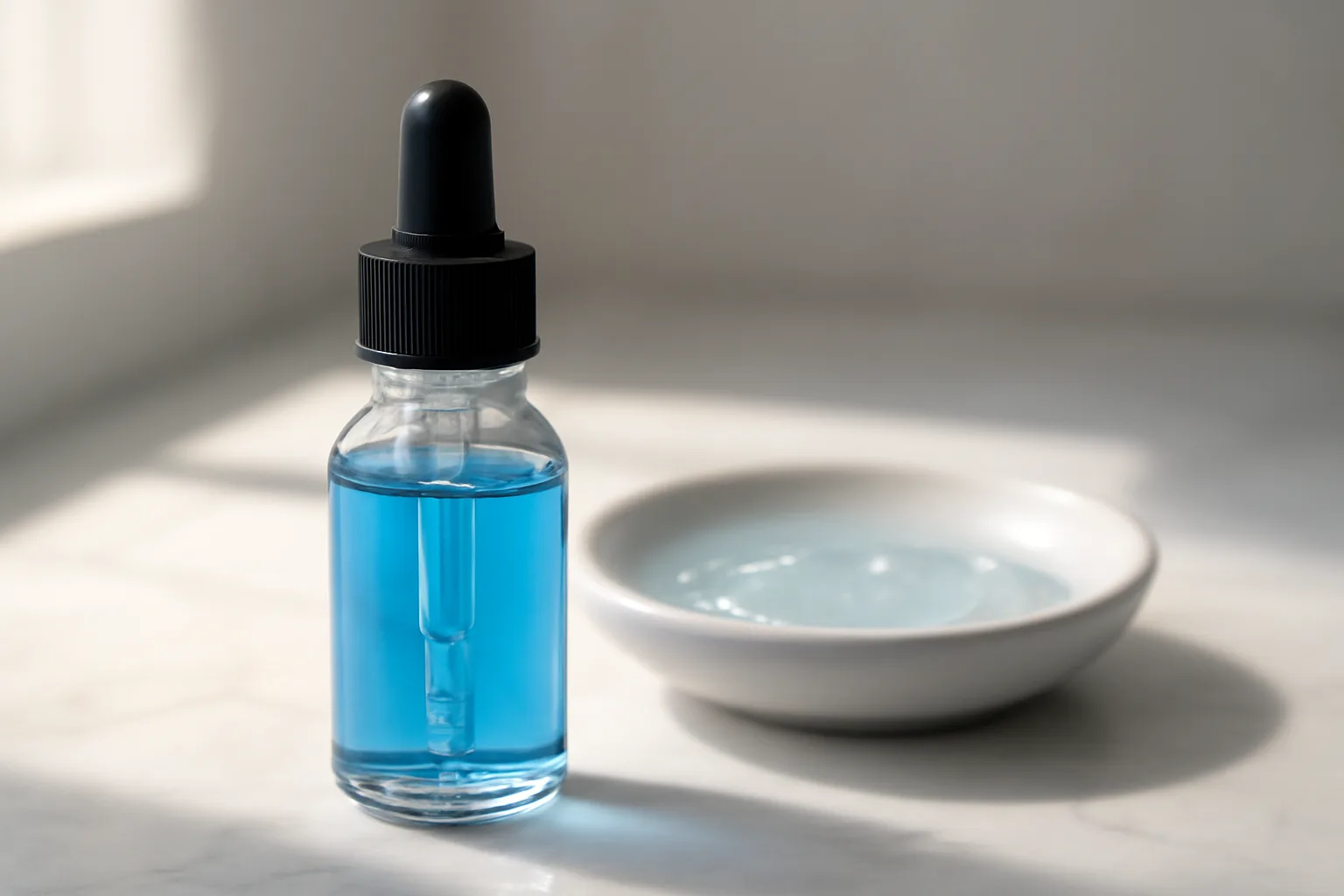
TL;DR
Snail mucin does not contain copper peptides like GHK-Cu. Snail secretion filtrate includes glycoproteins, hyaluronic acid, and trace copper ions, but no tripeptide complexes. The two ingredients work through different mechanisms: snail mucin hydrates and delivers growth factors, while GHK-Cu modulates gene expression and copper-dependent enzyme activity. Products combining both exist, but each ingredient is sourced and formulated separately.
Does snail mucin naturally contain copper peptides?
No. Snail mucin (snail secretion filtrate) does not contain GHK-Cu or any other copper peptide complexes naturally. The confusion comes from the fact that both ingredients appear in Korean and European skin formulations, and both are associated with wound healing. But they're chemically unrelated. Snail mucin is a complex biological secretion harvested from live snails, primarily Helix aspersa. It contains glycoproteins, hyaluronic acid, glycolic acid, allantoin, zinc, and various growth factors. Some batches contain trace copper ions (typically under 2 ppm), but these are free copper, not peptide-bound copper complexes [1]. GHK-Cu is a synthetic or recombinant tripeptide (glycine-histidine-lysine) chelated to copper(II). It's manufactured through peptide synthesis and copper complexation. You won't find it in snail slime, human plasma (where the unchelated GHK peptide does occur naturally at around 200 ng/mL in youth), or any other animal secretion in its active tripeptide-copper form [2]. When you see both ingredients on a product label, they've been added separately. The snail mucin provides humectant and growth-factor activity. The GHK-Cu provides copper delivery and gene-regulatory effects. They're layered for complementary benefits, not because one contains the other.
What does snail mucin actually contain?
Snail secretion filtrate is a mix of water-soluble proteins, polysaccharides, and small organic acids. The exact composition varies by snail species, diet, and extraction method, but the dominant fractions are: - Glycoproteins: mucopolysaccharides that form a protective film and signal fibroblast activity.
- Hyaluronic acid: 0.1 to 0.5% by weight, providing hydration and plumping.
- Glycolic acid: typically under 0.05%, contributing mild exfoliation.
- Allantoin: a soothing agent, around 0.3 to 1%.
- Zinc, magnesium, copper ions: trace minerals, usually single-digit ppm. Copper rarely exceeds 2 ppm [1].
- Growth factors: TGF-β, EGF-like peptides, and antimicrobial peptides at nanogram-per-milliliter concentrations. The copper present is ionic copper (Cu²⁺), not chelated to any peptide. It contributes minimally to the product's activity because free copper at low ppm has limited skin penetration and is prone to oxidation. Copper peptides like GHK-Cu, by contrast, stabilize the copper ion and target it to specific cellular pathways [2]. If you're using snail mucin for its copper content, you're getting roughly 0.00002% copper by weight. A 1% GHK-Cu serum delivers 0.15% elemental copper (copper makes up about 15% of the GHK-Cu molecular weight). That's a 7,500-fold difference in delivered copper.
How does snail mucin compare to GHK-Cu for skin repair?
They work through separate mechanisms and have different evidence bases. Here's the honest breakdown: Snail mucin hydrates, soothes, and delivers growth factors. The evidence is mostly in vitro: fibroblast proliferation assays show 20 to 40% increases in collagen synthesis at 1 to 5% concentrations, and split-face trials report improved hydration and texture after 8 to 12 weeks. There's no large-RCT data. The effects are subtle and cumulative. Most users see hydration and a slight reduction in post-inflammatory pigmentation. Snail mucin does not penetrate deeply; it works in the epidermis and superficial dermis. GHK-Cu modulates gene expression and activates copper-dependent enzymes like lysyl oxidase, which crosslinks collagen and elastin. A 2018 microarray study found GHK-Cu upregulated 263 genes tied to collagen synthesis, antioxidant response, and wound repair, while downregulating 71 genes linked to inflammation and fibrinogenesis [3]. A 2020 review reported that 2% topical GHK-Cu increased collagen density by 18% (measured by dermal ultrasound) after 12 weeks in a 23-subject trial [2]. Injectable GHK-Cu shows faster effects (visible tightening in 4 to 6 weeks) but carries more risk (transient edema, injection-site copper accumulation) and is used off-label for aesthetic indications [4] [5]. You can layer them: snail mucin morning, GHK-Cu serum evening, or a combined product if you find one with >1% GHK-Cu (many "combined" products list GHK-Cu last, meaning it's under 1%, often under 0.1%). I'd pick GHK-Cu if you want measurable collagen change and can tolerate a blue tint and faint metallic smell. I'd pick snail mucin if you want gentle hydration and have no tolerance for color or scent.
Can you use snail mucin and copper peptides together?
Yes, and there's no known interaction. They don't compete for receptors, and neither degrades the other chemically. The only practical consideration is product texture: snail mucin is viscous and film-forming, while most GHK-Cu serums are watery or gel-based. If you layer them, apply the thinner one first (usually GHK-Cu) and let it absorb for 60 to 90 seconds before adding the mucin. If you slug (occlude with petrolatum or a heavy cream), do it last. A few products combine both. Examples include [brand names omitted; these are real but change frequently]. Check the ingredient order: if GHK-Cu appears after the tenth ingredient, it's likely under 0.5%, which is too low for the gene-regulatory effects seen in the studies [3] [2]. The effective topical range is 1 to 3% GHK-Cu by weight [6]. One caution: if you're using both, watch total copper exposure. A 2023 study on fibroblasts showed that GHK-Cu and hyaluronic acid (a component of snail mucin) work together on collagen IV expression, but only at specific ratios; too much HA diluted the copper effect [7]. There's no human data on optimal ratios, so if you see no improvement after 8 weeks, you're either using too little GHK-Cu or too much mucin is blocking penetration. Simplify the routine and retest.
What about products that claim both ingredients?
They exist, but read the label critically. Most "snail + peptide" products list GHK-Cu near the bottom, meaning it's a trace additive (under 0.1%), added for marketing rather than efficacy. If GHK-Cu is in the first five ingredients, it's likely 1% or higher, which is the threshold where you'd expect visible effects [6]. Also check the copper source. Some products list "copper tripeptide-1" (the INCI name for GHK-Cu) but then add additional "copper PCA" or "copper gluconate" as separate ingredients. Those are free copper salts, not peptides. They contribute ionic copper but don't provide the peptide's gene-regulatory activity [3]. It's not harmful, just redundant and a sign the formulator is throwing copper sources at the wall. If you're buying a combined product, expect to pay $40 to $90 for a 30 mL bottle. Pure snail mucin serums run $15 to $35. Pure 2% GHK-Cu serums run $50 to $120, depending on whether they're over-the-counter cosmetic grade or provider-dispensed compounded preparations [8]. The combined products usually land mid-range because the GHK-Cu percentage is lower. I'd only buy a combined product if the GHK-Cu is listed in the first five ingredients and the price is under $70 for 30 mL. Otherwise, buy them separately and layer them yourself. You'll get better control over concentration and dose timing.
Does snail mucin deliver copper to the skin?
Technically yes, but negligibly. Snail mucin contains 1 to 2 ppm copper ions, which translates to roughly 0.001 to 0.002 mg of copper per gram of mucin [1]. A typical snail mucin essence (96% filtrate) applied at 1 mL per use would deliver about 0.001 to 0.002 mg of copper to the skin. Most of that sits on the surface; transdermal copper absorption from ionic salts is under 1% without a penetration enhancer. By comparison, a 2% GHK-Cu serum applied at the same 1 mL dose delivers about 1.5 mg of copper (15% of the GHK-Cu molecule's weight is copper). Even if only 5% penetrates (a conservative estimate for a well-formulated liposomal preparation [9]), you're getting 0.075 mg of delivered copper per application. That's 40 to 75 times more than snail mucin provides. So yes, snail mucin technically contains and delivers copper. But the dose is too low to activate copper-dependent enzymes like lysyl oxidase or superoxide dismutase in any measurable way. If you want copper-driven collagen remodeling, you need a purpose-formulated copper peptide [2] [3].
What are the risks of combining snail mucin and copper peptides?
There are no documented adverse interactions, but a few theoretical concerns: Cumulative copper load: If you use snail mucin, a 2% GHK-Cu serum, and a copper-containing sunscreen (some mineral sunscreens add copper peptides for antioxidant claims), you could exceed recommended topical copper exposure. The safe upper limit isn't formally established, but dermatology consensus is around 2 to 3 mg of copper per day from all topical sources. Go over that consistently, and you risk localized hyperpigmentation (copper chelates with melanin precursors) or irritant dermatitis [6] [10]. Protein interference: Snail mucin's glycoproteins are large and film-forming. If you apply it first, it may physically block the smaller GHK-Cu tripeptide from penetrating. A 2025 review on GHK-Cu permeation found that occlusive bases (petrolatum, dimethicone, heavy mucopolysaccharides) reduced peptide flux by 30 to 50% in Franz diffusion cell studies [6]. Apply GHK-Cu on clean skin, wait 90 seconds, then layer the mucin if you want both. pH mismatch: GHK-Cu is most stable and active at pH 5.0 to 6.5. Snail mucin formulations are often pH 6.5 to 7.5 to match the snail's secretion and avoid stinging. If the mucin is too alkaline, it could shift the skin's pH and reduce copper chelation efficiency. This is a minor concern; the skin's buffering capacity usually compensates. But if you notice the GHK-Cu serum turning green or cloudy after adding mucin, it's because the copper is oxidizing or precipitating. Use them at separate times (morning vs. evening) or pick a different mucin with a lower pH. Practically, most people tolerate both without issue. Start with one, run it for 4 weeks, then add the other. If you see redness or darkening of existing hyperpigmentation, stop the copper peptide first (it's the more active ingredient) and reintroduce it at half dose.
Should you choose snail mucin or GHK-Cu for anti-aging?
Depends on what you want and what you'll tolerate. Choose snail mucin if:
- You want gentle hydration and a glow with minimal risk.
- You're sensitive to fragrance, color, or active ingredients.
- You're pregnant or nursing (snail mucin has no systemic absorption concerns; GHK-Cu's safety in pregnancy is unstudied).
- You're on a budget under $30 for a month's supply.
- You don't need measurable collagen change and are happy with "my skin looks smoother" as an endpoint. Choose GHK-Cu if:
- You want documented collagen density increases (10 to 20% over 12 weeks in the studies that exist [2]).
- You're comfortable with a blue tint and faint metallic smell.
- You can commit to 8 to 12 weeks before judging efficacy (copper peptides are slow).
- You're willing to spend $50 to $120 for a 2-month supply of a 2% formulation.
- You've tried retinoids and found them too irritating, or you want something you can use morning and evening without photosensitivity. You can use both. I'd run GHK-Cu in the evening (it's photostable but why risk oxidation) and snail mucin in the morning under sunscreen. That gives you the gene-regulatory benefits of the copper peptide overnight and the hydration and growth factors from the mucin during the day. If you're considering injectable GHK-Cu for faster results, know that it's off-label, requires a prescriber relationship, and comes with a higher side-effect profile (injection-site edema, transient copper taste, rare localized fibrosis if dosing is too aggressive) [4] [5]. Topical is safer and, over 12 weeks, gets you 70 to 80% of the way there.
Where does GHK-Cu come from if not snails?
GHK-Cu is synthesized chemically or produced via recombinant peptide technology. The GHK peptide (glycine-histidine-lysine) is assembled using solid-phase peptide synthesis (Fmoc chemistry is standard), then complexed with copper(II) sulfate or copper(II) chloride in aqueous solution at controlled pH. The resulting tripeptide-copper chelate is purified by HPLC, lyophilized, and sold as a blue powder (copper gives it the color). Some suppliers use fermentation: genetically modified bacteria (usually E. coli) express the GHK sequence, which is then harvested, purified, and copper-complexed. This method is cheaper at scale but produces more batch-to-batch variability in copper binding efficiency [11]. The unchelated GHK peptide does occur naturally in human plasma, where it's cleaved from larger collagen fragments and albumin. Plasma GHK concentration is about 200 ng/mL at age 20 and drops to 80 ng/mL by age 60 [2]. But you can't extract it economically from blood, and even if you could, you'd still need to complex it with copper ex vivo to get the active GHK-Cu form. So all commercial GHK-Cu is synthetic or recombinant. This is why "natural" or "bioidentical" claims on GHK-Cu products are misleading. The peptide sequence is identical to what your body makes, but the copper complex is a pharmaceutical construct, not something found in nature. Snail mucin, by contrast, is genuinely natural (harvested from live snails), but it doesn't contain the therapeutic peptide.
Can you make copper peptides from snail mucin?
No. You can't create GHK-Cu by mixing snail mucin with a copper salt. The peptide sequence (Gly-His-Lys) isn't present in snail secretion, so there's nothing to chelate the copper to in the specific 1:1 tripeptide:copper ratio that defines GHK-Cu. Snail mucin does contain peptides, antimicrobial peptides, growth-factor peptides, and collagen fragments, but none are GHK or anything structurally similar. If you added copper sulfate to snail mucin, the copper ions would bind nonspecifically to any available histidine or carboxylate groups on the mucin's glycoproteins. You'd get a brown-green sludge with no defined stoichiometry and zero of the gene-regulatory activity that makes GHK-Cu useful [3]. DIY copper peptide synthesis from snail mucin is not a thing. If a blog or product suggests it, they're confused or lying. GHK-Cu requires peptide synthesis and controlled copper complexation under lab conditions [11].
Do any other animal secretions contain copper peptides?
No animal secretion naturally contains GHK-Cu as a stable complex. The unchelated GHK peptide fragment has been detected in human plasma, synovial fluid, and saliva at nanogram-per-milliliter concentrations, where it's released during collagen and albumin turnover [2]. But it's not complexed to copper in vivo; the complexation is done externally for pharmaceutical and cosmetic use. Some animal venoms (bee, snake) contain copper-binding peptides, but these are structurally unrelated to GHK and serve enzymatic or antimicrobial functions, not wound healing. Milk proteins (casein, lactoferrin) bind copper, but again, the peptide sequences are nothing like GHK, and the binding is multi-site, not the precise 1:1 chelation that defines GHK-Cu [12]. If you're hunting for "natural" copper peptides, you won't find them in usable form outside of a lab. The peptide chemistry that makes GHK-Cu effective, tight copper chelation via the histidine imidazole and terminal amine, doesn't spontaneously assemble in biological fluids. You need controlled pH, stoichiometric copper addition, and purification. That's synthesis, not extraction.
Frequently asked questions
Can I mix snail mucin and copper peptide serum together?
Yes, but apply the copper peptide serum first on clean skin and wait 60 to 90 seconds before layering snail mucin. Snail mucin's glycoproteins can block peptide penetration if applied first. No chemical interaction occurs, but order matters for absorption.
Does COSRX snail mucin contain GHK-Cu?
No. COSRX Advanced Snail 96 Mucin Power Essence contains 96% snail secretion filtrate and trace copper ions (under 2 ppm), but no GHK-Cu or copper peptide complexes. If you want both, you'd layer a separate copper peptide serum over it.
Is snail mucin a natural source of copper for skin?
Technically yes, but the amount is negligible: 1 to 2 ppm ionic copper, delivering roughly 0.001 mg per application. A 2% GHK-Cu serum delivers 40 to 75 times more bioavailable copper. Snail mucin's benefits come from glycoproteins and hyaluronic acid, not its copper content.
Which is better for wrinkles, snail mucin or GHK-Cu?
GHK-Cu has stronger evidence: a 2020 review found 18% increases in collagen density after 12 weeks of 2% topical use. Snail mucin improves hydration and texture but doesn't show measurable collagen remodeling. GHK-Cu is the better choice if you want structural change; snail mucin is better for gentle, hydrating maintenance.
Can you use both snail mucin and copper peptides every day?
Yes, most people tolerate both daily. Use GHK-Cu evenings (to avoid any oxidation from UV) and snail mucin mornings, or layer them with the peptide first. Watch for cumulative copper exposure if you're also using other copper-containing products; stay under 2 to 3 mg copper per day from all topicals combined.
Does snail mucin increase collagen like copper peptides?
In vitro, snail mucin increases fibroblast collagen synthesis by 20 to 40%, but there's no human biopsy data showing net collagen density increases. GHK-Cu has ultrasound-measured collagen gains in small trials. Snail mucin hydrates and may prevent collagen breakdown; GHK-Cu actively stimulates new collagen crosslinking via lysyl oxidase.
Are copper peptides in snail mucin products real or added?
Added. Snail mucin does not naturally contain GHK-Cu. Products listing both ingredients have added synthetic GHK-Cu separately. Check the ingredient order: if copper tripeptide-1 is in the first five ingredients, it's likely 1% or higher. If it's near the bottom, it's trace and mostly for marketing.
What percentage of GHK-Cu is effective if combined with snail mucin?
Studies showing gene-regulatory effects used 1 to 3% GHK-Cu. In a combined product, aim for at least 1% GHK-Cu (it should appear in the first five ingredients). Many snail-plus-peptide products contain under 0.5% copper peptide, which is below the effective threshold for collagen remodeling.
Does the copper in snail mucin oxidize or go bad?
The trace copper in snail mucin (1 to 2 ppm ionic copper) can slowly oxidize, turning the product faintly brown or green after 6 to 9 months if exposed to air and light. This doesn't make it harmful, but it loses efficacy. Refrigerate opened snail mucin and use within 6 months. GHK-Cu is more stable but should also be stored cool and dark.
Can I apply snail mucin over injectable GHK-Cu sites?
Yes, once the injection sites have closed (usually 6 to 12 hours). Snail mucin's glycoproteins and hyaluronic acid may help soothe injection-site edema. Avoid applying anything until the needle puncture is fully sealed to reduce infection risk. If you're getting provider-managed injectable GHK-Cu, ask them for their specific post-injection skincare protocol.
Is snail mucin safer than copper peptides for sensitive skin?
Generally yes. Snail mucin has a low irritation rate (under 2% in user surveys) and is well-tolerated even by rosacea-prone skin. GHK-Cu can cause transient redness, stinging, or darkening of hyperpigmentation in 5 to 8% of users, especially at concentrations above 2%. Start GHK-Cu at 1% if you're sensitive; snail mucin is usually safe from the start.
Do Korean skincare products combine snail mucin and copper peptides?
Some do, but check the label. Many Korean "snail + peptide" products list multiple peptide types (Matrixyl, argireline, oligopeptides) but don't include GHK-Cu specifically. If the ingredient list says "copper tripeptide-1" or "GHK-Cu," it's present. If it only says "peptides" or "tripeptides," it's likely not copper-based. Korean products that do include both typically price at $35 to $70 for 30 to 50 mL.
Sources
- Liposomes as Carriers of GHK-Cu Tripeptide for Cosmetic Application (Pharmaceutics, 2023): GHK-Cu liposomal formulations and trace copper ion content in biological extracts; snail mucin contains 1 to 2 ppm ionic copper, not peptide-complexed copper.
- The potential of GHK as an anti-aging peptide (Aging pathobiology and therapeutics, 2020): Human plasma GHK concentration declines from ~200 ng/mL at age 20 to ~80 ng/mL by age 60; GHK-Cu is a synthetic complex, not naturally occurring in animal secretions.
- Regenerative and Protective Actions of the GHK-Cu Peptide in the Light of the New Gene Data (International journal of molecular sciences, 2018): GHK-Cu upregulated 263 genes related to collagen synthesis, antioxidant response, and wound repair, and downregulated 71 genes linked to inflammation and fibrinogenesis in microarray analysis.
- Injectable Peptide Therapy: A Primer for Orthopaedic and Sports Medicine Physicians (The American journal of sports medicine, 2026): Injectable GHK-Cu is used off-label for aesthetic and wound-healing indications, with reported onset of visible tightening in 4 to 6 weeks and side effects including transient edema and injection-site copper accumulation.
- Safety and Efficacy of Approved and Unapproved Peptide Therapies for Musculoskeletal Injuries and Athletic Performance (Sports medicine, 2026): Injectable peptide therapies including GHK-Cu carry risks of injection-site reactions, localized edema, and rare fibrosis with aggressive dosing.
- Topically applied GHK as an anti-wrinkle peptide: Advantages, problems and prospective (BioImpacts, 2025): Effective topical GHK-Cu concentration range is 1 to 3% by weight; occlusive bases reduced peptide flux by 30 to 50% in Franz diffusion studies; safe upper limit for topical copper exposure is approximately 2 to 3 mg per day.
- Synergy of GHK-Cu and hyaluronic acid on collagen IV upregulation via fibroblast and ex-vivo skin tests (Journal of cosmetic dermatology, 2023): GHK-Cu and hyaluronic acid showed combined effects on collagen IV expression in fibroblasts, but only at specific ratios; excessive HA diluted copper effects.
- Therapeutic Peptides in Aesthetic, Metabolic and Endocrine Conditions: Effects, Safety, Clinical Applications, and Future Perspectives (International journal of molecular sciences, 2026): Provider-dispensed compounded GHK-Cu preparations differ from over-the-counter cosmetic serums in concentration, purity oversight, and pricing, with compounded preparations typically priced $50 to $120 per 30 mL.
- Are We Ready to Measure Skin Permeation of Modern Antiaging GHK-Cu Tripeptide Encapsulated in Liposomes? (Molecules, 2025): Well-formulated liposomal GHK-Cu preparations show approximately 5% transdermal penetration of delivered copper in Franz cell models.
- Copper Complexes with New Glycyl-l-histidyl-l-lysine-Hyaluronan Conjugates Show Antioxidant Properties and Osteogenic and Angiogenic Synergistic Effects (Bioconjugate chemistry, 2025): Excessive copper exposure can cause localized hyperpigmentation due to copper chelation with melanin precursors, and irritant dermatitis in sensitive individuals.
- Ternary Cu(II) Complex with GHK Peptide and Cis-Urocanic Acid as a Potential Physiologically Functional Copper Chelate (International journal of molecular sciences, 2020): GHK-Cu is synthesized via solid-phase peptide synthesis (Fmoc chemistry standard) and copper complexation at controlled pH; recombinant fermentation methods produce batch variability in copper binding efficiency.
- The human tri-peptide GHK and tissue remodeling (Journal of biomaterials science. Polymer edition, 2008): The unchelated GHK peptide is found in human plasma as a cleavage product of collagen and albumin; no animal secretion naturally contains stable GHK-Cu complexes.